
How Long Do Edibles Take to Kick In? - Scarlet Fire Cannabis Co. (North York / Toronto)
You ate an edible an hour ago and nothing has happened yet. Sound familiar? You are not alone, and you are not doing anything wrong. Edibles behave completely differently from smoked or vaped cannabis, and that gap catches even experienced consumers off guard. Understanding what is actually happening inside your body makes the experience far more predictable and far more enjoyable.
This guide covers the science, the factors that affect timing, the different edible types, and practical tips for getting the most out of your session. If you are shopping for edibles in North York or Toronto, the team at Scarlet Fire Cannabis Co. is also here to walk you through every product on the menu.
Ready to find the right edible for your body and goals? Visit Scarlet Fire Cannabis Co. at 3852 Bathurst St, North York, ON. Our Cannabis Sommeliers will match you with the right product, potency, and format before you ever leave the store.
What Happens in Your Body When You Eat an Edible
Edibles follow a completely different metabolic route than inhaled cannabis, and that route is the entire reason for the delay. When you smoke or vape cannabis, THC travels from your lungs directly into your bloodstream and reaches the brain within minutes. The process bypasses digestion entirely.
With an edible, THC must travel through your digestive tract first. Once the food is broken down in the stomach and absorbed into the intestinal lining, THC passes through the liver before entering circulation. That detour is what makes edibles both slower and, for many people, significantly more potent.
The Role of 11-Hydroxy-THC
Inside the liver, delta-9 THC undergoes a process called first-pass metabolism. Enzymes convert it into a compound called 11-hydroxy-THC, a metabolite that does not exist in meaningful quantities in the cannabis plant itself. It forms entirely inside your body.
11-hydroxy-THC crosses the blood-brain barrier more efficiently than delta-9 THC, producing effects that many people describe as deeper, more body-focused, and longer-lasting. Research suggests it activates CB1 receptors in the brain at a notably higher potency than the original compound.
This is why a 10 mg THC edible can feel far more intense than 10 mg of smoked cannabis, even for experienced users. The molecule your brain is actually responding to is stronger by design, not by accident.
Factor | Smoked Cannabis | Edibles |
Onset Time | Seconds to 5 minutes | 30 minutes to 2 hours |
Peak Effects | 20-30 minutes | 2-4 hours after ingestion |
Total Duration | 1-4 hours | 4-8 hours (up to 12 hrs) |
THC Form in Brain | Delta-9 THC | 11-Hydroxy-THC (more potent) |
Predictability | High | Variable by individual |
How Long Do Edibles Actually Take to Kick In
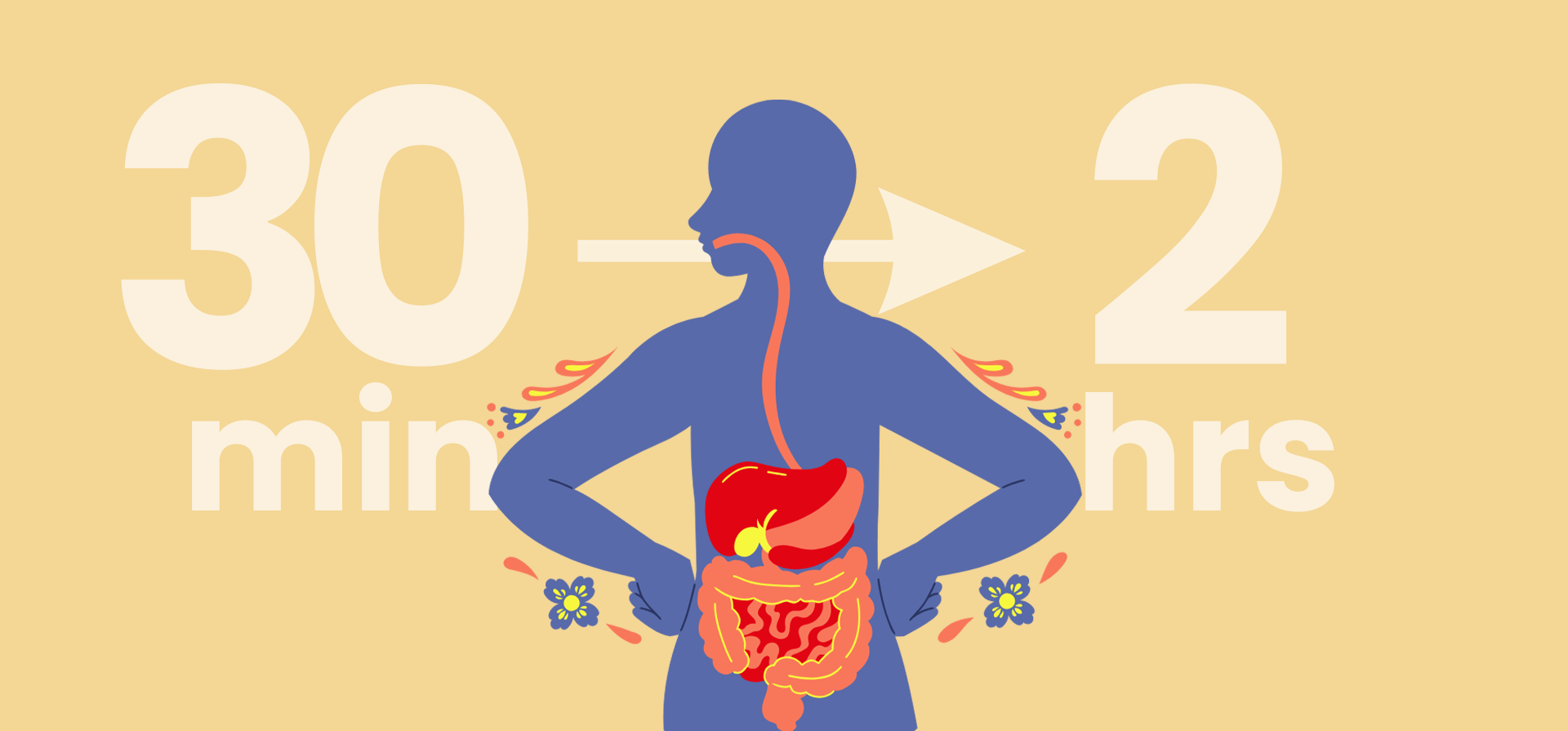
For most people, edibles begin producing noticeable effects somewhere between 30 minutes and 2 hours after consumption. The widely cited range across multiple research sources is 45 to 90 minutes, with some people not feeling full effects until the 2-hour mark.
Peak intensity typically arrives 2 to 4 hours after ingestion. Effects then taper gradually over the following 2 to 6 hours, with some residual calm lasting up to 12 hours depending on dose and individual metabolism. The single most important rule with edibles: wait a full two hours before deciding nothing is happening. Taking more before the first dose peaks is the most common cause of an overwhelming experience.
Why the Window Is So Wide
A 30-minute-to-2-hour range exists because everybody processes food and cannabinoids differently. The same edible eaten by two people in the same room can produce onset times that differ by more than an hour. That variability is not a flaw in the product. It reflects how individual human digestion actually works.
Six Factors That Determine When Your Edible Kicks In
Onset time is not random. It is shaped by a predictable set of variables that you can learn to work with.
1. Stomach Contents
What you have eaten before consuming an edible is one of the strongest predictors of onset time. An empty stomach means less competing material in the digestive tract, so THC absorbs faster, often producing onset within 30 to 45 minutes. A full stomach, especially one loaded with fat or complex carbohydrates, slows the process significantly. Some reports document delays of 2 to 3 hours after a heavy meal.
2. Metabolism
Metabolism refers to the rate at which your body breaks down and processes substances. People with faster metabolisms generally experience earlier onset and shorter duration. Those with slower metabolisms may wait longer but often feel effects for a greater period of time.
3. Body Weight and Composition
THC is fat-soluble, meaning it binds to fat tissue before being released back into circulation. People with higher body fat percentages may experience a slower initial onset but a longer overall duration, as THC redistributes from fat cells over time. People with less body fat tend to feel effects more quickly and for a shorter period.
4. Cannabis Tolerance
Regular cannabis consumers build tolerance to THC over time, which can delay onset or reduce intensity. If you have recently taken a break from cannabis, the same dose you used before may feel considerably stronger and kick in faster. New consumers should always start at the lowest available dose.
5. THC Dosage and Concentration
Higher-potency edibles typically produce effects that onset more quickly and feel more intense. A 2.5 mg dose will behave very differently from a 10 mg dose in the same body. Ontario regulations cap individual servings at 10 mg THC, which provides a reasonable benchmark for new consumers.
6. Type of Edible
Not all edibles are processed the same way. The format determines how and where THC is absorbed in the body, which directly affects onset speed.
Edible Type | Absorption Route | Typical Onset |
Gummies and Chocolates | Digested in stomach and liver | 45-90 minutes |
Baked Goods (brownies, cookies) | Digested in stomach and liver | 45-90 minutes |
Mints, Lozenges, Hard Candy | Partly absorbed through mouth tissue | 15-45 minutes |
Cannabis Beverages | Stomach and small intestine | 15-60 minutes |
Tinctures (held under tongue) | Sublingual, bypasses digestion | 15-45 minutes |
Capsules and Soft Gels | Stomach and liver | 45-120 minutes |
Sublingual Products: The Faster Alternative
Tinctures, mint strips, and lozenges that dissolve under the tongue use sublingual absorption, meaning THC enters the bloodstream through the tissue beneath the tongue rather than passing through the stomach. This bypasses the liver’s first-pass metabolism, producing onset times closer to 15 to 30 minutes in many users.
If you hold a tincture under your tongue for 60 to 90 seconds before swallowing, you access this faster pathway. If you swallow it immediately, it behaves like a standard edible and onset slows accordingly.
Why Edibles Feel Stronger Than Smoking

Beyond onset time, many consumers are surprised by the intensity of an edible high compared to smoking. This is not a matter of potency on the label. It is a function of the conversion to 11-hydroxy-THC described above.
The same 10 mg of THC consumed in edible form produces a fundamentally different compound by the time it reaches the brain. That compound binds to receptors more efficiently and lingers in the bloodstream longer because it is metabolized more slowly than inhaled delta-9 THC. Even seasoned cannabis consumers who smoke daily sometimes find edibles unexpectedly strong. The number on the label does not translate to an equivalent experience across consumption methods.
What the Peak Actually Feels Like
The peak of an edible experience typically arrives 2 to 4 hours after consumption. During this window, effects are often more body-centered than the cerebral quality associated with smoked cannabis. Many people report a heavier physical sensation, deeper relaxation, and in some cases more vivid sensory experiences. Duration varies widely but commonly extends 4 to 8 hours.
Practical Tips for a Better Edible Experience
Before You Consume
- Start with 2.5 to 5 mg THC: First-time edible consumers or anyone with low tolerance should begin at the lower end. Effects are much easier to increase next time than they are to manage in the moment.
- Eat something first: A light snack improves comfort without significantly delaying absorption the way a full meal would.
- Choose the right setting: Edibles last significantly longer than smoked cannabis. Plan your day accordingly and give yourself a full 6 to 8 hours in a comfortable environment.
- Set a timer: Mark the time you consumed the edible. Having a reference point prevents the common mistake of assuming nothing is happening when effects are simply still building.
While You Wait
- Wait the full two hours: This is the single most important guideline with edibles. Taking a second dose at the 45-minute mark is the leading cause of overconsumption.
- Stay hydrated: Water and light snacks help keep the experience comfortable, especially as effects build.
- Avoid alcohol: Combining alcohol with THC edibles intensifies both substances and makes dosing unpredictably more intense.
If You Feel the Effects Too Strongly
- Stay calm: Edible effects are time-limited and will pass. Remind yourself that the sensation is temporary.
- Find a comfortable space: A familiar environment, a couch, a blanket, and a trusted person nearby make a significant difference.
- Try CBD: Some evidence suggests that CBD may modulate the intensity of THC effects. A CBD-dominant product may help take the edge off.
- Hydrate and eat: A light snack can help ground the experience. Avoid sugary drinks, which can amplify anxiety in some people.

How to Make Edibles Kick In Faster
For consumers who want a faster-acting experience from edibles, there are several approaches worth considering.
- Choose sublingual formats: Tinctures, mint strips, and dissolvable products held under the tongue absorb through mouth tissue and produce onset times 15 to 30 minutes faster than standard edibles in many people.
- Consume on a lighter stomach: Waiting 2 to 3 hours after a large meal before taking an edible allows digestion to clear, speeding up absorption. Pairing with a small amount of dietary fat can improve bioavailability.
- Consider a tolerance break: Even a 24 to 48 hour break from cannabis can reset sensitivity, making the same dose feel more effective and onset faster.
- Try cannabis beverages: Infused drinks often absorb through the stomach lining faster than solid foods, with many consumers reporting onset within 15 to 30 minutes.
- Talk to a Cannabis Sommelier: The staff at Scarlet Fire Cannabis Co. can recommend specific product formats, ratios, and formulations based on your history and goals.
Consistency Over Intensity
Responsible cannabis use prioritizes consistency and predictability rather than pursuing maximum effect. Products chosen for steady performance allow users to anticipate outcomes more accurately and reduce the likelihood of discomfort or disruption. This mindset is especially relevant for adults who incorporate cannabis into regular routines rather than occasional use.
This emphasis on consistency aligns with Ontario’s public health objectives, which focus on informed decision-making and harm reduction. By choosing formats, ratios, and amounts that deliver repeatable results, consumers build long-term confidence in their selections. Over time, this approach supports a more balanced and sustainable relationship with cannabis.
Practical Framework for Evaluating Cannabis in Ontario
Consumers evaluating cannabis products in Toronto and North York can benefit from applying a structured hierarchy that reflects how cannabis actually performs in real-world use. This approach emphasizes measurable, regulated attributes rather than branding or informal terminology. By following this order, consumers reduce uncertainty and improve consistency in product selection.
A practical evaluation framework includes:
- Cannabinoid composition and ratios, which establish the primary direction and intensity of effects
- Delivery format and timing, which determine onset speed and duration
- Dose and repeatability, which influence predictability across uses
- Terpene profile as a secondary factor, which may refine but not define the experience
This framework aligns closely with Ontario’s regulatory intent, which prioritizes transparency, standardization, and informed decision-making. Applying it consistently supports safer use and greater confidence, particularly for adults seeking reliable outcomes rather than experimentation.
Edible Dosing Reference Guide
Ontario regulations cap single servings at 10 mg THC per unit. The table below provides a general reference for how different dose levels tend to affect consumers, though individual responses vary significantly.
Dose (THC) | Experience Level | Typical Effects | Onset (Approximate) |
1-2.5 mg | First-time / microdose | Mild relaxation, light mood lift | 45-90 minutes |
2.5-5 mg | Beginner to occasional | Moderate relaxation, possible mild euphoria | 45-90 minutes |
5-10 mg | Moderate / recreational | Clear psychoactive effects, body relaxation | 30-75 minutes |
10 mg | Ontario single-serving max | Significant effects; use with caution | 30-60 minutes (may vary) |
Note: These are general reference points only. Individual response to cannabis varies based on all the factors described throughout this guide. If you are new to edibles or returning after a break, always start with the lowest available dose and wait the full two hours before reassessing.
Shop Edibles in North York at Scarlet Fire Cannabis Co.
Scarlet Fire Cannabis Co. is located at 3852 Bathurst St in North York, Ontario, serving cannabis consumers across Toronto and the surrounding area. The store carries a curated menu of edibles including gummies, chocolates, tinctures, beverages, and THC:CBD balanced products.
What sets Scarlet Fire apart from most cannabis retailers is not just the product selection. It is the depth of knowledge behind the counter. The store’s Cannabis Sommeliers are trained to match each customer with the right format, potency, and cannabinoid profile based on individual goals, whether that means better sleep, stress relief, pain management, or a recreational evening well-planned.
The store carries edible options across a range of onset speeds and THC:CBD ratios, with staff who can explain the difference between a fast-acting tincture and a slower-onset gummy in plain language that makes sense before you buy.
Visit us at 3852 Bathurst St, North York, ON | Call: (416) 663-5000