
What Are Cannabis Terpenes? - Scarlet Fire Cannabis Co. (North York / Toronto)
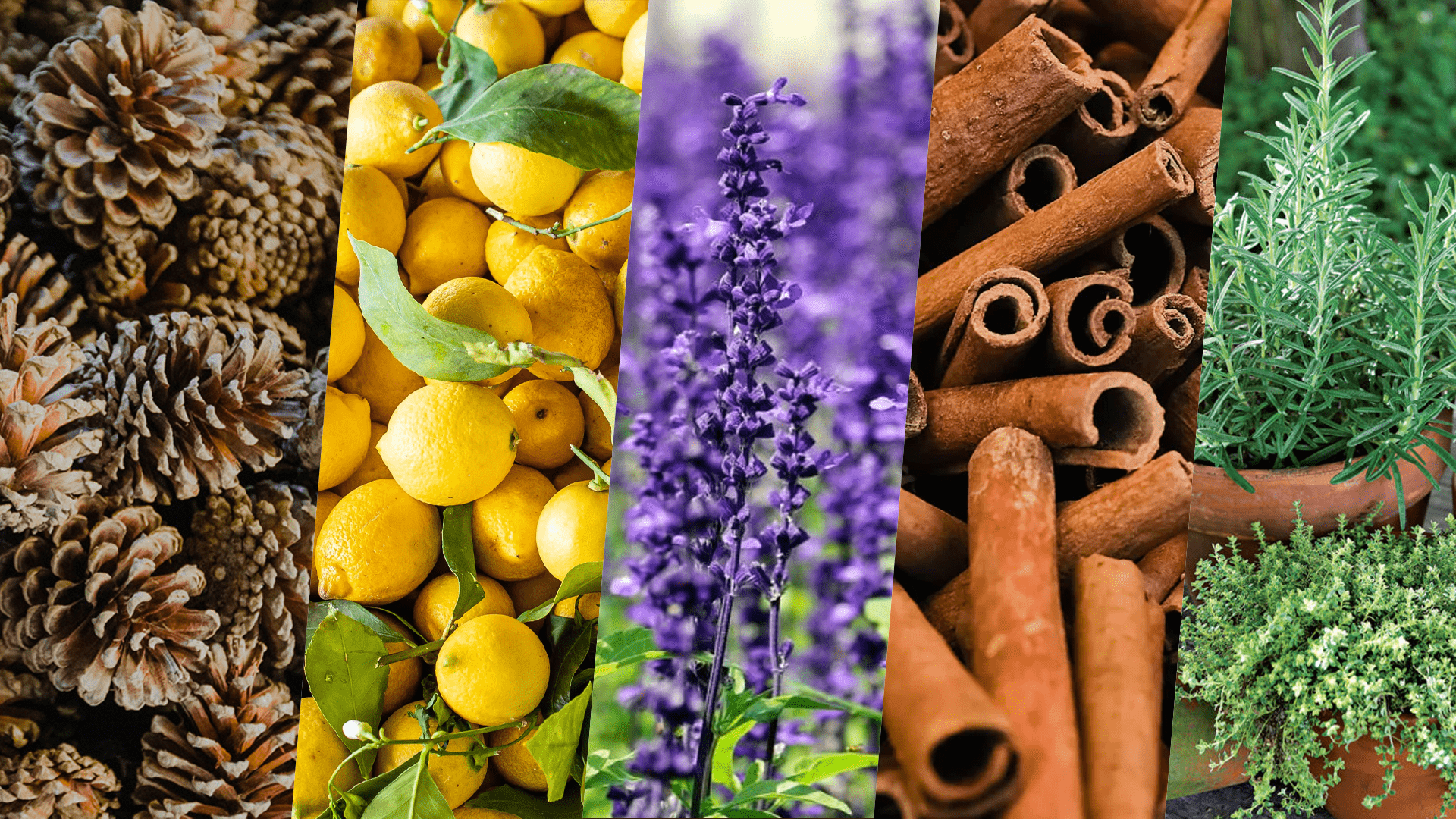
If you have ever noticed that one cannabis strain smells like a pine forest and another reminds you of fresh citrus, you already have a front-row seat to the world of terpenes. These naturally occurring aromatic compounds are responsible for the distinctive scents, flavors, and a significant portion of the therapeutic effects found in cannabis plants. Yet for many consumers in Canada and beyond, terpenes remain one of the most misunderstood aspects of cannabis education.
At Scarlet Fire Cannabis Co. in North York, Toronto, we believe that informed consumers make better choices. Whether you are managing anxiety, seeking relief from nausea, or simply trying to find a strain that matches your lifestyle, understanding cannabis terpenes is one of the most practical skills you can develop as a modern cannabis user. This guide breaks down the full cannabis terpenes list, explains what they do in your body, how they interact with cannabinoids and flavonoids, and how to use that knowledge when you shop.
Cannabis Terpenes Explained
Terpenes are organic aromatic compounds produced by a wide range of plants, including cannabis. In cannabis specifically, they are secreted from the same resin glands that produce cannabinoids like THC and CBD. Plants evolved terpenes as a survival mechanism: to attract pollinators, repel predators, and protect against environmental stressors.
In the cannabis plant, over 200 terpenes have been identified. However, each cultivar (commonly called a “strain”) expresses a distinct terpene profile that contributes to its smell, taste, and experiential effect. The concentration and ratio of these terpenes vary depending on growing conditions, genetics, harvest time, and curing methods.
Key distinction to understand: Terpenes are not the same as cannabinoids. THC and CBD are cannabinoids that bind to receptors in your endocannabinoid system. Terpenes, while they may influence the endocannabinoid system and interact with receptors, primarily work through different pathways including serotonin, dopamine, and GABA systems.
Cannabis Terpenes and Their Effects
Terpenes do not produce a psychoactive “high” on their own. Their power lies in how they modulate the overall cannabis experience through a phenomenon researchers call the entourage effect.
The entourage effect refers to the synergistic interaction between terpenes, cannabinoids (THC, CBD, CBG, CBN), and flavonoids. When these compounds work together, the combined effect is meaningfully different from any single compound in isolation. This is why a high-THC strain with a calming terpene profile can feel relaxing, while another high-THC strain with stimulating terpenes can feel energizing or even anxiety-inducing.
How Terpenes Influence Your Experience
Terpene | Primary Aroma | General Effect | Common In |
Myrcene | Earthy, musky | Relaxing, sedating | Indica-leaning strains |
Limonene | Citrus, lemon | Uplifting, mood-enhancing | Sativa-leaning strains |
Caryophyllene | Spicy, peppery | Stress-reducing, anti-inflammatory | Hybrid strains |
Linalool | Floral, lavender | Calming, anti-anxiety | Various cultivars |
Pinene | Pine, fresh | Focus-enhancing, bronchodilating | High-CBD strains |
Terpinolene | Floral, herbal | Mildly sedating, antioxidant | Jack Herer varieties |
Humulene | Earthy, hoppy | Appetite-suppressing | Various cultivars |
Ocimene | Sweet, floral | Energizing, antiviral | Tropical strains |
This table gives you a starting point, but remember: real-world effects depend on the full terpene profile in combination with the cannabinoid content, your personal physiology, consumption method, and dosage.
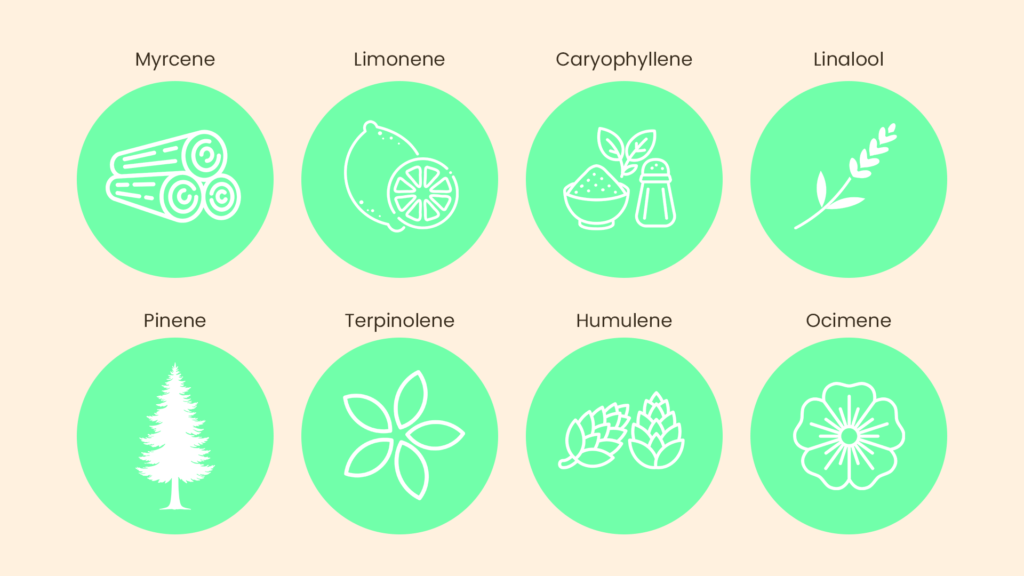
The Complete Cannabis Terpenes List: Profiles You Need to Know
Myrcene: The Most Common Cannabis Terpene
Myrcene is the most abundant terpene found in commercial cannabis cultivars, often comprising over 50% of a strain’s total terpene profile. Its aroma is earthy, musky, and slightly fruity, reminiscent of cloves or ripe mangoes.
What myrcene does: Research suggests myrcene has sedative, muscle-relaxant, and analgesic properties. It is frequently associated with the “couch-lock” effect common in high-myrcene indica-leaning strains. Myrcene may also increase cell membrane permeability, potentially allowing cannabinoids to cross the blood-brain barrier more efficiently.
- Associated with: deep relaxation, sleep support, physical tension relief
- Common strains: OG Kush, Blue Dream, Granddaddy Purple
- Found in: mangoes, hops, lemongrass, thyme
Limonene: The Mood-Lifting Terpene
Limonene is the second most commonly recognized cannabis terpene and produces a sharp citrus aroma. It is also found abundantly in lemon rinds, oranges, and other citrus fruits.
What limonene does: Studies have examined limonene’s potential as a mood elevator and anxiolytic (anti-anxiety) compound. It may increase serotonin and dopamine levels in key brain regions, which supports its reputation for uplifting effects. Limonene is also being studied for potential antifungal and antibacterial properties.
- Associated with: elevated mood, reduced stress, mental clarity
- Common strains: Wedding Cake, Do-Si-Dos, Strawberry Banana
- Found in: citrus rinds, peppermint, juniper
Caryophyllene: The Terpene That Behaves Like a Cannabinoid
Beta-caryophyllene is unique in the terpene world because it is the only terpene known to directly bind to cannabinoid receptors, specifically the CB2 receptor found throughout the immune system and peripheral tissues. This gives it a distinct pharmacological role among cannabis terpenes.
What caryophyllene does: It produces a spicy, peppery aroma (also found in black pepper and cloves). By binding to CB2 receptors, caryophyllene may have anti-inflammatory, analgesic, and neuroprotective properties without producing psychoactive effects.
- Associated with: inflammation support, stress reduction, pain management
- Common strains: GSC (Girl Scout Cookies), Chemdog, Sour Diesel
- Found in: black pepper, cloves, rosemary, copaiba
Linalool: Cannabis Terpenes for Anxiety
Linalool is perhaps best recognized as the primary terpene in lavender, and it carries a distinctly floral, slightly spicy aroma. Among cannabis terpenes, linalool stands out for its well-documented calming properties.
What linalool does: Research published in multiple studies suggests linalool modulates glutamate and GABA neurotransmission, which are the brain’s primary excitatory and inhibitory chemical messengers. This dual action may explain its sedative and anti-anxiety profile. Linalool is one of the most discussed cannabis terpenes for anxiety management.
- Associated with: anxiety reduction, sleep improvement, mood stabilization
- Common strains: Amnesia Haze, LA Confidential, Zkittlez
- Found in: lavender, birch trees, coriander
Pinene: The Focus and Memory Terpene
Alpha-pinene is the most widely occurring terpene in nature and produces the unmistakable scent of a pine forest. In cannabis, it tends to appear in smaller concentrations but can have a meaningful impact on the overall experience.
What pinene does: Pinene is a bronchodilator (opens airways), which may support respiratory function. It may also inhibit acetylcholinesterase, the enzyme that breaks down acetylcholine, a neurotransmitter linked to memory and focus. This is one reason pinene-dominant strains are associated with alertness rather than sedation.
- Associated with: mental focus, memory retention, respiratory support
- Common strains: Jack Herer, Trainwreck, Strawberry Cough
- Found in: pine needles, rosemary, basil, parsley
Terpinolene: The Multi-Dimensional Terpene
Terpinolene produces a complex aroma blending floral, herbal, and citrus notes. It is less common as a dominant terpene but is highly valued in certain cultivars.
What terpinolene does: Studies suggest terpinolene has antioxidant, antibacterial, antifungal, and sedative properties. It is also being researched for potential anti-proliferative effects. Despite its mild sedative qualities, terpinolene-dominant strains often feel more cerebral than deeply sedating.
- Associated with: mild relaxation, antioxidant support, creative headspace
- Common strains: Jack Herer, Ghost Train Haze, Dutch Treat
Cannabis Terpenes and Flavonoids: The Overlooked Partnership

Most discussions about terpenes stop short of covering flavonoids, which is a significant gap in cannabis education. Flavonoids are a class of phytonutrients also produced by the cannabis plant, and they work alongside terpenes and cannabinoids in the entourage effect.
Cannabis-specific flavonoids (called cannaflavins) include Cannaflavin A and Cannaflavin B, which have been studied for anti-inflammatory properties. Research from the University of Guelph found these compounds may be significantly more potent than standard aspirin at reducing inflammation at the cellular level.
Cannabis Terpenes and Their Flavors: What You Taste Reflects What's Inside
The flavor profiles of cannabis are directly tied to its terpene and flavonoid content. Understanding this connection helps consumers use taste as a guide to terpene content.
Flavor Profile | Likely Dominant Terpenes | Potential Effects |
Citrus / Lemon | Limonene, Terpinolene | Uplifting, energizing |
Pine / Earth | Pinene, Myrcene | Grounding, focused |
Floral / Lavender | Linalool, Ocimene | Calming, anti-anxiety |
Spicy / Pepper | Caryophyllene, Humulene | Anti-inflammatory, relaxing |
Sweet / Berry | Linalool, Myrcene, Limonene | Balanced, mood-supportive |
Tropical / Fruity | Myrcene, Ocimene, Terpinolene | Euphoric, creative |

Cannabis Terpenes and Cannabinoids: Understanding the Full Picture
Terpenes do not work in isolation. To fully understand cannabis terpenes and what they do, you must understand how they interact with cannabinoids.
THC (Tetrahydrocannabinol) binds primarily to CB1 receptors in the brain and central nervous system, producing psychoactive effects. Terpenes like myrcene may enhance THC’s sedative qualities, while limonene may counterbalance THC-induced anxiety.
CBD (Cannabidiol) has a more complex relationship with the endocannabinoid system, influencing multiple receptor systems indirectly. CBD terpenes benefits are amplified significantly when the two work together. For example, linalool combined with CBD produces measurably greater anxiolytic effects in preclinical models than either compound alone.
CBG (Cannabigerol) is gaining attention as a “mother cannabinoid” that precedes THC and CBD in biosynthesis. When paired with pinene and caryophyllene, CBG shows promising focus-enhancing properties.
The takeaway: looking at THC percentage alone is an oversimplification. The full cannabinoid and terpene profile tells a far more complete story about what to expect from any given product.
Consistency Over Intensity
Terpenes are often discussed for their potential role in nausea management. Cannabis has a long history of helping with chemotherapy-related nausea, and certain terpenes may contribute to these effects. Limonene has shown anti-nausea potential in preclinical studies, possibly through its influence on serotonin pathways linked to nausea responses.
Caryophyllene may help reduce nausea through CB2 receptor activation and anti-inflammatory effects in the digestive system. Linalool may also support nausea relief by calming the nervous system and easing stress-related nausea symptoms.
Important note: If you are managing nausea related to a medical condition or ongoing treatment, speak with a healthcare provider. Cannabis can be a complementary tool but should not replace professional medical guidance.
Cannabis Terpenes and Benefits: A Summary of Current Evidence
The body of research on cannabis terpenes and their benefits continues to grow, though most studies remain at the preclinical (animal model or cell study) level. Here is an honest assessment of where the science currently stands:
Established Benefits With Stronger Evidence
- Anti-inflammatory effects (caryophyllene, humulene, myrcene)
- Anxiolytic (anti-anxiety) effects (linalool, limonene, caryophyllene)
- Sedative and sleep-supportive effects (myrcene, linalool, terpinolene)
Emerging Benefits With Promising Preclinical Data
- Neuroprotective properties (pinene, linalool)
- Antibacterial and antifungal activity (limonene, terpinolene, pinene)
- Antioxidant properties (terpinolene, myrcene)
- Appetite regulation (humulene)
Benefits Still Under Investigation
- Direct anti-tumor activity (various terpenes in cell models)
- Respiratory support (pinene as bronchodilator in clinical settings)
- Pain management via CB2 pathways (caryophyllene)
Consumers should approach marketing claims with healthy skepticism while remaining open to the genuine therapeutic potential that ongoing research continues to substantiate.
Cannabis Terpenes in Canada: What You Should Know as a Canadian Consumer
Since the Cannabis Act came into force in October 2018, cannabis terpenes in Canada have become part of a regulated, quality-controlled supply chain. Legal cannabis in Canada is required to be tested and must meet strict standards that include potency testing and contaminant screening.
However, terpene content is not universally required on Canadian cannabis labels, though many licensed producers voluntarily include terpene profiles on product packaging or their websites. This makes retailer knowledge particularly valuable.
At Scarlet Fire Cannabis Co. in North York, our team is trained to discuss terpene profiles in detail. We can help you move beyond THC percentage as the sole metric and find products matched to your actual goals.
Cannabis Terpenes Anxiety: Choosing the Right Profile
For consumers using cannabis specifically to manage anxiety, terpene selection is critical. High-THC products without appropriate terpene profiles can actually worsen anxiety in some individuals, a phenomenon well-documented in cannabis literature.
Terpenes Most Associated With Anxiety Relief
- Linalool: The most studied for direct anti-anxiety properties
- Caryophyllene: CB2 activation without CB1-related anxiety risk
- Limonene: Mood elevation that may reduce anxiety-related tension
- Myrcene: Sedative effect that can quiet an anxious nervous system
Terpenes to Use With Caution if Anxiety-Prone
- Terpinolene and pinene in high concentrations can feel stimulating for some consumers
- High THC products without balancing terpenes (like caryophyllene or linalool) may amplify anxiety
Recommended approach: If managing anxiety, look for products with measurable linalool or caryophyllene content, moderate THC levels, and meaningful CBD content. Ask our staff at Scarlet Fire for guidance.
How to Buy Cannabis Based on Terpenes: A Practical Buying Guide
Understanding how to buy cannabis terpenes wisely, meaning how to use terpene information as a shopping tool, transforms how you approach the dispensary floor.
Step 1: Define Your Goal
Are you looking for relaxation, focus, sleep support, social uplift, or specific symptom relief? Your goal determines which terpene profile to target.
Step 2: Read the Label or Ask
Look for terpene percentages on packaging. Prioritize products where the dominant terpene aligns with your goal. If the label does not list terpenes, ask a knowledgeable budtender.
Step 3: Consider the Full Cannabinoid Profile
A high-myrcene strain with 30% THC and no CBD hits very differently than a high-myrcene strain with 18% THC and 1% CBD. Use both pieces of information together.
Step 4: Start Low, Go Slow
Terpene effects are dose-dependent. A small amount of a terpene-rich product may be more effective than a large amount of a terpene-poor one.
Step 5: Keep Notes
Track which terpene profiles produce desired results for you personally. Individual variation in terpene response is real and significant.
Find Your Perfect Terpene Profile at Scarlet Fire Cannabis Co.
Understanding cannabis terpenes transforms how you shop and how you consume. Instead of chasing the highest THC number on the shelf, you can approach cannabis with the same intention you might bring to any wellness practice: knowing what you want, why it works, and how to find it.
Scarlet Fire Cannabis Co. in North York, Toronto is built for exactly this kind of informed cannabis experience. Our team is trained in terpene science and the full spectrum of what cannabis has to offer. We carry a curated selection of products across the terpene profiles that matter most to our customers, and we take the time to help you find what actually works for you. Whether you are new to cannabis, returning after a break, or a seasoned consumer looking to dial in your experience, terpenes are the key to a more intentional approach.
Visit us at Scarlet Fire Cannabis Co. in North York, Toronto. Ask our team about current terpene-forward products in stock, get personalized guidance, and experience cannabis retail done differently.
[Shop In-Store at Scarlet Fire Cannabis Co. – North York, Toronto] | [Browse Our Current Menu] | [Contact Our Team]