
TCH Tolerance: Why T-Breaks Work So Fast - Scarlet Fire Cannabis Co. (North York / Toronto)
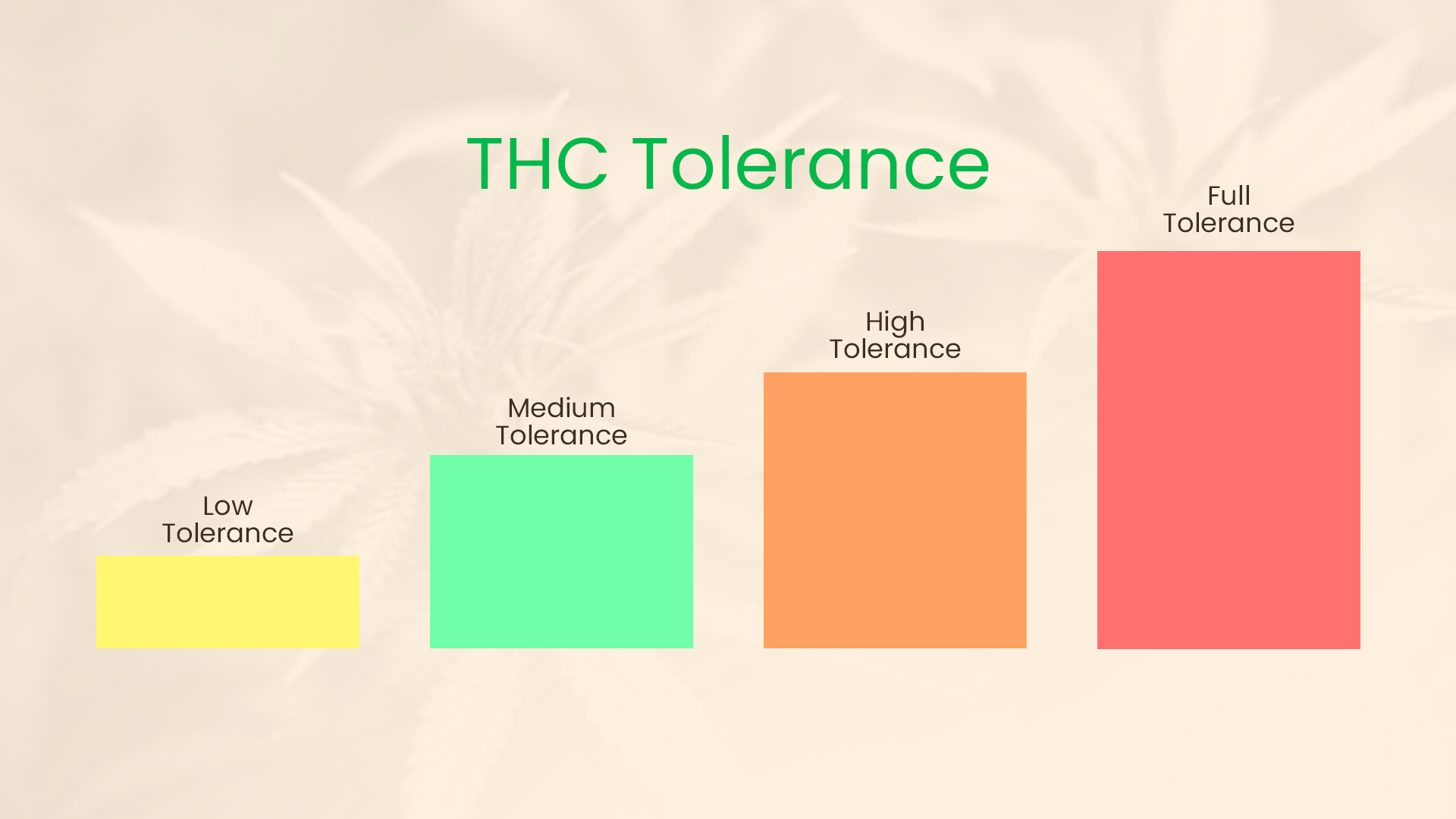
Cannabis tolerance happens when you need more THC to achieve the same effects you once felt with smaller amounts. Even if your cannabis has not changed, the experience can feel weaker and less satisfying because your brain has adapted to repeated THC exposure.
Many consumers recognize tolerance but do not fully understand the science behind it. Learning how THC affects the endocannabinoid system helps explain why tolerance develops, how tolerance breaks work, and what to expect during recovery. At Scarlet Fire Cannabis Co., questions about tolerance are common, especially among regular cannabis users looking to reset their experience. Talk to us and we can can help you find lower-dose, terpene-forward products that work better after a reset.
Why THC Tolerance Happens
THC produces its effects by interacting with the body’s endocannabinoid system (ECS), which helps regulate mood, memory, sleep, appetite, pain, and stress. The ECS contains CB1 receptors throughout the brain, normally activated by natural compounds called endocannabinoids, including anandamide and 2-AG.
THC closely resembles anandamide, allowing it to bind to CB1 receptors and create psychoactive effects. Unlike natural endocannabinoids, THC is stronger and stays in the body longer, causing prolonged receptor stimulation. With repeated exposure, the brain adapts to this overstimulation, leading to cannabis tolerance.
What THC Does to Your Natural Endocannabinoid System

Chronic THC use can also disrupt the body’s natural endocannabinoid system, particularly anandamide (AEA) and 2-AG. These compounds help regulate mood, sleep, appetite, and overall emotional balance.
When THC repeatedly overstimulates CB1 receptors, the body’s normal signaling system can become suppressed. Research suggests long-term cannabis use may alter natural endocannabinoid production, which may contribute to the “blunted” feeling some heavy users experience over time.
The Two-Step Mechanism of THC Tolerance
Tolerance develops through two distinct but related neurological processes. Both have been documented in animal models and confirmed in human brain imaging studies.
Step 1: Desensitization
The first stage of THC tolerance is called desensitization. CB1 receptors remain present in the brain, but they respond less effectively to THC, reducing the intensity of its effects.
This happens because repeated THC exposure triggers proteins that dampen receptor signaling and “turn down” the brain’s response. Research suggests this process can begin reversing within three to seven days of abstinence, which explains why short tolerance breaks may improve sensitivity for some users.
Step 2: Downregulation
The second and more significant stage of THC tolerance is called downregulation. In this process, the brain reduces the number of available CB1 receptors by pulling them away from neuron surfaces, leaving fewer sites for THC to bind to and weakening its effects.
Research published in Molecular Psychiatry found that chronic cannabis users had lower CB1 receptor density than non-users, particularly in brain regions linked to memory and decision-making. Studies also showed these changes were largely reversible after several weeks of abstinence, supporting the science behind tolerance breaks.
Why THC Is Fat-Soluble and Why That Matters for Your Break
THC is fat-soluble, meaning it is stored in body fat and released slowly over time. Unlike alcohol, which clears quickly, THC can remain in the body for days or weeks, especially in regular users. This slow release plays a major role in cannabis tolerance and the timeline of a tolerance break.
Research suggests occasional users may clear THC within several days, while heavy daily users can retain THC metabolites for 30 days or longer. Even so, CB1 receptor recovery begins within about 48 hours of stopping cannabis, as the brain starts adjusting once new THC exposure ends.
The T-Break Timeline: What Actually Happens, Week by Week
Neuroscience now supports a reasonably clear picture of receptor recovery across a typical tolerance break.
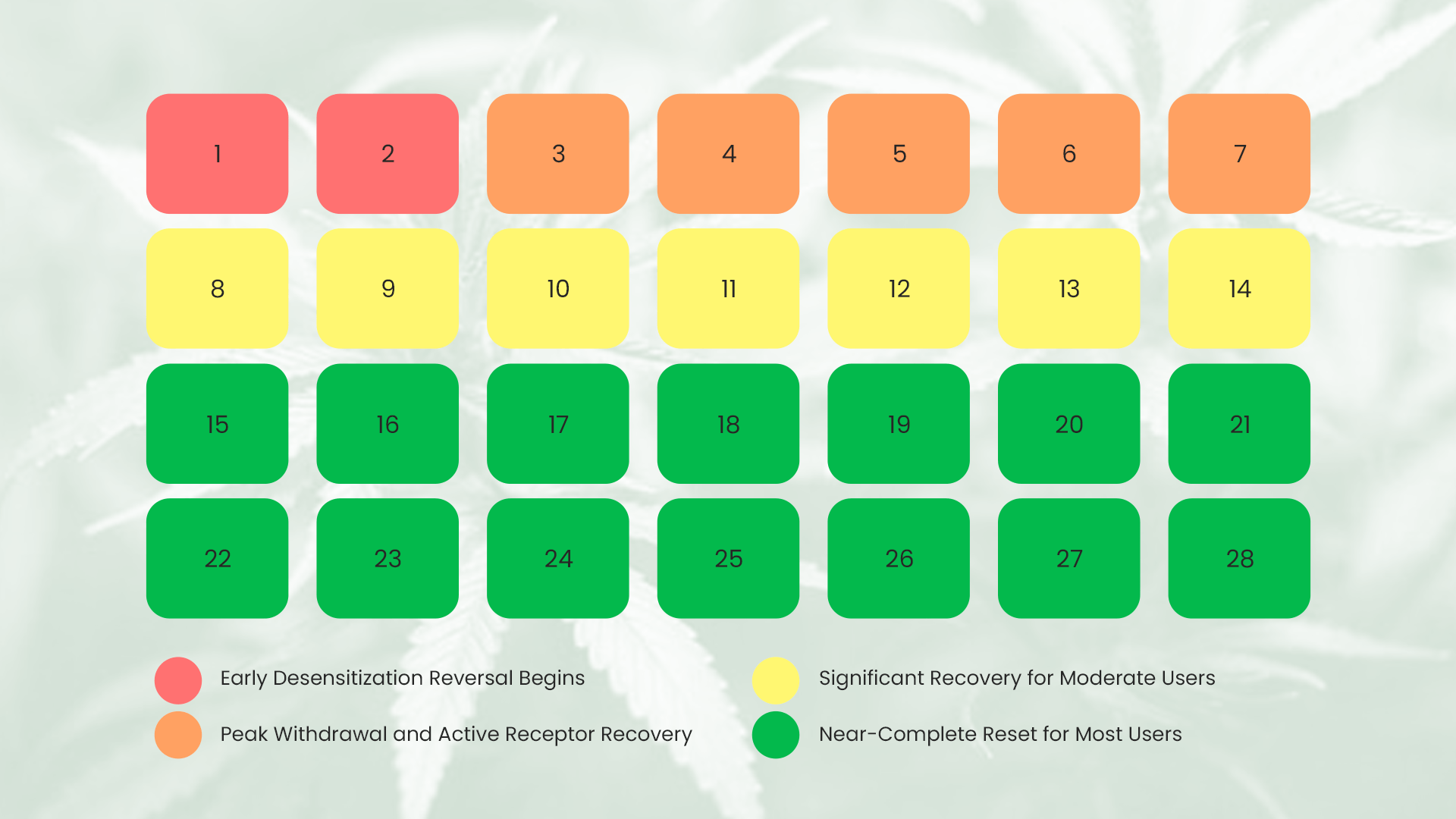
Days 1–2: Early Desensitization Reversal Begins
Within 48 hours of stopping cannabis, measurable increases in CB1 receptor availability are already detectable. In the Hirvonen et al. (2012) PET imaging study, even early abstinence showed a statistically significant beginning of receptor recovery. For light to moderate users, this initial window may be sufficient to produce a noticeable improvement in sensitivity. For daily heavy users, this period marks the beginning of recovery but represents only a fraction of the full reset.
This is also the window when withdrawal symptoms, if any, first emerge. According to a clinical review published in Drug and Alcohol Review (PMC9110555), symptoms typically begin within 24–48 hours of cessation. The most common are irritability, anxiety, sleep disruption, and reduced appetite.
Days 3–7: Peak Withdrawal and Active Receptor Recovery
This is the most challenging period for most users. The PMC-indexed DSM-5 withdrawal symptom study (PMC4015312) documents that irritability, anxiety, sleep difficulties, and appetite changes peak in the first week of abstinence, with some symptoms, particularly disturbed sleep and vivid dreams, peaking slightly later around days five to ten.
From a receptor standpoint, desensitization is actively reversing, and downregulation recovery is underway. Light to moderate users will often notice meaningfully improved cannabis sensitivity if they resume use after this point, though a full reset for heavy users requires significantly more time.
Days 7–14: Significant Recovery for Moderate Users
For people who use cannabis several times per week, a one- to two-week tolerance break can produce a noticeable reset. Many users report stronger effects and a return closer to their previous baseline after seven to fourteen days without cannabis.
For heavy daily users, two weeks may improve tolerance but not fully restore CB1 receptor function. Brain regions linked to memory, decision-making, and cannabis reward responses tend to recover more slowly than others.
Days 14–28: Near-Complete Reset for Most Users
Research from the Hirvonen et al. PET imaging study found that CB1 receptor levels in chronic cannabis users largely returned to normal after about four weeks of monitored abstinence. The study is considered one of the key scientific findings supporting the commonly discussed two- to four-week tolerance break timeline.
Clinical guidance from Jordan Tishler also suggests that two- to four-week breaks may be more effective than shorter breaks, particularly for long-term heavy users who consume cannabis multiple times daily.
How Usage Patterns Affect Your Reset Timeline
Not all T-breaks are the same because not all tolerance is the same. The depth of receptor downregulation depends on how frequently you consume, how much you consume, how potent the products are, and how long you have been using at that level.
Usage Pattern | Approximate Break Needed | Expected Outcome |
Occasional (few times per week) | 3–7 days | Significant sensitivity improvement |
Regular (once daily) | 1–2 weeks | Meaningful reset for most users |
Heavy (multiple times daily) | 2–4 weeks | Near-complete receptor normalization |
Long-term heavy (years daily) | 4–6 weeks | Full reset; hippocampus may be slower |
What to Expect During a T-Break: Managing the Uncomfortable Part
Cannabis withdrawal during a tolerance break is a real and recognized phenomenon, particularly for regular heavy users who stop abruptly. While it is not considered medically dangerous in the same way as alcohol or benzodiazepine withdrawal, it can still be uncomfortable and disruptive for one to two weeks.
The most common symptoms, per the clinical management of cannabis withdrawal (PMC9110555), include irritability, anxiety, restlessness, sleep difficulties, vivid dreams, reduced appetite, low mood, headaches, sweating, chills, and stomach discomfort. Symptoms usually begin within 24 to 48 hours after stopping cannabis, peak between days two and six, and improve within one to two weeks for most users. Sleep disruption may last longer in some heavy long-term consumers.
Practical Strategies for the First Two Weeks
- Exercise daily. Physical activity can increase natural anandamide production and support mood during a tolerance break. Even a twenty-minute walk may help reduce stress and improve emotional regulation.
- Maintain good sleep habits. Sleep disruption is one of the main reasons people end a T-break early. A consistent bedtime, limited screen exposure before bed, a cool sleeping environment, and low-dose melatonin may help during the first week.
- Eat on a schedule. THC can increase appetite, so reduced hunger is common during a break. Eating regular meals helps maintain energy and mood stability.
- Avoid replacing cannabis with alcohol. Alcohol may worsen sleep quality, increase anxiety, and elevate cortisol levels during recovery.
- CBD does not reset THC tolerance. CBD interacts differently with the endocannabinoid system and does not strongly activate CB1 receptors. Using CBD during a T-break should not interfere with receptor recovery, but it is not proven to speed up the reset process either.
How to Return to Cannabis After a T-Break
Coming back to cannabis after a meaningful break is an exercise in starting lower than you think you need to. After two to four weeks of abstinence, your CB1 receptors have been upregulated toward baseline. The same dose you were using before the break will feel stronger — potentially much stronger, especially for the first session or two.
A few principles that make the return smarter:
- Start with a significantly lower dose than your pre-break baseline. What felt like a light session before your break may now feel like much more. Give yourself room.
- Choose flower over concentrates for your first sessions back. Concentrates deliver THC at significantly higher concentrations than dried flower. After a full reset, starting with flower gives you more control over dose and a gentler re-entry.
- Pay attention to terpene profiles. Not all cannabis products are equivalent in their experiential effect. Products high in linalool and caryophyllene tend to produce calmer, more manageable experiences, which are useful when you are calibrating a reset system. Ask the team at Scarlet Fire about current terpene-forward products in stock.
- Consider lower-THC, higher-terpene products long term. One of the contributing factors to rapid tolerance build-up is the consistent use of very high-THC products. Rotating between products, incorporating lower-THC options, and choosing fuller-spectrum products that rely on terpenes and minor cannabinoids rather than raw THC percentage can slow the rate at which tolerance re-develops after a break.
Do You Need a Full Break, or Can You Reduce Instead of Stopping?
Stopping cannabis completely is the fastest way to reset THC tolerance, but it may not be practical for medical users managing pain, anxiety, sleep issues, or other conditions.
Gradually reducing THC intake over time can still improve CB1 receptor sensitivity, although the process is slower than full abstinence.
The main factor is reducing THC exposure so receptors have time to recover. Consumers using cannabis medically may benefit from discussing tolerance management with a healthcare provider, especially since Canada’s regulated market offers products with different THC strengths that can support a gradual tapering approach.
Understanding Tolerance Reset and Returning to Cannabis Thoughtfully
Research shows that THC tolerance is a reversible response caused by changes in CB1 receptor activity. Depending on usage habits, sensitivity may begin improving within days and continue recovering over several weeks.
A tolerance break gives the endocannabinoid system time to recover and may help restore the effects consumers are looking for. At Scarlet Fire Cannabis Co., consumers can explore lower-THC products, terpene-focused options, and more balanced consumption approaches after a break.
Visit us in North York, Toronto. Let’s make sure the cannabis you choose after your break is worth the effort you put in.
[Shop In-Store at Scarlet Fire Cannabis Co. – North York, Toronto] | [Browse Our Current Menu] | [Contact Our Team]