
CBD Isolate, Crystalline, or Nano Powder: Which Is Better? - Scarlet Fire (North York / Toronto
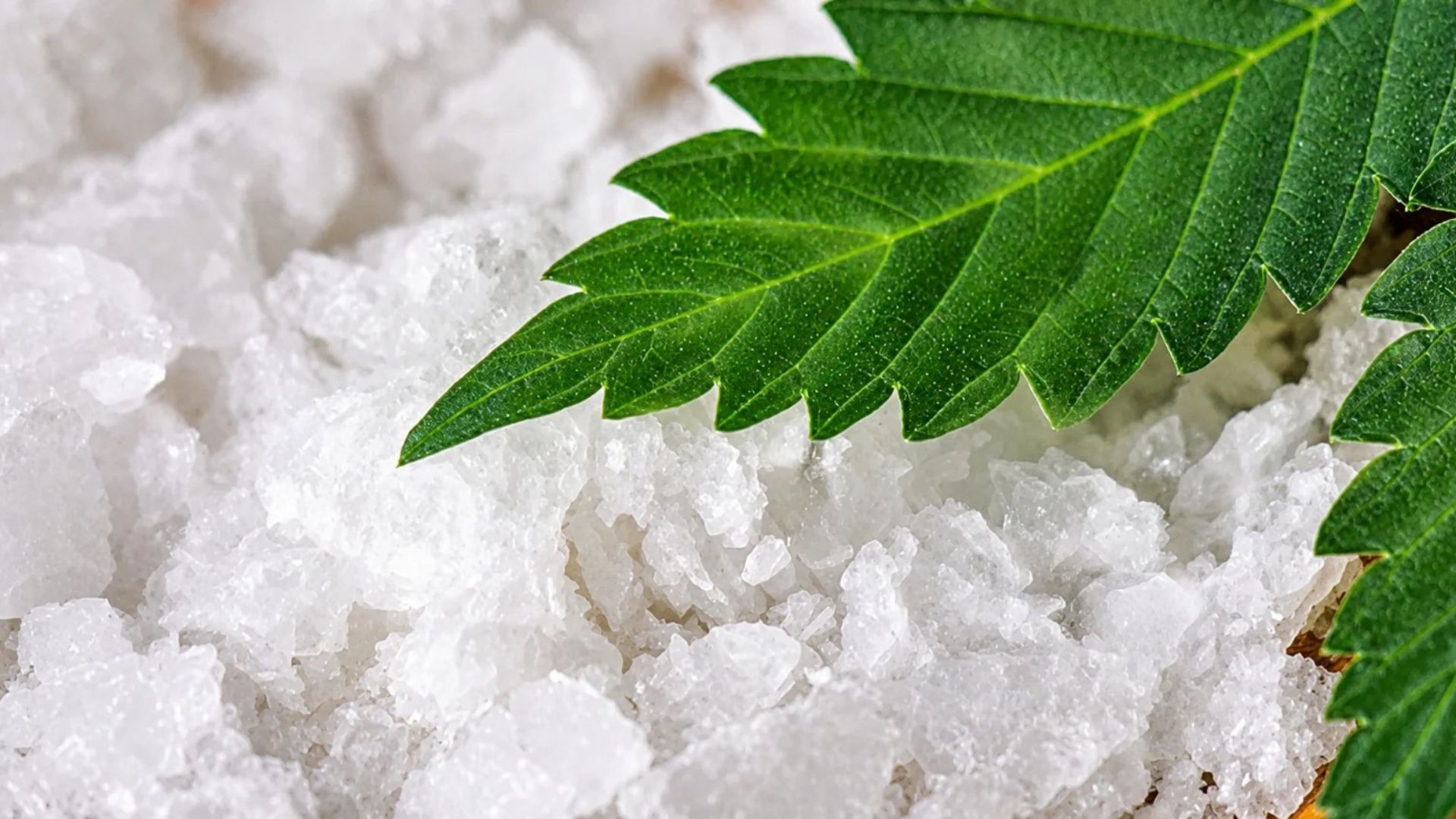
Walk into any modern cannabis discussion and the terminology surrounding CBD can quickly become confusing. Terms such as isolate, crystalline, and nano powder are often used interchangeably in marketing, even though they refer to products that behave very differently once they enter the body. For consumers seeking to make informed decisions, that lack of clarity is more than a minor inconvenience. It can determine whether a product is effectively absorbed and utilized or simply passes through the system with little benefit.
Clarifying the differences among these products begins with understanding what they actually are rather than relying on marketing claims. At Scarlet Fire Cannabis Co in North York, our team regularly helps customers look beyond the label and make sense of the options available. The sections below examine the characteristics of these three forms of cannabidiol, explore the science behind how the body absorbs them, and provide a practical basis for choosing the option that best aligns with individual goals, budgets, and lifestyles.
Not sure which CBD form fits your routine? Browse our curated CBD menu or call our North York shop at 416-663-5000 to talk it through with our team.
Understanding CBD Isolate
CBD isolate is the purest form of cannabidiol available on the market. It is produced by taking a raw hemp extract and refining it repeatedly until every other compound has been stripped away. Unlike full-spectrum or broad-spectrum CBD products, it contains no other cannabinoids, terpenes, flavonoids, or plant materials, just pure, crystalline CBD. The result is a substance that is typically 99 percent or higher in purity.
This extreme refinement is precisely what makes isolate appealing to a particular kind of consumer. Because everything except CBD has been removed, the product is completely free of THC, the compound responsible for cannabis intoxication. If you are still weighing the two compounds, our simple guide to choosing between CBD and THC breaks down how each one feels and what each is suited for. This makes isolate an ideal option for people who are sensitive to THC, subject to workplace drug testing, or simply want a clean, single-compound product they can dose with precision. There is no guesswork about what else might be in the jar.
That purity comes with a meaningful trade-off, however. By removing all the other plant compounds, the isolate also forfeits what researchers call the entourage effect. This is the theory that cannabinoids and terpenes work better together than any single molecule does alone. Isolate users accept a more limited experience in exchange for predictability and compliance, which for many people is a worthwhile exchange.
Examining CBD Crystalline
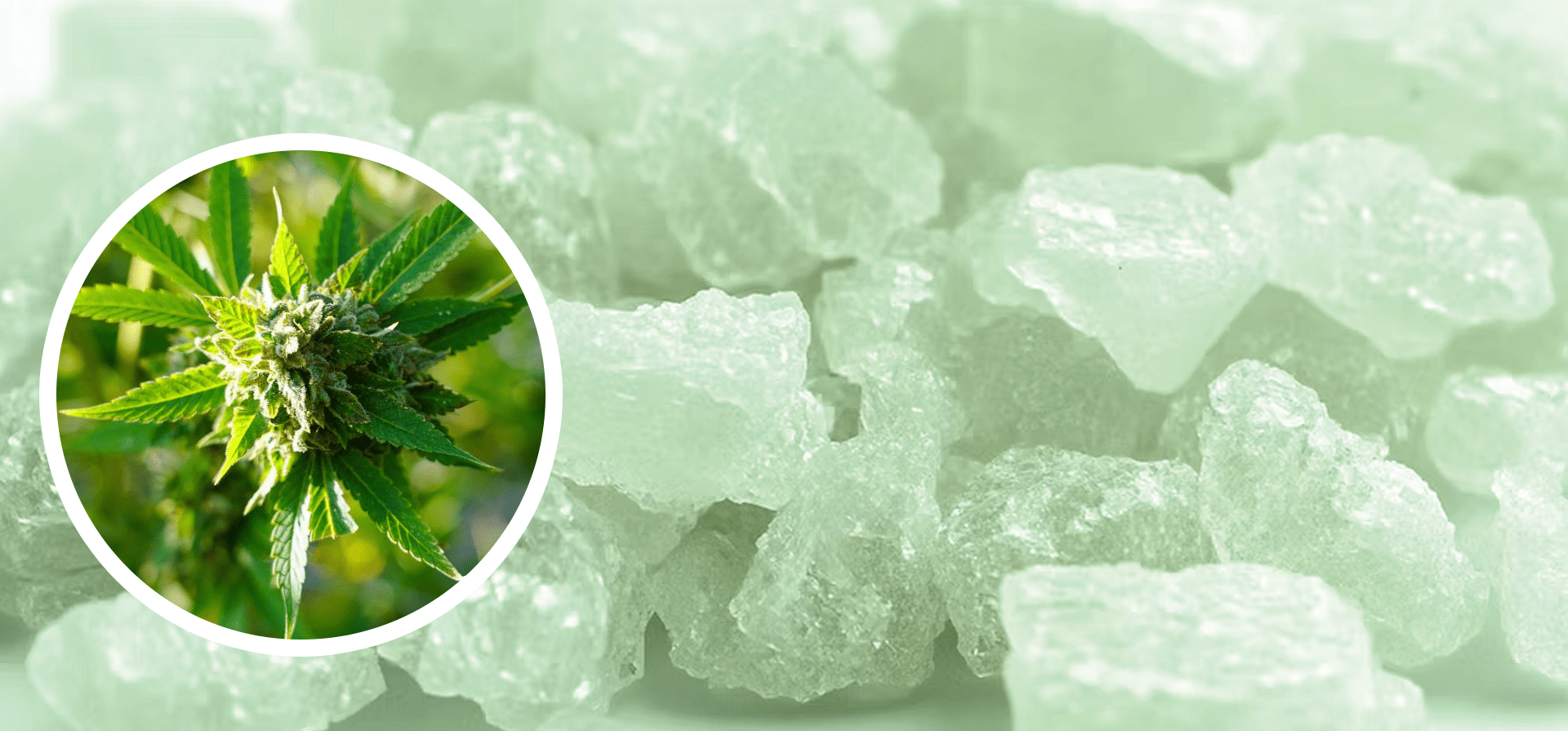
One of the most common sources of confusion in the CBD market is the perceived difference between isolate and crystalline. Many consumers assume these are distinct products with different effects, when they are actually two physical forms of the same chemical compound. CBD isolate is sometimes described as CBD crystals, although it is more commonly sold as a fine white powder. From a chemical standpoint, both are identical.
The term cannabidiol crystalline refers to the way cannabidiol naturally behaves during the final stages of purification. As CBD becomes increasingly refined, it tends to form microscopic crystal structures. If manufacturers preserve the material in this state, the result is a coarse, translucent substance with an appearance similar to small crystals. When those crystals are ground into a powder, they become the familiar form of CBD isolate. In either case, the product consists of approximately 99 percent pure cannabidiol.
The distinction between the two forms is largely practical rather than pharmacological. Powdered isolate is easier to measure, dissolve, and incorporate into various formulations, making it the preferred choice for most manufacturers. Crystalline CBD, by contrast, appeals to enthusiasts who appreciate working with a less processed concentrate. The difference lies primarily in texture and handling rather than chemical composition.
Recognizing this distinction can help consumers avoid a common misconception. Paying a premium for crystalline CBD under the assumption that it is more potent or more effective than powdered isolate reflects a misunderstanding of the product itself. Both forms contain the same cannabidiol and are absorbed by the body in the same manner. As a result, the choice between crystalline CBD and powdered isolate depends largely on personal preference and intended use rather than any difference in strength or effectiveness.
The Role of Nanotechnology in Modern CBD Formulations
Nano powder represents a more significant innovation because it differs from isolate and crystalline CBD in ways that extend beyond appearance. Whereas isolate and crystalline are simply two physical forms of pure cannabidiol, nano powder is specifically engineered to address one of CBD’s longstanding challenges: limited absorption by the human body. Rather than serving as a marketing distinction, nanotechnology is intended to alter how the compound is delivered and utilized.
The underlying challenge is rooted in chemistry. CBD is highly lipophilic and exhibits very low water solubility, making dissolution one of the primary factors limiting its absorption. Because the human body consists largely of water while CBD behaves like an oil, the two do not readily mix. Much of the consumed CBD remains trapped within oily droplets until digestion occurs, and a substantial portion is subsequently broken down during first-pass metabolism in the intestines and liver. As a result, only a relatively small amount ultimately reaches systemic circulation.
Nanotechnology seeks to overcome this limitation by reducing CBD into extremely small droplets through processes such as nanoemulsification. At sufficiently small sizes, these particles behave similarly to a dissolved substance, which explains why nano formulations are often marketed as water-soluble. In a strict chemical sense, however, the CBD itself remains oil-based. The manufacturing process simply disperses the particles finely enough to allow them to mix more effectively with water and pass through the body’s absorption barriers with greater efficiency.
From a practical standpoint, nano powder offers a product that blends readily into beverages, foods, and other water-based formulations. This characteristic makes it particularly appealing to individuals who dislike the oily texture associated with traditional tinctures or who want to incorporate CBD into drinks without experiencing separation. Although the convenience of the format is noteworthy, the more important consideration lies in how these formulations may influence absorption after consumption.
Understanding Bioavailability and How CBD Is Delivered
Bioavailability is the single most important concept in this entire comparison, and it is the factor most often left out of marketing copy. The term refers to the percentage of a substance that actually reaches your bloodstream and becomes available for your body to use. A product can be 99 percent pure and still deliver very little benefit if your body cannot absorb it. Purity and bioavailability are two completely different measurements.
For standard, oil-based CBD taken orally, the numbers are humbling. The World Health Organization has estimated that the bioavailability of CBD from oral, oil-based formulations is only about 6 percent, which means the vast majority of ingested CBD passes through the body without being absorbed. This benchmark applies directly to traditional isolate and crystalline powder when they are simply swallowed. You may be paying for a gram of pure cannabidiol while your body uses only a sliver of it.
Nano formulations are designed specifically to raise that figure, and the research is genuinely encouraging. In one peer-reviewed study, an oral nanoemulsion of CBD reached a bioavailability of 18.6 percent at six hours and 25.4 percent at twenty-four hours, roughly three to four times higher than the standard oral benchmark. Other formulation studies report comparable gains, with one nanostructured carrier achieving roughly 27 percent oral bioavailability. The pattern across the literature is consistent: smaller particles absorb better.
It is worth keeping these findings in proportion. Many of the strongest results come from animal studies or from specific proprietary technologies, and individual products vary widely in quality. Nano technology is a broad term, and there are many different ways to manufacture nano CBD, with varying effects. A product labeled nano is not automatically superior. The label tells you the intent of the manufacturing, not the verified performance of that specific batch. This is exactly why lab testing matters for every cannabis product you consume, and why buying from a knowledgeable, curated retailer matters.
A Direct Comparison

To make the differences concrete, the table below summarizes how the three forms stack up across the factors that matter most to a thoughtful buyer. Keep in mind that crystalline and powdered isolates share a chemical identity, so their absorption behavior is the same when consumed the same way.
Factors that Matter for Buyers
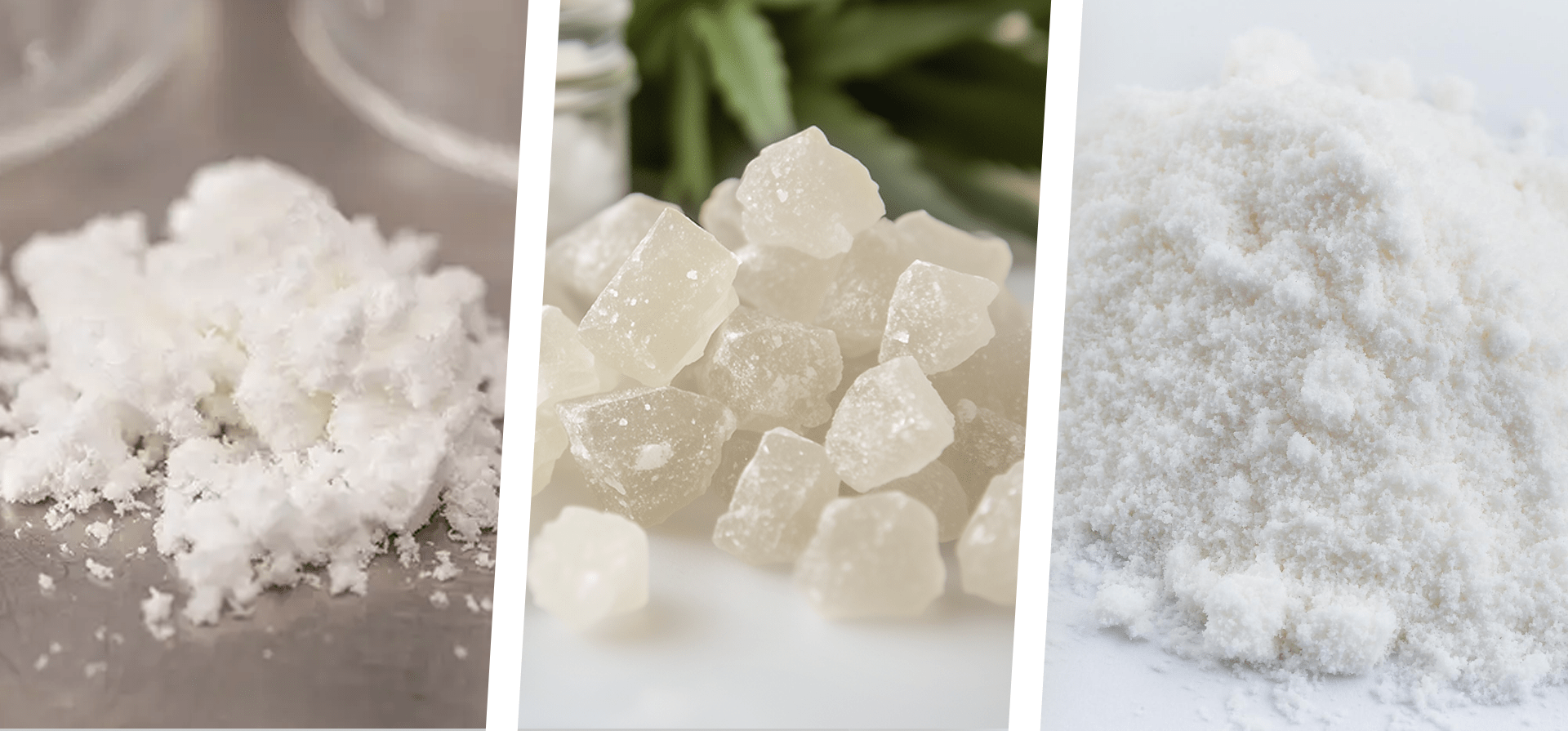
Different CBD formats can be compared across a set of practical, measurable factors that influence how they perform in real-world use. These include purity, physical form, solubility, absorption efficiency, and intended application. The table below outlines how isolate, crystalline, and nano powder differ across these key criteria, helping clarify how each one is designed for a distinct type of user and use case.
| Factor | CBD Isolate (Powder) | Crystalline | Nano Powder |
| Purity | 99 percent or higher | 99 percent or higher | High, plus added emulsifiers |
| THC content | None | None | Typically none |
| Physical form | Fine white powder | Shiny crystal chunks | Water-dispersible powder |
| Mixes into water | Poorly | Poorly | Easily |
| Typical oral bioavailability | About 6 percent | About 6 percent | Roughly 18 to 27 percent |
| Best for | Precise dosing, DIY, capsules | Connoisseurs, raw concentrate fans | Beverages, faster onset, efficiency |
| Entourage effect | None | None | None |
The takeaway from this comparison is not that one form is universally superior. It is that each form optimizes for a different priority. Isolate and crystalline optimize for purity and dosing control. Nano powder optimizes for absorption and convenience. Your ideal choice depends entirely on which of those priorities matters most to you.
Want to see real options on the shelf today? View the live Scarlet Fire menu and compare CBD products side by side.
Dosing and Consistency
Beyond how well it absorbs, one of the biggest advantages of CBD isolate and, to a similar extent, crystalline is how easy they are to dose accurately. Because these products are essentially pure cannabidiol, there is nothing extra to account for when measuring intake. This level of simplicity is harder to find in full-spectrum or broad-spectrum products, where multiple cannabinoids and plant compounds are blended together. For users who like to track their intake closely, that predictability is important.
This is why isolate and crystalline tend to suit people who are making their own products or following a structured routine. With a basic kitchen scale and a clear dosing plan, it is straightforward to calculate exactly how many milligrams are being used each time. If you are interested in what these simplified forms leave out, our breakdown of the hidden potential of minor cannabinoids offers a deeper look.
Nano powders can still offer a high degree of consistency, but they come with a different formulation structure. Because they often include emulsifiers or carrier ingredients to improve water dispersibility, the powder is not pure CBD by weight. This makes it more important to review the certificate of analysis so you can understand exactly what is included in the product and how much active CBD you are actually getting per serving.
A Note on Buying Legally and Safely in Ontario
No matter where you land on the isolate versus nano discussion, the source of your CBD matters just as much as the form you choose. In Ontario, cannabis products can only be sold through provincially authorized retailers, including licensed private stores and the government-run online store, and the legal age to purchase is 19. Sticking to these legal channels is the only reliable way to ensure that what is on the label actually matches what is inside the package.
This is especially important with CBD products. Claims about purity and bioavailability are not something most consumers can verify just by looking at a product, so the credibility of the retailer becomes your main layer of protection. A reputable shop will source from regulated producers, provide access to a certificate of analysis when needed, and have staff who can clearly explain the difference between true nano formulations and products that use the term more loosely for marketing purposes. You can learn more about who we are and how we curate before you ever set foot in the store.
Building Your CBD Routine With Scarlet Fire Cannabis Co.
Choosing between isolate, crystalline, and nano powder really comes down to what you care about most in your CBD experience. If your priority is purity, control, and exact dosing, isolate and crystalline keep things simple and predictable. They are THC-free, easy to measure, and give you a straightforward way to manage intake. If your focus is absorption and convenience, nano powder takes a different approach by using formulation technology to help the body take in CBD more efficiently, which can make it a better fit for drinks and faster-acting use.
If you do not want to figure all of that out on your own, there is support available. Scarlet Fire Cannabis Co at 3852 Bathurst Street in North York is known for a carefully selected product range and staff who actually understand the science behind what they are selling. The team can walk you through certificates of analysis, explain how each format fits different routines, and help you avoid paying extra for features that do not match your goals. Visit our North York shop, call 416-663-5000, or browse our menu online to find the CBD format that genuinely works for you.