
Indica, Sativa, and Hybrid: The Real Story Behind the Strains at Scarlet Fire Cannabis
October 24, 2025
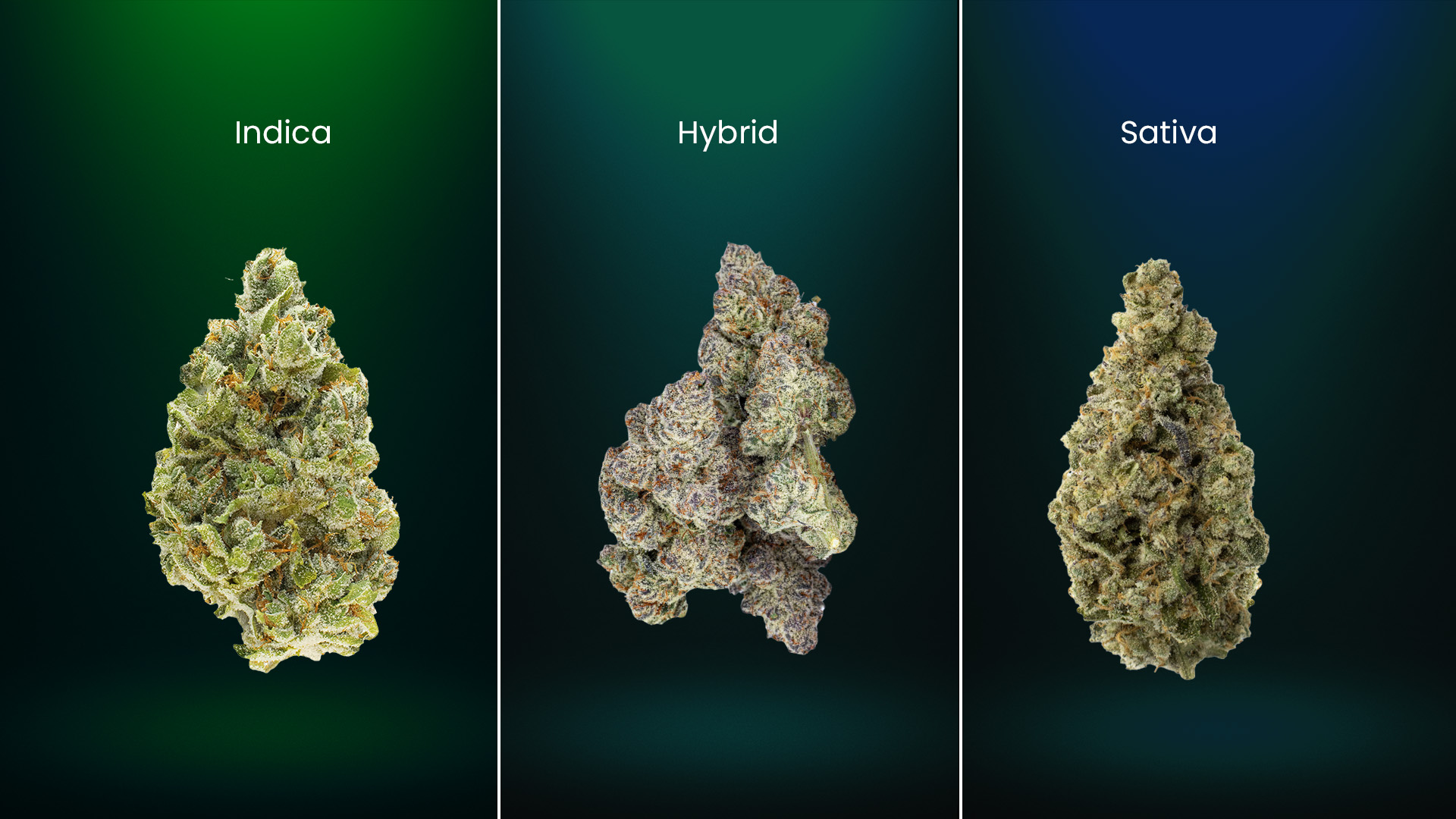
Walk into Scarlet Fire Cannabis on Bathurst Street in North York, and you’ll feel it right away, that buzz of conversation that’s equal parts curiosity and reverence. People don’t just come here to buy weed. They come to understand it. Every jar, every rosin gummy, every glimmering nug on the shelf has a story, and those stories start with three words that have defined cannabis culture for decades: Indica, Sativa, and Hybrid.
But here’s the truth: those words don’t mean what most people think they do.
The idea that Indica makes you sleepy and Sativa gives you energy is the kind of folklore that once made sense when cannabis was less understood. Now, science and experience are rewriting the rules. As the industry evolves, we’re learning that what matters isn’t the name on the label, but the chemistry inside the plant: the cannabinoids, terpenes, and the balance of compounds that interact with your brain and body in complex ways.
Scarlet Fire’s budtenders live for these nuances. They spend hours curating cannabis menus for the shop that go beyond surface-level buzzwords. They’re here to help you discover not just what you smoke, but why it feels the way it does.
A Tale of Two Plants: Where Indica and Sativa Began
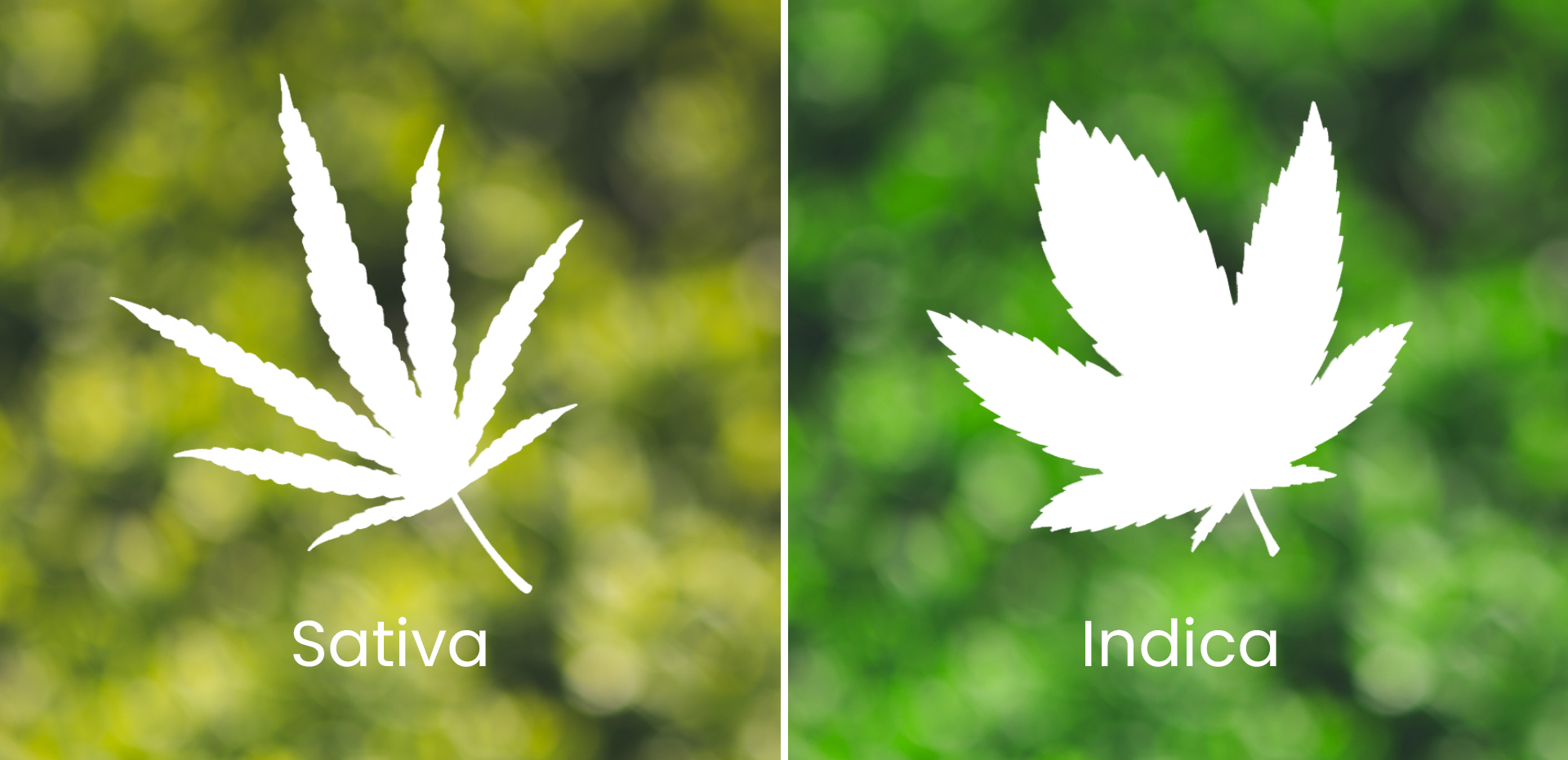
To really get it, we’ve got to go back, way back to the 18th century. Botanists like Carl Linnaeus and Jean-Baptiste Lamarck were the first to classify cannabis into species. Linnaeus named Cannabis sativa, describing tall, fibrous European plants grown for rope and textiles. A few decades later, Lamarck introduced Cannabis indica, shorter and bushier plants from India and Southeast Asia that produced strong psychoactive effects.
These differences weren’t imagined. C. sativa thrived in long, sunny climates- tall and elegant, with narrow leaves and high THC relative to CBD. C. indica, meanwhile, evolved in harsh mountain regions, forming dense buds and a chemical profile heavier in CBD, giving a more grounded, body-based effect. It made sense that these plants would act differently. But what happened next, centuries of crossbreeding and hybridization, blurred every clean line that Linnaeus and Lamarck tried to draw.
Today, pure Indica or Sativa is more myth than reality. Every modern cultivar on Scarlet Fire’s menu carries DNA from both worlds, shaped by generations of growers who bred for potency, flavor, and specific effects.
Sativa: Born from the Sun
If cannabis had a morning, it would be Sativa: the plant that wakes the world up. It’s the spark that catches with the first inhale, the bright hum that turns thoughts into movement and stillness into momentum. Sativa is where energy meets intention.
Cannabis Sativa originated in the equatorial regions of the world like Africa, Central America, Southeast Asia, and parts of South America, where the sun reigns and the days stretch long. Those endless rays shaped everything about the plant’s design. Sativas grew tall, slim, and expressive, built to soak in light and channel it into long, graceful branches lined with narrow leaves. These plants weren’t made to hunker down or hide from harsh weather; they were built to stretch, to thrive, to breathe with the day.
Because of that environment, Sativas developed their own chemistry, one that mirrors their surroundings. They tend to carry higher levels of THC and lower amounts of CBD, resulting in effects that are more cerebral than physical, more stimulating than sedating. It’s the type of cannabis that doesn’t just relax you; it wakes something up inside you.
A good Sativa hits like a jolt of conversation or the rush before a song’s first drop. It can make colors feel sharper, ideas come faster, and your sense of time stretch just a little. For many, that means enhanced creativity, focus, and mood elevation. That’s why it’s often the go-to choice for daytime use, when you’ve got things to do, people to see, or art to make.
What makes Sativa truly special, though, are the terpenes that run through it, the aromatic compounds that define its personality. Most Sativa-dominant cultivars lean into citrus, fruit, or spice. You can often smell the presence of Limonene, a terpene known for its uplifting, stress-relieving properties; Pinene, which clears the head and boosts alertness; or Terpinolene, with its complex floral and herbal scent that keeps things light and mentally refreshing.
Those terpenes don’t just set the mood, they shape the experience. They interact with cannabinoids in what scientists call the entourage effect, where chemistry works in harmony to create a unique blend of stimulation and clarity. That’s why not all Sativas feel the same. One might make you feel laser-focused, another might loosen your thoughts until you’re laughing at something you hadn’t noticed in years.
At Scarlet Fire Cannabis, we love Sativas for their momentum. They’re the cultivars that get people talking, creating, exploring. They’re perfect for anyone who treats life as an adventure, people who chase experience, not routine. Whether you’re heading to a concert, writing, or just trying to make a regular Tuesday feel less regular, a well-balanced Sativa can turn the mundane into something memorable.
Our budtenders know this plant’s rhythm inside and out. They’ll show you which cultivars offer that electric head buzz and which ones deliver clarity without the jitters. The goal isn’t just to get high, but to feel aligned, to let the plant amplify what’s already there.
Sativa is cannabis in motion: awake, expressive, and endlessly curious. It’s the part of the plant that reminds us why cannabis isn’t just about escape. It’s about engagement. It’s about seeing the world a little brighter, hearing music a little deeper, and realizing that sometimes, the best highs are the ones that make you more yourself.
Indica: The Tough Little Plant That Could
If Sativas are the skywalkers of the cannabis world, Indicas are the grounded ones- the roots that remind you to slow down, breathe, and feel the weight of the world settle in the best possible way.
Cannabis Indica traces its lineage back to the Hindu Kush mountains, an unforgiving stretch of terrain that cuts across Afghanistan, Pakistan, and parts of India. Imagine a landscape where the days are scorching, the nights are cold, and water is a luxury. That’s where Indica learned to survive. These plants adapted by growing short, sturdy, and bushy, with broad leaves and thick resin coats that protect them from the elements. They’re nature’s definition of resilience, built to thrive where life isn’t easy.
It’s that very toughness that gives Indica its distinct charm. While Sativas reach for the sun, Indicas hold their ground. The dense flowers these plants produce are rich in cannabinoids and terpenes, the good stuff that helps ease pain, melt stress, and quiet a restless mind.
The Indica experience is all about the body. It’s warmth in your limbs, a gentle heaviness behind the eyes, a deep breath that feels like it’s been waiting to happen all week. It’s the strain that takes the edge off anxiety, lulls you into sleep, and helps you reconnect with stillness after a long, chaotic day.
This is why many people reach for Indicas when they’re managing insomnia, chronic pain, or anxiety. The sedative effects often come from higher concentrations of Myrcene, a terpene that deepens relaxation and eases muscle tension. Combined with the right cannabinoid balance, usually a higher ratio of CBD to THC than its Sativa relatives, Indica cultivars create that familiar, cozy calm that settles deep into your system.
Of course, Indica’s reputation for making you “melt into the couch” has given it a few clichés over the years, but at Scarlet Fire Cannabis, we know it’s more than that. It’s not about getting knocked out, it’s about letting go. It’s about easing into yourself, finding comfort in the quiet, and realizing how good it feels to finally slow down.
We carry Indica-dominant cultivars that do just that, craft-grown, small-batch selections that deliver real nuance rather than blunt force. Some offer a dreamy, slow-building relaxation; others bring pain relief without sedation. Whether you’re managing stress, inflammation, or sleepless nights, our budtenders can guide you toward the perfect Indica for your rhythm, not just the label.
And here’s the thing most people miss: that earthy, skunky aroma you catch when you open a jar of Indica isn’t just smell, it’s science. The same terpenes that helped the plant survive harsh mountain air now help you unwind. Myrcene, Caryophyllene, and Linalool don’t just define Indica’s scent, they’re the chemical keys that unlock its signature calm.
The Science Moves On: From “Strain” to “Chemovar”
In the world of true cannabis knowledge, language matters. The word strain actually belongs to microbiology, used to classify bacteria and viruses. Cannabis, on the other hand, deserves the same level of botanical respect we give to fine wine grapes or heirloom coffee. That’s where the term chemovar comes in, short for chemical variety.
Chemovars redefine how we understand cannabis. Instead of lumping everything into vague “Indica” or “Sativa” buckets based on appearance, chemovars focus on the plant’s chemistry, the unique fingerprint of cannabinoids, terpenes, and flavonoids that shape how it smells, tastes, and feels. It’s the difference between guessing and knowing.
Where a “strain” might tell you what a plant looks like, a chemovar tells you what it does. It’s about how the plant interacts with your body and mind, not just how it looks under a grow light.
There are three broad types of chemovars recognized in modern cannabis science:
Type I: High THC
These are the heavy hitters. Type I chemovars are rich in tetrahydrocannabinol (THC), the primary psychoactive compound that produces euphoria, sensory enhancement, and that classic “high.” They’re the ones that sharpen music, deepen flavors, and make time stretch just a little. At Scarlet Fire, these are the cultivars that invite you to feel everything, perfect for those who want intensity, creativity, and edge.
Type II: Balanced THC and CBD
This is the middle path, the harmony between head and body. Type II chemovars balance THC and cannabidiol (CBD), creating an experience that’s both clear and comforting. You still feel the lift, but the CBD helps temper the overstimulation, easing anxiety and grounding your high in calm. It’s a favorite among customers who want focus and function without the fog. Think of it as the jazz set of cannabis, nuanced, layered, and beautifully balanced.
Type III: High CBD
These are the quiet healers. Type III chemovars are low in THC and high in CBD, offering therapeutic effects without intoxication. They calm the nervous system, soothe inflammation, and bring equilibrium to both body and mind. Perfect for those seeking relief from pain, anxiety, or tension without the head rush, they represent the medicinal side of cannabis at its most elegant.
But here’s the real insight: even within those three categories, no two chemovars are ever identical. The difference lies in the terpene profiles and the ratios between cannabinoids. One Type I may send your mind soaring with euphoria, while another wraps you in introspection. That’s why Scarlet Fire doesn’t treat cannabis like a numbers game. We treat it like a spectrum of experience.
Our budtenders talk in chemistry, not clichés. They don’t sell based on THC percentage or catchy strain names; they sell based on how the plant feels its rhythm, its depth, its story. Whether you’re looking for something that sparks a laugh or something that helps you sleep, Scarlet Fire matches you to the right chemovar, not just whatever’s trending.
That’s the beauty of understanding cannabis on this level it turns consumption into connection. Once you start exploring chemovars instead of “strains,” you begin to see cannabis for what it really is: a complex, intelligent plant with infinite expressions.
So when we say we want you to stop chasing myths and start chasing moments, this is what we mean. You deserve better than the factory-floor products flooding the corporate chains. You deserve cannabis that’s been curated by people who care about chemistry, not contracts people who live and breathe the plant the way Scarlet Fire does.
Because cannabis isn’t just one thing. It’s a living spectrum. And we’re here to help you find your color on it.
Cannabinoids: The Building Blocks of the High
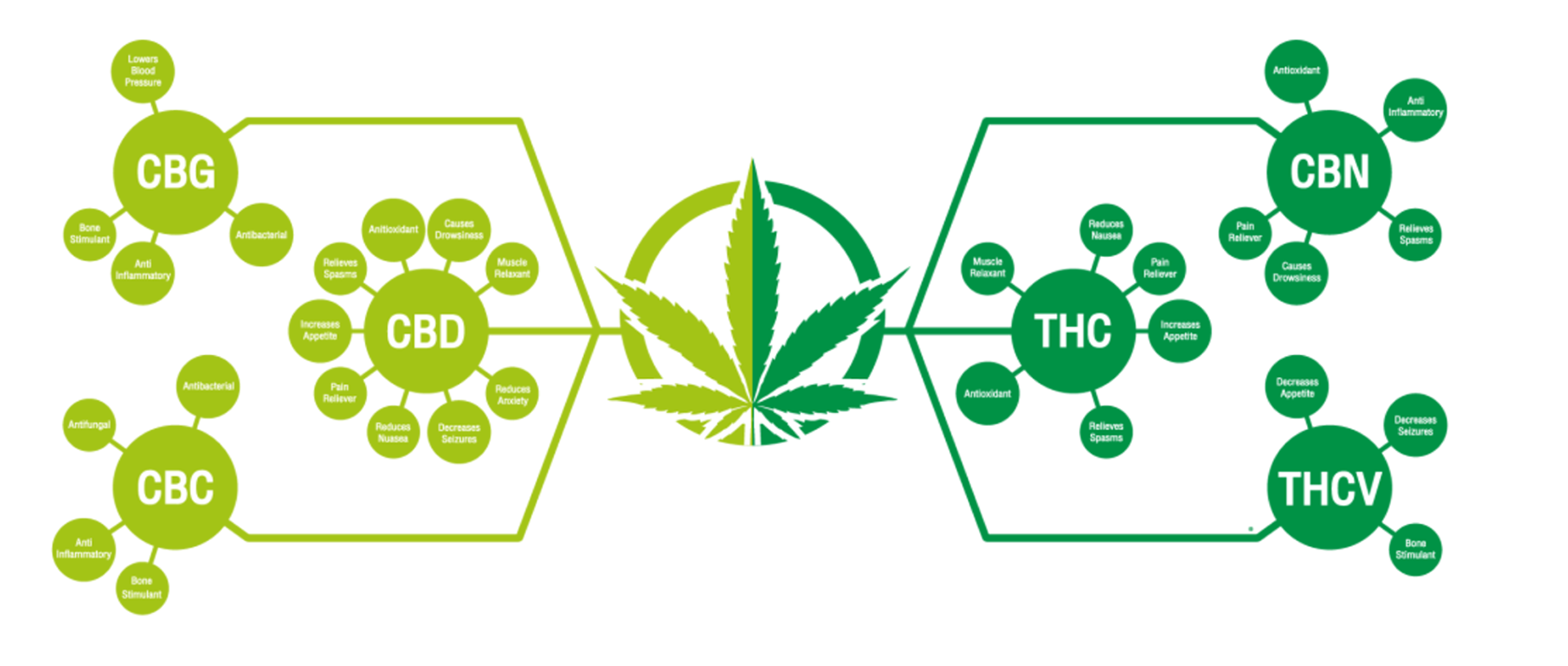
Every cannabis experience begins with cannabinoids: the natural compounds that interact with receptors in your body’s endocannabinoid system. The two stars of the show are THC (tetrahydrocannabinol) and CBD (cannabidiol), but they’re far from alone.
THC binds primarily to CB1 receptors in the brain, responsible for the euphoric “high.” CBD doesn’t bind in the same way- instead, it modulates THC’s effects, calming overactivity and balancing anxiety.
Other cannabinoids matter too:
CBN (Cannabinol) forms when THC oxidizes. It’s mildly psychoactive and known for its sedative properties, that cozy “lights-out” calm.
CBG (Cannabigerol), often called the “mother cannabinoid,” may reduce anxiety and obsessive-compulsive tendencies.
THCA (Tetrahydrocannabinolic Acid) is THC’s raw, non-psychoactive form before heat (decarboxylation) transforms it.
Terpenes: The Soul of the Plant
If cannabinoids are the body, terpenes are the soul. They’re the aromatic compounds that give cannabis its scent, flavor, and much of its personality. Terpenes are the fragrant oils that give each plant its signature aroma and therapeutic power. The earthy calm of Myrcene, the citrus rush of Limonene, the pine-bright focus of Pinene; they’re active compounds with real neurological effects. For example:
Myrcene is abundant in many “Indica” cultivars. It’s associated with relaxation, muscle relief, and that classic couch-lock serenity.
Limonene is energizing, mood-lifting, and often found in “Sativa” varieties. It helps combat stress and enhance creativity.
Caryophyllene has a spicy edge: found in black pepper and cloves, and it’s unique because it actually binds to CB2 receptors, offering anti-inflammatory benefits.
Pinene sharpens focus and memory, cutting through foggy highs with mental clarity.
This is why two “Indicas” can feel wildly different, or why one “Sativa” might make you blissful while another sends your thoughts racing. It’s the terpene composition, and how it synergizes with cannabinoids, that defines your journey. The more we learn about terpenes, the clearer it becomes: they aren’t background noise. They’re the harmony behind the high. That’s why Scarlet Fire obsesses over terpene profiles as much as potency, because true cannabis connoisseurs care about the full spectrum of effect.
What Really Defines a Strain: The Role of Terpenes in Indica and Sativa

When most people talk about Indica or Sativa, they’re thinking about how cannabis makes them feel, whether relaxed or uplifted, mellow or creative. But here’s the thing: what gives each cultivar its personality isn’t just THC or CBD. It’s something far more alive: terpenes.
Myrcene is the compound responsible for that deep, earthy aroma found in many heavy Indicas. It’s the molecule that turns tension into tranquility and restless minds into still water. If you’ve ever felt a strain pull you into deep relaxation or help you drift off to sleep, chances are Myrcene was leading the charge.
In fact, many cultivators and chemists use Myrcene levels as a reference point when describing whether a cultivar leans Indica or Sativa. When Myrcene makes up more than 0.5% of a plant’s terpene profile, it’s often associated with Indica characteristics, soothing, calming, sedative. If it’s below 0.5%, the plant tends to express Sativa-like traits, energizing, alert, cerebral.
But even here, Scarlet Fire’s philosophy cuts through the noise: it’s not about rigid categories or outdated labels. It’s about chemistry working in concert, the entourage effect. The entourage effect is what happens when cannabinoids and terpenes work together like instruments in a band. THC might be the lead singer, but terpenes are the rhythm section, shaping the song’s groove. Myrcene deepens the bass line, while Limonene adds a bright, citrusy harmony. Caryophyllene brings spice and bite. Together, they create something richer, more dimensional, more human.
That’s why Scarlet Fire doesn’t just list THC percentages. We break down terpene profiles. We talk about why a Myrcene-heavy cultivar might ease anxiety, why a Pinene-rich strain might sharpen focus, or how a balanced Linalool blend can make you feel calm without drowsy. Because once you understand terpenes, you stop chasing highs, and start curating experiences.
At Scarlet Fire Cannabis on Bathurst Street, that’s what makes the difference. We don’t deal in categories. We deal in character. Each cultivar on our menu earns its spot because of how its chemistry translates to feeling: how it hits, heals, and harmonizes with your body. That’s not marketing. That’s mastery.
The Neurological Dance: How Cannabis Really Affects the Brain
Behind every hit lies a symphony of biology. When THC enters the bloodstream, it crosses the blood-brain barrier and binds to CB1 receptors concentrated in areas that regulate mood, memory, and perception.
This interaction releases dopamine, the neurotransmitter of pleasure and reward, and modulates the brain’s natural endocannabinoids, anandamide and 2-AG, which play roles in mood regulation, appetite, and pain perception.
That rush of euphoria from a Sativa-dominant cultivar? It’s not just psychological, it’s chemical. That grounded, body-heavy Indica relaxation? Also chemical.
The myth of “placebo” falls apart under neuroscience. Yes, mindset matters. But measurable, replicable changes in cortical activity and neurotransmitter release prove cannabis acts directly on the nervous system. The way you interpret it, relaxed or inspired, depends on your unique neurochemistry, environment, and tolerance.
At Scarlet Fire, our budtenders know this balance. They guide customers not toward trends but toward alignment, helping you understand what your body responds to.
How Indica and Sativa Really Feel; and Why It Matters
Ask anyone who’s ever walked into Scarlet Fire Cannabis after a long day, and they’ll tell you: not all highs are created equal. Some strains pull you into a slow exhale, letting the world soften around the edges. Others light a fuse in your brain, sending ideas bouncing and laughter spilling out.
Indica-dominant cultivars tend to wrap you up in a heavier, slower kind of calm. They’re the ones that ease the body, quiet the muscles, and drop your thoughts into a lower gear. When people talk about “couchlock,” that’s the sensation they’re describing. your body finally giving in to stillness. It’s the kind of cannabis that belongs to late nights, soft lights, and good music. Perfect for when the work is done and you just want to feel human again.
Sativa-leaning varieties move in the opposite direction. They’re lighter, sharper, and more cerebral. Instead of slowing you down, they open you up, a creative current that makes conversation flow, turns chores into adventures, and keeps your mind awake. Many of our daytime regulars at Scarlet Fire lean toward these uplifting cultivars because they fuel productivity and focus without weighing them down.
But here’s where the old Indica-versus-Sativa binary falls apart: it’s not a rule, it’s a tendency. The real difference in how these plants make you feel comes down to chemistry, not category. The ratio of THC to CBD, the terpene composition, the way it was cured, and how your body’s endocannabinoid system responds, that’s what defines the experience.
That’s why Scarlet Fire’s budtenders never hand you something just because the label says Indica or Sativa. We ask how you want to feel. Are you managing chronic pain or chasing better sleep? Fighting anxiety or hunting for that spark of inspiration? Because we carry cultivars bred with purpose, small-batch craft genetics that target specific moods, energy levels, and needs.
For example, some high-THC Indicas melt away tension without knocking you out, while certain balanced Hybrids offer pain relief with a creative edge. Many patients managing arthritis, fibromyalgia, or cancer find relief in Indica-dominant chemovars for their anti-inflammatory and soothing properties. Others navigating depression, PTSD, or stress disorders often find clarity and lightness in Sativa-forward varieties.
That’s the beauty of modern cannabis. We’re no longer forced to choose between pain and productivity. Skilled cultivators, the kind whose work fills Scarlet Fire’s shelves, grow with intention. They breed across spectrums to create nuanced experiences that meet real human needs. The kind of care and precision that never existed on the black market, where profit outweighed purity and the only goal was yield.
At Scarlet Fire, every cultivar has been grown, dried, cured, and tested with transparency. We don’t play guessing games. Our customers know exactly what they’re consuming, and that it was sourced from Canada’s best craft growers who treat cannabis as medicine, art, and science all at once.
And if you’ve ever noticed how differently cannabis smells from one jar to the next, that’s not coincidence, it’s chemistry speaking. Indica-leaning strains often carry deeper, musky, and earthy notes. Sativas lean sweeter, fruitier, sometimes with a spicy kick. Myrcene, Limonene, and Caryophyllene, these aren’t just scents; they’re molecular cues that guide the experience, working hand in hand with cannabinoids to soothe, lift, or center you.
From Myth to Molecule: Why “Indica vs. Sativa” Is Outdated
The whole “Indica vs. Sativa” binary? It’s a relic of the past. Modern testing shows that chemistry, not lineage, determines effect. You could have two plants that look identical, yet one sends your mind soaring while the other tucks you in. It’s all about the chemovar, that fingerprint of cannabinoids and terpenes working in harmony.
A strain once labeled “Sativa” might contain Myrcene-heavy terpenes, giving it a sedative edge. Another marked “Indica” might carry high Limonene, offering an energetic lift. This is why Scarlet Fire avoids the corporate trap of overgeneralization. While big-box dispensaries push products based on outdated categories, we train our staff to focus on chemistry and craft. Each batch, each harvest is different, and that’s the beauty.
Hybrids: The Middle Ground, or the New Normal
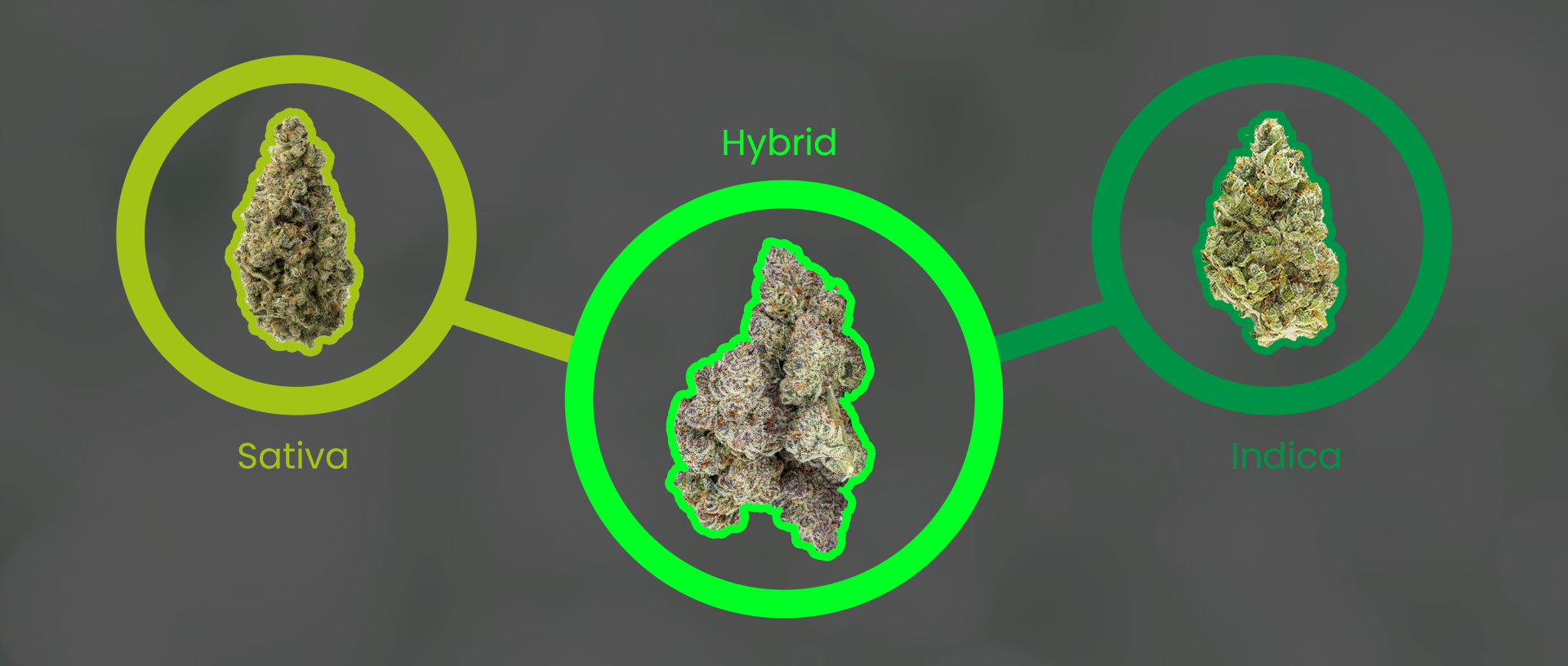
If Indica and Sativa are two poles of a spectrum, Hybrids are the kaleidoscope in between. They’re the offspring of centuries of crossbreeding, bringing together the best of both worlds, energy and calm, creativity and comfort.
In truth, almost every modern cultivar is a hybrid. But hybrids aren’t just mixes; they’re intentional creations, bred to fine-tune flavor, effect, and therapeutic balance.
At Scarlet Fire, we treat hybrids as canvases for craftsmanship. From uplifting daytime blends that pair tropical terpenes with focused highs to evening-heavy hybrids that melt stress without sedation, every jar on our shelf has purpose.
Our menu isn’t static, it evolves. One week, it’s a high-terpene Lemon Runtz bursting with limonene zest. Next, it’s a creamy Kush Mints hybrid that lulls you into that sweet, reflective headspace where time slows down. That rotation keeps the experience fresh and mirrors how living cannabis truly behaves, dynamic, not binary.
Is It All Just in Your Head? The Truth About the “Placebo” Debate
Some skeptics argue that the effects people associate with “Indica” or “Sativa” are placebo, that it’s suggestion, not science. But anyone who’s tried Scarlet Fire’s carefully curated selection knows better.
Science backs it up. Neuroimaging studies show that different terpene and cannabinoid profiles activate distinct neural circuits. THC-rich chemovars heighten gamma oscillations, linked to creativity and pattern recognition. Myrcene-heavy blends, on the other hand, increase alpha wave activity, promoting relaxation and drowsiness.
So no, it’s not placebo. It’s chemistry. But it’s also context.
How you consume, where you are, and who you’re with all shape your experience. Scarlet Fire’s community understands that cannabis isn’t a one-size-fits-all substance. It’s a mirror. It meets you where you are and amplifies what’s within.
The Scarlet Fire Philosophy: Cannabis as a Craft, Not a Commodity
Scarlet Fire Cannabis isn’t like the corporate chains that flood Toronto, the One Plants, Value Buds, or Canna Cabanas of the world. Their shelves are filled with pay-to-play products, where placement depends on marketing budgets, not merit.
Scarlet Fire stands apart.
We built this place for the seekers, the connoisseurs, the people who collect experiences instead of possessions. Every item on our Bathurst Street menu has earned its spot through quality, not contracts. We carry the kind of cannabis that makes your brain light up, not because it’s trendy, but because it’s true.
Our budtenders don’t push; they guide. They’ll talk with you about terpene structure, cannabinoid ratios, the neurological pathways of euphoria, or simply how to find that sweet spot between calm and creativity. We curate for people who love discovery, people who want the Dom Pérignon of cannabis, not the discount aisle version.
If you walk into Scarlet Fire wondering whether to go for an Indica, Sativa, or Hybrid, we’ll start with a different question: What kind of experience are you after?
Looking for that long, rolling conversation that lasts through the night? You might want a limonene-forward hybrid with a bright THC-to-CBD balance.
Need to quiet the noise and find stillness? A myrcene-heavy cultivar with subtle CBN might be your ticket.
Want creativity without chaos? We’ll guide you to a balanced Type II chemovar that stimulates without overstimulation.
Cannabis is about the connection between plant and person, chemistry and consciousness. At Scarlet Fire, we’re here to help you navigate that with precision and passion.
The Future of Cannabis: Beyond Labels
The cannabis world is evolving fast, and Scarlet Fire is proud to lead the charge toward a chemovar-based future, one built on science, transparency, and craftsmanship.
As genetic mapping and terpene analytics become standard, we’ll move even further from vague strain talk into a world where customers know exactly what they’re consuming and why it makes them feel the way it does.
In that world, dispensaries like Scarlet Fire will stand as educational hubs, not just retailers. We’ll keep demystifying the plant, bringing chemistry to life, and honoring cannabis not as a product, but as an experience, one that deserves reverence, curiosity, and joy.
The Final Hit: Why This Knowledge Matters
Understanding Indica, Sativa, and Hybrid isn’t about picking sides. It’s about awakening to how beautifully complex cannabis truly is. It’s about knowing that what you inhale, eat, or dab isn’t random, it’s a crafted molecular symphony designed to interact with your biology.
Scarlet Fire’s mission is to bring that awareness to Toronto’s cannabis community. We’re not here to sell hype. We’re here to sell understanding, to give people access to something real in a world of overbranded noise.
So next time someone asks whether you’re an Indica or Sativa person, smile. Then tell them it’s bigger than that. Tell them you shop at Scarlet Fire Cannabis on Bathurst Street, where the conversation goes deeper, the cannabis burns cleaner, and the experience feels like something worth remembering.