
Types of Hash: Bubble Hash, Dry Sift, Pressed, and More - Scarlet Fire (North York / Toronto)
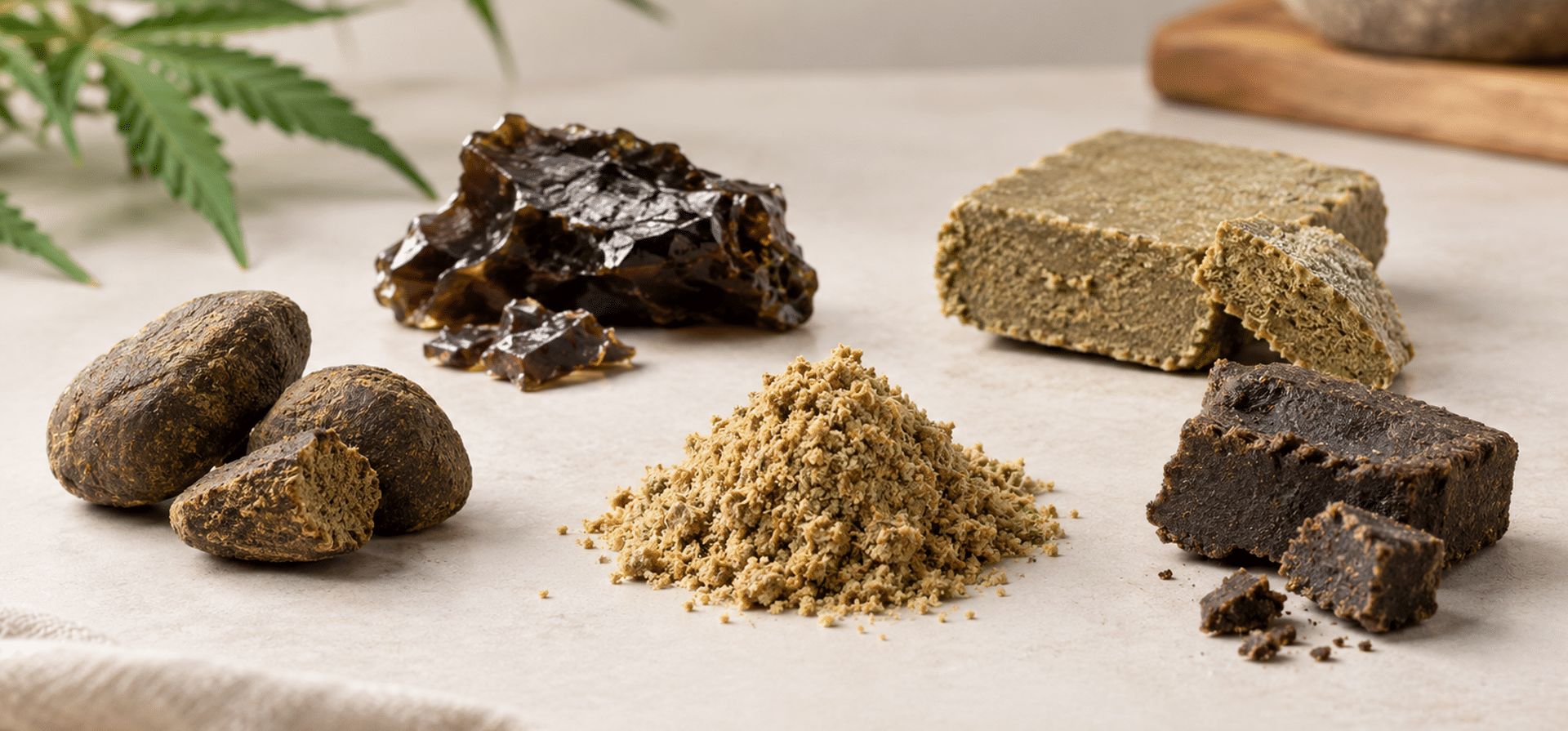
Hash is a concentrated cannabis product made mostly from separated trichome resin. The traditional forms you’ll see on a shelf include bubble hash, dry sift, pressed hash, temple balls and charas. Some are loose and granular, while others are shaped into solid pieces. Rosin is a related solventless extract made by applying heat and mechanical pressure to flower, kief or hash.
We get this question at the counter all the time. Folks know their flower and their vapes, but hash has its own vocabulary. Micron numbers, melt ratings, sixers, and temple balls can sound confusing until somebody explains them.
Here’s the quick version before we get into it:
Type | How it’s made | Typical texture |
Bubble hash | Trichomes are separated in ice water, then filtered or screened | Sandy, greasy, or resinous |
Dry sift | Trichomes are separated through dry screening or sieving | Powdery, granular, or pliable |
Pressed hash | Kief or resin is compressed, sometimes with heat and pressure | Dense, crumbly, or pliable |
Temple ball | Hash is hand-formed into a ball and may be aged | Often firm outside and softer inside |
Charas | Resin is collected by hand-rubbing living cannabis plants | Usually sticky and pliable |
Rosin | Flower, kief, or hash is processed with heat and pressure | Oil-like, sappy, badder-like, or jammy |
Our North York shop is built around traditional and artisanal hash, and the case rotates constantly. Pop by 3852 Bathurst St and we’ll walk you through whatever’s in there.
What Hash Actually Is, and Where the Resin Comes From
Hash is trichome resin that’s been taken off the plant and packed into something you can hold. Trichomes are those frosty little glands all over a mature female flower, and they’re where the plant makes and stores its cannabinoids and a lot of its terpenes. Get them off the leaf and stalk material, collect them up, and that’s your starting point.
Size is the whole reason hash gear looks the way it does. Research published in the Journal of Cannabis Research measured mature glandular heads at roughly 40 to 110 microns across, with stalk length all over the map depending on the genetics. That’s the number every screen and bag size is chasing.
Handy terms to have in your pocket:
- Trichome head: the resin filled ball at the top of the gland, the bit you actually want
- Kief: loose trichome dust, usually what collects in the bottom of your grinder
- Solventless: made without chemical solvents, using water separation, heat, pressure or mechanical screening
- Melt: how much residue gets left behind when heat hits it
- Micron: the unit used to describe how big the holes in a screen or bag are
How Hash Is Different From Flower and Everything Else

Hash sits between your dried flower and the modern solvent stuff, in how it’s made and in how it gets sold. Flower is the whole bud with the trichomes still stuck to it. Hash has had most of that plant material taken out, which is why you’re getting more cannabinoid content per gram than you would from bud.
Shatter and many distillates are produced through solvent-based extraction, followed by processing steps that remove or refine the extraction medium. Hash and rosin skip that part completely, and that’s the whole reason solventless has the following it does. On the retail side in Ontario, hash and rosin both get sold as cannabis extracts and carry the labelling that goes with it.
|
Category |
How it’s separated |
Sold as |
|---|---|---|
|
Dried flower |
Not separated, trichomes still on |
Dried cannabis |
|
Traditional hash |
Water, screens, hands |
Cannabis extract |
|
Rosin |
Heat and pressure |
Cannabis extract |
|
Shatter, distillate |
Chemical solvent, then purged |
Cannabis extract |
Bubble Hash: Ice Water, Fine Screens and Graded Bags
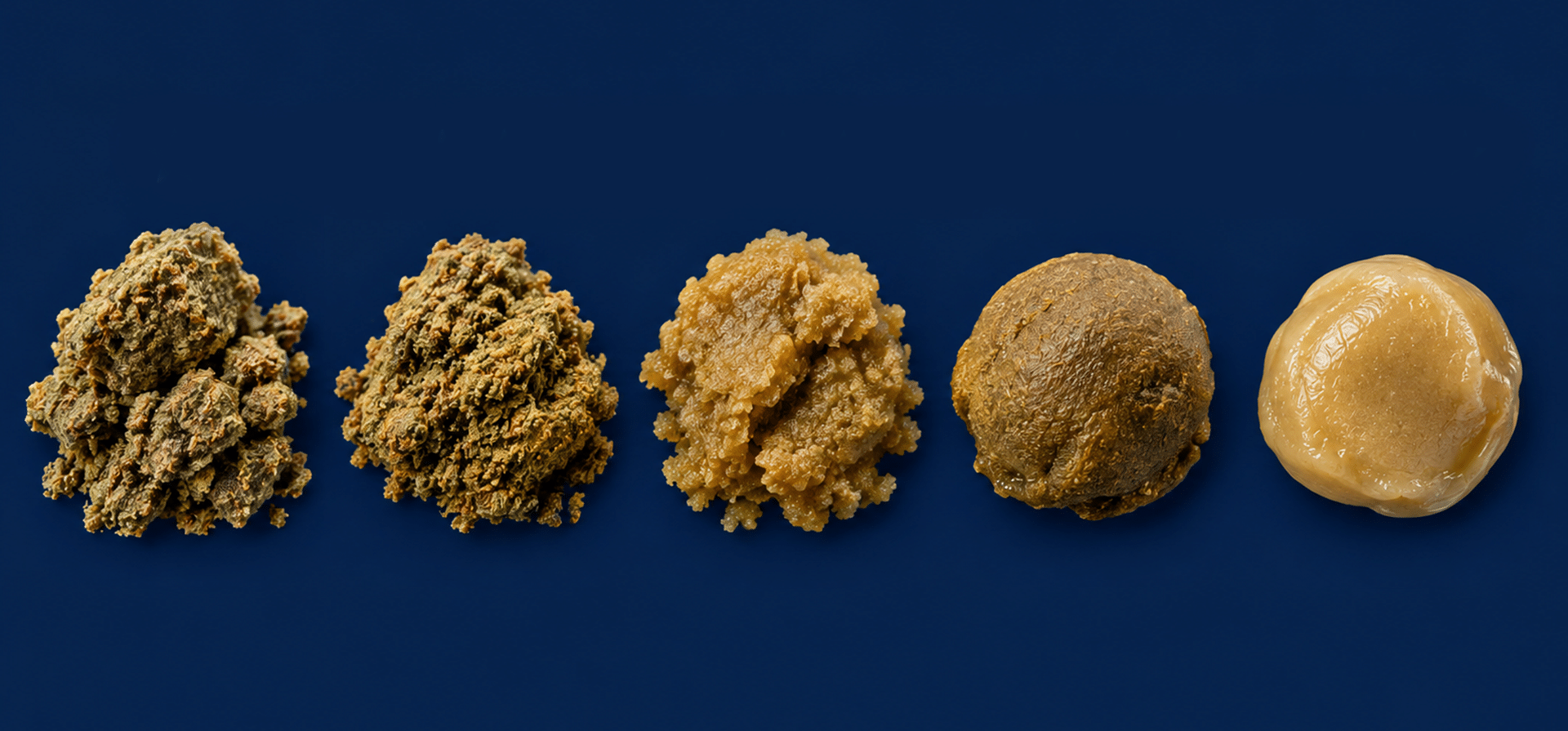
Bubble hash is made by washing cannabis in ice water so the resin glands go brittle, break off, and sink down through a stack of graded mesh bags. The cold does a lot of the heavy lifting, since frozen trichome heads come loose way easier. Most washers go gentle on the agitation, because thrashing it just shreds more leaf into the mix.
The water then drains down through those bags, each one with smaller holes than the one above it. Coarse stuff hangs up near the top, the middle bags catch most of the intact heads, and the fine sediment washes straight out the bottom. Whatever’s collected gets freeze dried or air dried, then graded and labelled.
How Bubble Hash Gets Made, Step by Step
- Fresh frozen or cured flower goes in a vessel with ice and cold water
- It gets agitated by hand or machine, usually a few minutes per wash
- The water drains down through the micron bags, coarsest to finest
- Each bag gets scooped, pressed of water, and dried
- Grades get labelled by micron range and sold on their own or blended
Reading the Micron Numbers
The micron number tells you how big the holes were in the bag that caught that batch, not how good the hash is. Lower number means smaller holes. Higher number means bigger holes, so more stuff gets through.
Many washers focus on the 73 to 120 range because it can capture a substantial proportion of mature trichome heads. The most useful range varies by cultivar, starting material, mesh design and washing conditions. It’s not a magic window though, and the best range shifts with the cultivar, the trichome size, the starting material and how the wash went. The higher bags can hold bigger trichome structures along with more plant material, depending on the run.
|
Micron range |
What it usually catches |
What it feels like |
|---|---|---|
|
25 to 45 |
Fragments and smaller heads |
Gritty, usually darker |
|
45 to 73 |
Smaller mature heads, some fine debris |
Sandy, easy to work |
|
73 to 120 |
Mature heads, the range most washers chase |
Blonde to amber, greasy |
|
120 to 160 |
Bigger heads plus more plant structure |
Coarser, mixed bag |
|
160 to 220 |
Bigger material, usually headed for pressing |
Varies, often green tinted |
Want to see what a 73u wash actually looks like in the jar? Have a look at what’s in stock, or come check the case yourself.
Dry Sift: Screens, Friction and Not a Drop of Water
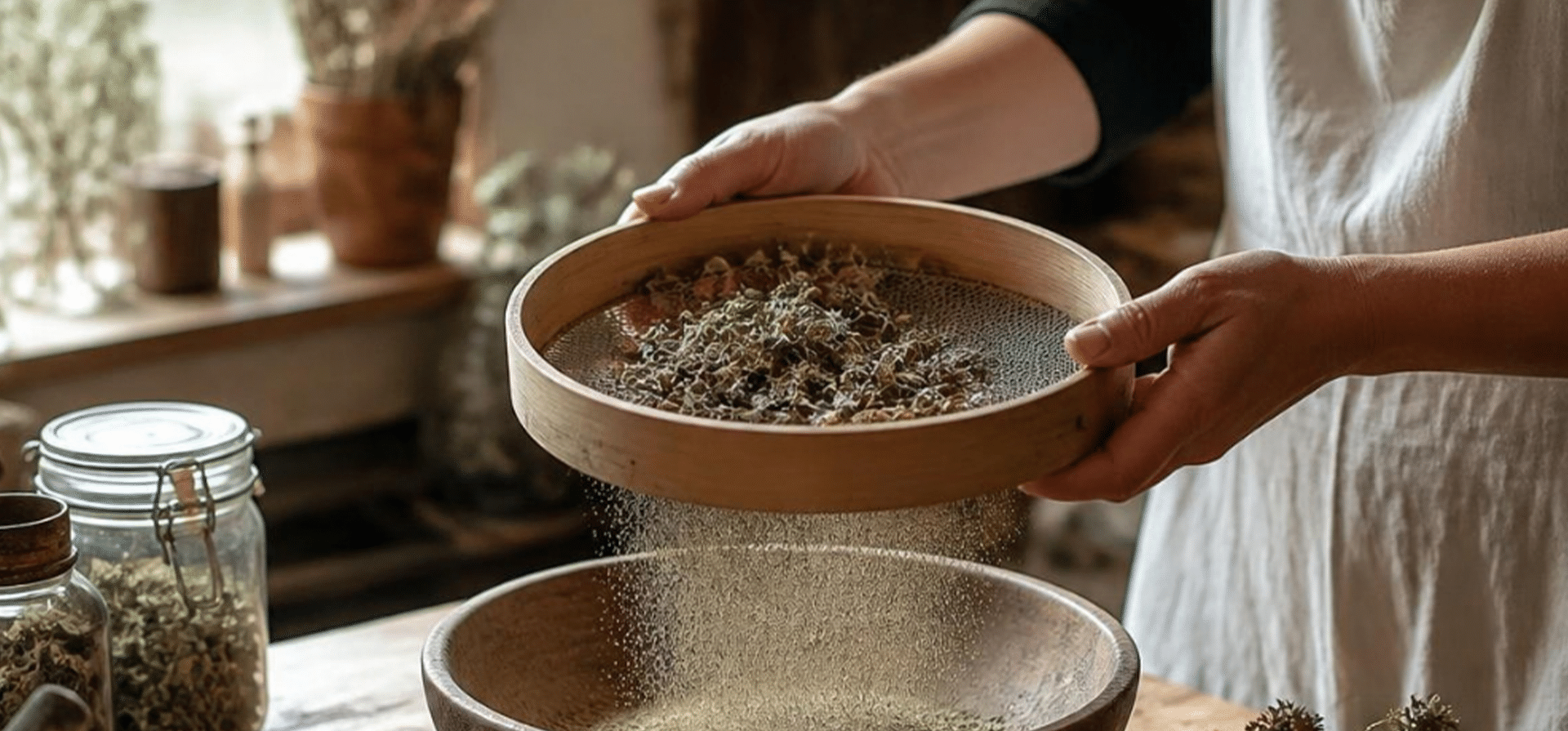
Dry sift is a hash made by tumbling or brushing dried bud across fine screens so the heads shake loose on friction alone. No water, no ice, nothing to dry afterward. It’s one of the oldest mechanical hash-making methods and it’s still in commercial use today.
Done properly, dry sift gets extremely refined, though it lives and dies on material prep, screen design, how it’s agitated and how it’s collected. Your material has to be cold and cured right or the resin smears instead of falling through. Shake it too hard and you’re pushing plant dust through with the heads, which drops the grade fast.
Grades you’ll see on a label:
- Full melt dry sift: barely any visible contamination, next to no residue when heat hits it
- Half melt: melts part way, and that’s most mid grade sift
- Sift for pressing: coarser collection meant to get warmed up and pressed
- Static tech sift: taken further on static screens to isolate the heads
Pressed Hash: Slabs, Bricks and the Traditional Imports
Pressed hash is a sift or bubble that’s been warmed and packed under pressure until it’s one solid, bendy piece. Pressing changes the texture and how the piece handles in your hand at room temperature. Colour and consistency keep shifting after that too, depending on oxidation, heat, how much it gets handled, how it’s stored and what it was made from.
Every traditional region presses a little differently, which is why a Moroccan slab behaves nothing like an Afghan brick. Moroccan style tends to run drier and crumbles up easy between your fingers. Afghan and Lebanese styles are usually softer and stickier, closer to putty when it’s warm out.
Temple Balls
A temple ball is hash worked by hand into a dense sphere, a style most people associate with Nepal and that part of the world. Some get aged or cured after they’re rolled, which lets the outside skin and the inside texture develop over time. How it’s done varies a lot maker to maker, so no two are really alike.
Cutting one open is half the fun. Traditionally aged temple balls often develop a firmer outer skin and a softer, more pliable centre. Plenty of our regulars hang onto a temple ball for months and shave a bit off at a time.
Charas
Charas is made by rubbing resin off living cannabis plants by hand, a tradition tied to the Himalayan regions. The resin builds up on your palms, then gets rolled off and shaped into sticks or balls. It’s traditionally collected while the plant is still living, rather than after harvest.
Fresh charas is often sticky, dark and pliable enough to take a fingerprint. Its texture changes with age, temperature and handling. It’s hand collected, so batches are tiny and no two runs come out quite the same. That inconsistency is a big part of why charas people are charas people.
Not sure which tradition is your speed? Read up on how we do hash, then let one of us put a few in front of you.
Rosin: The Solventless Extract Made From Flower or Hash
Rosin is an extract made by applying heat and mechanical pressure to flower, kief or hash, with no chemical solvent anywhere in it. It’s typically pressed between heated plates, with parchment or another suitable surface catching the resin as it runs out. Setups vary widely, from small hand presses on a countertop to commercial rigs.
Hash rosin starts from a hash, usually a bubble, while flower rosin starts from the whole bud. Hash rosin can end up with less plant material in it when the hash going in was well refined, but that depends on the whole chain, not just the starting point. Live rosin comes from fresh frozen plants that normally get washed into hash first, which helps hang onto the volatile compounds that drying and curing tend to cost you.
Type | What goes in | What sets it apart |
|---|---|---|
Flower rosin | Dried, cured bud | Pressed straight from flower |
Hash rosin | Hash, usually bubble | Pressed from separated resin |
Live rosin | Fresh frozen material | Washed first, then pressed |
Kief vs Hash: Where the Line Actually Sits
Kief is loose trichome material, and hash is a cohesive product made by collecting and working that resin into something solid. You can press kief into hash, no problem. But hash also gets made by washing, hand rubbing or screening, so not every piece of hash started life as grinder kief.
The difference you’ll notice at home is handling. Loose kief goes everywhere and there’s way more surface area sitting open to the air, while a pressed piece is dense and easy to portion. Either way, a sealed container, out of the heat and light.
Hash Textures and Melt Ratings, Quick Reference
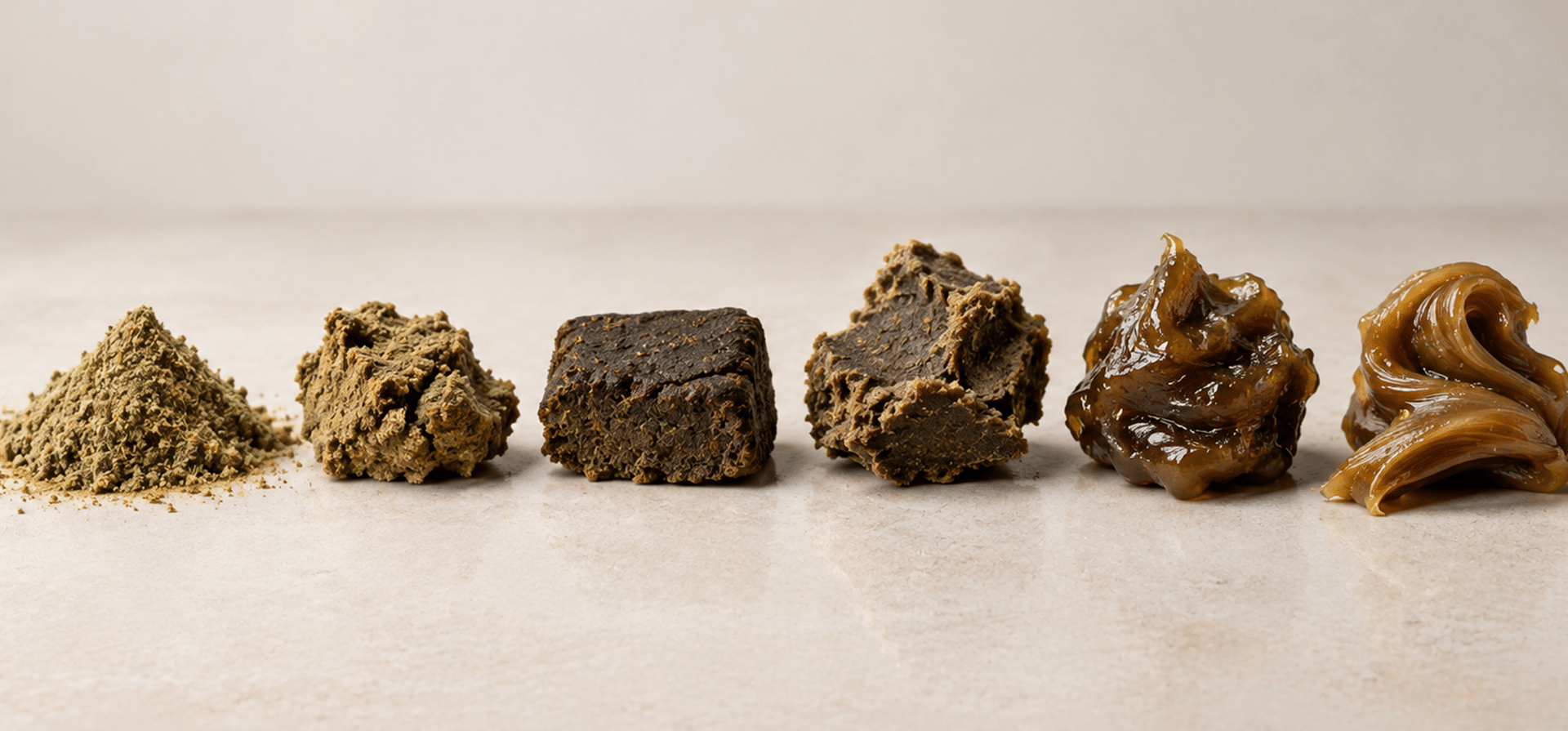
Melt ratings are shop talk for how much residue hash leaves behind when you heat it, and you’ll usually see it out of six stars. A sixer generally means very high melt with barely anything left behind. There’s no regulated standard behind it though, so treat those stars as the producer’s own description rather than a lab number.
Melt isn’t purely about purity either. Resin condition, moisture, leftover plant material and how it was processed all factor in. Which format works in which device comes down to the specific product and your gear, so ask instead of guessing.
- Sand: dry and granular, what fresh unpressed sift looks like
- Wet sand: a bit tacky, holds its shape when you squeeze it
- Play dough: soft and bendy, classic pressed traditional
- Taffy: stretches on you, shows up in some well-aged temple balls
- Crumble or badder: whipped up rosin textures, aerated during the cure
How to Pick Your First Hash at the Counter
If hash is new to you, a pressed traditional piece is usually an easy place to start because it portions and handles without any fuss. Warm a corner between your fingers and it breaks down no problem. It’s not the only reasonable starting point, mind you, and taste varies a ton person to person.
Bubble, sift and rosin get easier to choose between once you know what flavours you’re after and what your gear is built for. Some folks like bubble for a cleaner tasting profile, others would take a good dry sift for the aroma every time. We’ll usually ask how you plan to use it, what smells you gravitate to, and what you’ve had before.
What to check before you commit:
- Your method: match the product to the gear it’s meant for
- The label: tested THC and CBD, packaged date, intended use
- Batch info: producer, lot number, packaged on date where it’s listed
- Grade or micron: ask for it, don’t just go off price
- Look and feel: does what’s in your hand match what the label says
- Storage notes: follow whatever the producer printed on there
- Size: grab a small one first, then go bigger on what you actually like
Want to line a few up side by side? See what we’ve got in before you make the drive.
What to Ask Your Budtender About Hash
The fastest way to land on something you’ll like is to come in with a couple of questions ready. Nobody expects you to know the lingo, and asking is what keeps you from paying for something that doesn’t suit your gear. Our staff would rather spend ten minutes narrowing it down than sell you the wrong format.
Most of it comes down to matching the product to how you actually use it. A piece that’s perfect crumbled into a joint might be a waste in a concentrate setup, and the other way around. Bring the questions below and you’ll get there quickly.
- What’s the texture on this one, and how does it handle?
- Is it meant for flower use or for concentrate equipment?
- What does the label say for tested THC and CBD?
- Is a micron range or grade listed for it?
- Who made it, and when was it packaged?
How We Work With Hash at the Shop
Our team goes through the product info, looks at the details we’re given, and helps you compare formats, textures and what each one’s meant for. We deal with craft growers and small batch processors, and we build the case around traditional and artisanal formats instead of volume. Anything that shows up mislabelled or not as described goes straight back.
Staff training works the same way. Everyone behind our counter can tell you what separates a 90u wash from a static tech sift without reaching for a cheat sheet. Customers often ask our team for help comparing formats, textures and intended uses
Come Talk Hash With Us on Bathurst
Our North York shop carries a broad selection of traditional and artisanal hash, seven days a week at 3852 Bathurst St. The case runs from Afghan and Lebanese pressings to Nepalese style temple balls to bubble washed a lot closer to home. Selection rotates, so it’s always worth asking what just landed.
Bring your questions, that’s what we’re here for. Ask about micron ranges, ask what came in this week, ask how something stacks up against what you’ve already tried. Give the shop a shout to check stock before you make the drive, see what’s going on in store, or dig into more cannabis education on our blog.