
Understanding Cannabis Tolerance: How to Reset Safely – Scarlet Fire Cannabis Co. (North York / Toronto)
Tolerance represents the body’s natural adaptation to repeated THC exposure, influenced by changes in cannabinoid receptor activity over time. While not inherently harmful, tolerance can affect how cannabis is perceived and how much a person chooses to consume. Adults shopping at a North York cannabis store, Toronto cannabis dispensary, or in nearby communities such as Vaughan, Markham, Thornhill, and Willowdale often manage tolerance by moderating use, selecting lower-potency products, and relying on Ontario’s clear THC/CBD labeling.
Scarlet Fire Cannabis Co. is a North York cannabis store that offers lab-tested cannabis with compliant potency and format labeling. Shoppers from North York, Richmond Hill, Scarborough, Downsview, and York Mills visit for regulated products that support informed purchasing decisions. Staff can explain product formats, potency ranges, and standard serving information to help customers choose with confidence.
Understanding Cannabis Tolerance
Cannabis tolerance describes the reduced physiological and subjective effects that may occur after repeated cannabinoid exposure, reflecting the body’s natural adaptation within the endocannabinoid system. As tolerance develops, a dose that once produced noticeable effects may feel milder, leading some adults to reconsider potency or frequency. Adults shopping at a North York cannabis store, Toronto cannabis dispensary, or nearby areas like Vaughan and Markham often learn about tolerance to support more intentional and informed consumption.
Tolerance is most commonly linked to THC, the primary psychoactive compound in cannabis, because repeated exposure can affect cannabinoid receptor responsiveness. Over time, this adaptation may reduce sensitivity to the same THC level, while CBD interacts differently and does not typically produce the same receptor desensitization. Shoppers visiting a North York dispensary or Toronto cannabis shop often review cannabinoid content and terpene profiles to better understand potential effects.
Canada’s regulated cannabis market relies on standardized lab testing and clear THC/CBD labeling to ensure consistent potency information. These labels help adults in North York, Toronto, Vaughan, and Markham monitor intake and compare products accurately. Licensed retailers such as Scarlet Fire Cannabis Co. serve customers from North York, Richmond Hill, and Scarborough by offering compliant, clearly labeled cannabis that supports responsible purchasing and tolerance awareness.
How the Body Develops Tolerance
Tolerance develops through several biological processes, with the most studied involving cannabinoid receptor regulation in the brain. Repeated THC exposure can cause CB1 receptors to become temporarily less sensitive or reduce their presence on the cell surface, a process known as downregulation. Adults learning about cannabis at a North York cannabis store or Toronto cannabis dispensary often explore how these mechanisms influence personal tolerance and product choice.
Additional contributors include receptor desensitization, neuroadaptation, and pharmacokinetic changes that affect how cannabinoids are absorbed and metabolized. These responses reflect the body’s effort to maintain balance and are also observed with substances like caffeine. Shoppers at a North York dispensary or in nearby communities such as Vaughan and Markham often consider these factors when reviewing potency and product formats.
Tolerance develops gradually rather than immediately, and it varies depending on dose, frequency, and individual physiology. Canada’s regulated cannabis market supports awareness through standardized lab testing and clear THC/CBD labeling. Licensed retailers such as Scarlet Fire Cannabis Co. serve customers from North York, Richmond Hill, and Scarborough by offering compliant, clearly labeled cannabis that helps adults make informed, responsible purchasing decisions.
Factors That Influence Tolerance
Tolerance is not uniform across all users. Several factors influence how quickly and to what degree tolerance develops:
1. Frequency of Use
Frequent, daily consumption of cannabis, especially high-THC products, is more likely to lead to noticeable tolerance compared with occasional use. Users who consume multiple times per day are more likely to experience diminished effects at their typical dose.
2. Potency and Product Format
Products with higher concentrations of THC contribute to tolerance more rapidly than products with lower THC content. Concentrates and vape cartridges often deliver higher doses per inhalation than dried flower, which can influence tolerance development. Lab-tested products from regulated sources such as Scarlet Fire carry standardized potency labels. These labels provide clarity about THC and CBD content, allowing consumers to track exposure over time.
3. Individual Differences
Genetics, endocannabinoid system variation, body composition, metabolic rate, and past cannabis exposure all influence tolerance. Two individuals consuming the same product at the same frequency may develop tolerance at different rates.
4. Method of Consumption
Inhalation, oral ingestion (edibles), sublingual use, and other formats differ in onset, duration, and intensity. For example, edibles have a delayed onset and longer duration, which can lead to different patterns of tolerance compared with smoking or vaping.
Recognizing Tolerance: What Adults May Notice
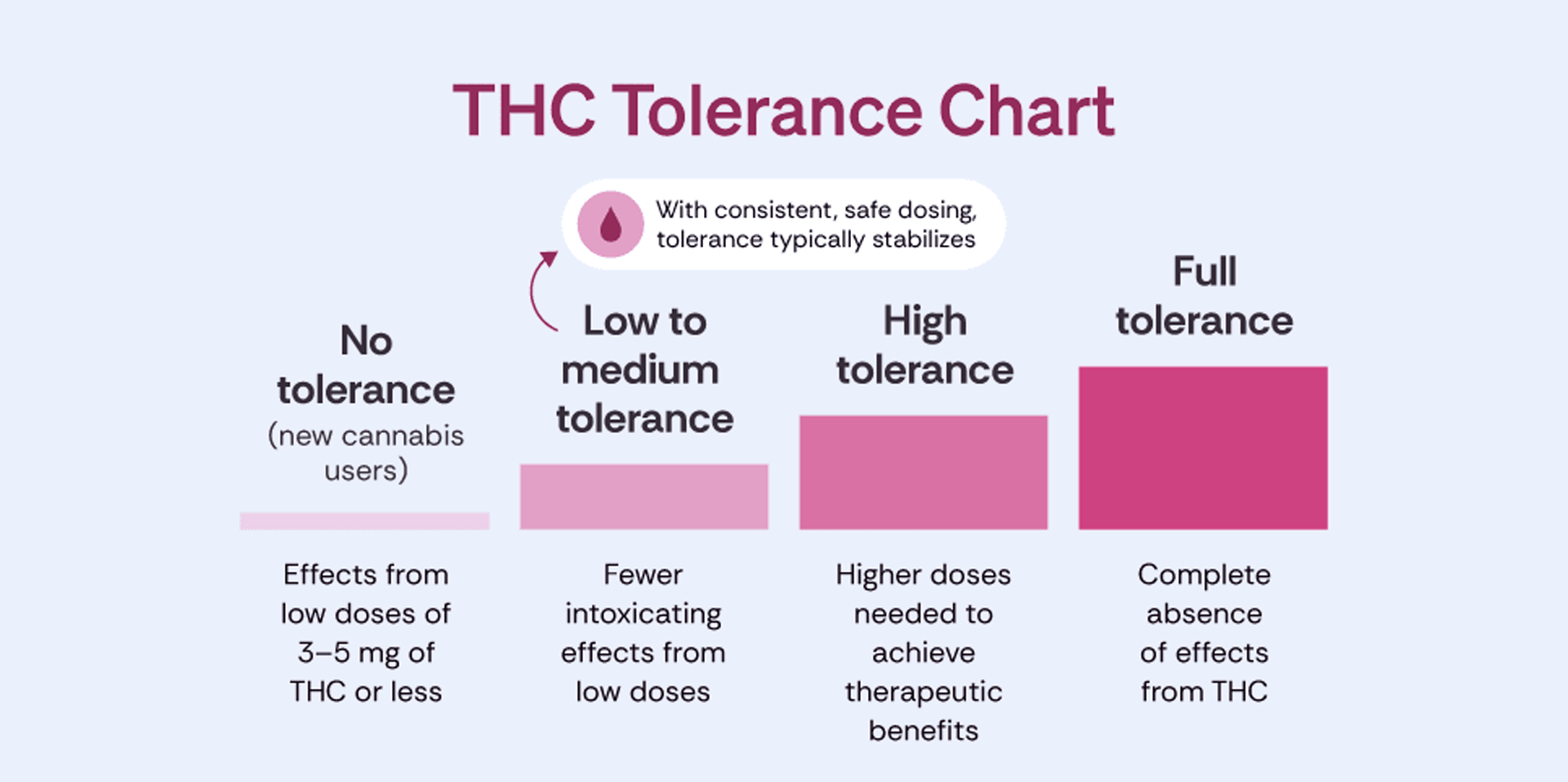
Tolerance is a subjective experience, but common signs may include:
- Previously effective doses no longer produce expected effects
- Gradually increasing amounts are needed for similar perceived effects
- Reduced intensity or duration of effects at familiar doses
These observations do not themselves indicate harm or dysfunction, but they signal that the body’s response to repeated cannabinoid exposure has shifted.
Understanding tolerance can support intentional choices about dose, timing, and product selection. In Ontario’s regulated market, accurate potency labeling helps quantify what is being consumed, which in turn supports tolerance awareness.
Why People Consider Resetting Tolerance

Some adult consumers consider resetting their tolerance for personal reasons. Many want lower doses to feel noticeable effects again or to recalibrate habits after frequent use. Others simply want to shift patterns that feel routine rather than intentional. A tolerance reset is not required for everyone and is not a medical treatment. It usually refers to a period of reduced or paused cannabis use.
There is no single definition or timeline for a tolerance reset. Length and approach vary by person and purpose. Research suggests some receptor sensitivity can recover with lower exposure, but timing differs across individuals. Choosing a tolerance break is a personal decision, not a medical necessity.
Safe, Evidence-Informed Approaches to Tolerance Reset
Since tolerance is a biological adaptation rather than a pathological condition, there is no prescribed clinical protocol for a tolerance reset.
However, for adult consumers who choose to adjust their tolerance, several evidence-informed strategies can be considered.
1. Moderating Frequency of Use
One approach to lowering tolerance is gradually reducing the frequency of cannabis use. This does not require full cessation but may involve:
- Reducing daily use to specific occasions
- Taking days off between use
- Limiting use to weekends or less frequent intervals
Reducing exposure allows cannabinoid receptors more time without stimulation, potentially leading to gradual changes in receptor responsiveness.
2. Reducing Dose and Potency
Another strategy involves lowering both the dose and potency of products consumed. For example:
- Choosing lower-THC products rather than high-potency concentrates
- Monitoring milligrams of THC per serving rather than quantity consumed by weight
Products with balanced THC and CBD ratios or higher CBD relative to THC may produce experiences that feel different but are associated with lower overall THC exposure. These products remain lab-tested and standardized, supporting clear understanding of intake.
3. Incorporating Non-Cannabis Days
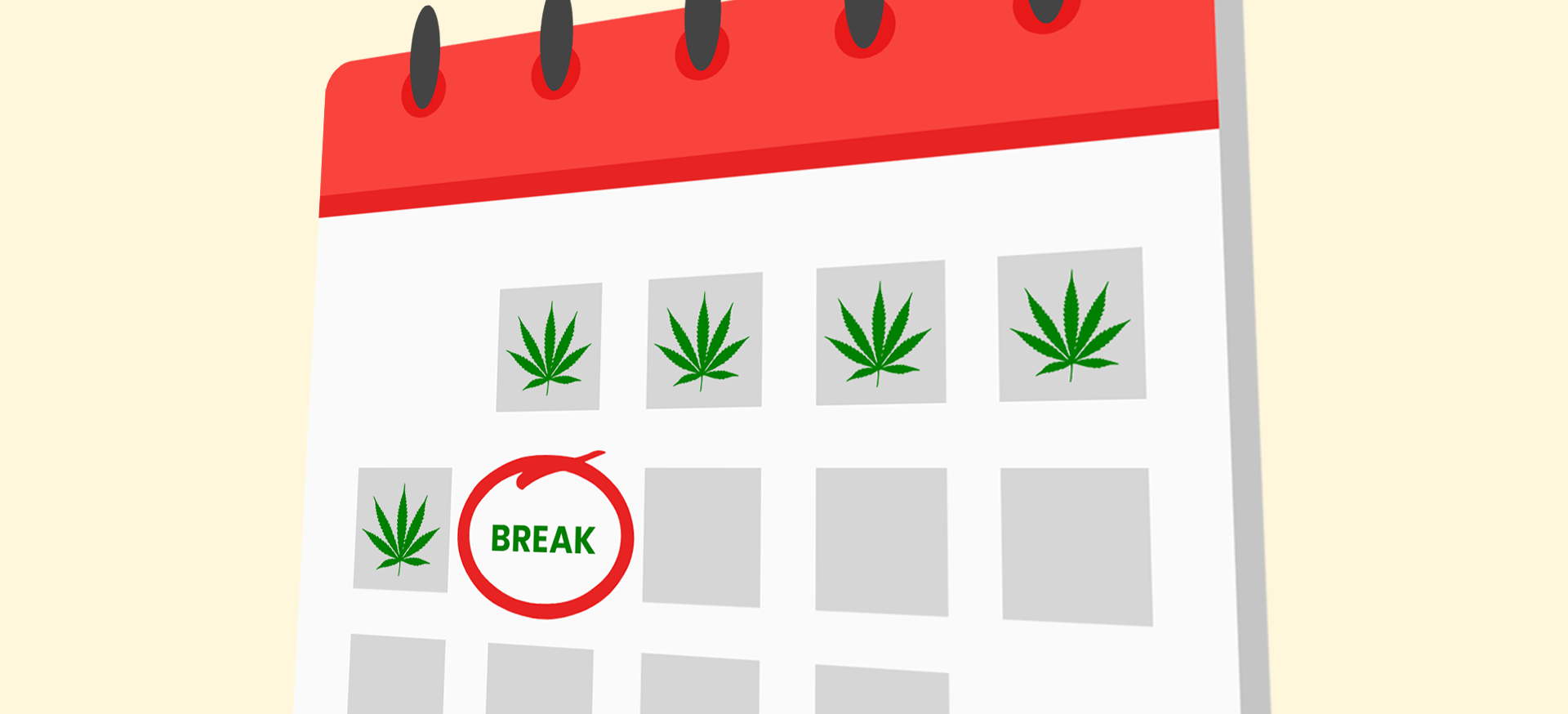
Some users incorporate “non-cannabis days” into their routine. A break of a specified number of days can help reduce overall exposure. Research on receptor regulation suggests that biological responses adjust over time when the stimulus is reduced or removed, but the timeframe for meaningful change varies across individuals.
There is no universally agreed upon duration for a tolerance reset. Some research indicates that receptor regulation begins to normalize within days to weeks of reduced exposure, but individual neurophysiology and consumption history influence the process.
4. Avoiding Frequent High-Potency Exposure
High-potency products, such as extracts and concentrates, deliver larger doses of THC per use. For adult consumers focused on tolerance, alternating formats or choosing products with lower THC content can reduce overall cannabinoid exposure without complete cessation, if that aligns with personal goals.
What Evidence Says About Tolerance Reversibility
Scientific literature on cannabis tolerance primarily comes from controlled studies of cannabinoid receptor dynamics and human observational research. Key findings include:
- Receptor desensitization is reversible in many cases: Cellular studies indicate that CB1 receptor sensitivity can return toward baseline with reduced agonist exposure. The timeline for recovery varies and is influenced by duration and intensity of exposure.
- Behavioral tolerance is linked to repeated exposure: Human studies support the idea that consistent high-dose THC use is associated with greater tolerance and that tolerance diminishes with reduced use.
- Individuals differ in response: Genetic and environmental factors contribute to variation in tolerance development and reversal. There is no single timeline or threshold that applies universally.
Since tolerance involves neural adaptation rather than structural damage, changes can occur over time with altered patterns of use. However, timelines are not fixed, and individual differences are significant.
What a Tolerance Reset Is Not
A tolerance reset is not the same as treatment for cannabis use disorder, medical detox, or any required health intervention. Tolerance by itself does not mean dependence, addiction, or harm. Many adults use cannabis regularly without negative effects on daily life. A reset is simply a personal adjustment, not a clinical need.
This distinction matters because regulated cannabis frameworks focus on informed, safe adult use rather than labeling all consumption as problematic. A tolerance break is best viewed as an intentional behavior choice, not a compulsory health measure.
Practical Considerations for Adults in a Regulated Market
In Ontario and across Canada, the regulated market emphasizes accurate product information and standardization. For adult consumers, this context informs tolerance decisions in practical ways:
Potency Labels
Products sold through licensed retailers such as Scarlet Fire carry lab-verified potency labels. These labels allow consumers to track how many milligrams of THC and CBD they consume per serving. Monitoring these numbers over time can inform decisions about tolerance and dosage adjustments.
Retailer Education
While staff at licensed stores do not provide medical advice, they can explain product formats, potency differences, and standard serving definitions. This support can help consumers make intentional choices aligned with their tolerance and preferences.
Format Selection
Different product formats have different effects. For example:
- Inhaled products have rapid onset and shorter duration
- Edibles have delayed onset and longer duration
- Tinctures and sublinguals fall somewhere in between
Understanding these differences supports informed tolerance management.
Standardized Serving Sizes
Ontario regulation defines standard serving sizes for edibles and other products. Adhering to these servings during a tolerance reset period can help maintain clarity about changes in effects and responsiveness.
Tracking Consumption for Intentional Adjustments
Keeping a consumption journal is one evidence-informed strategy that some adult consumers use when adjusting tolerance. A journal might track:
- Product type and format
- Potency (THC and CBD mg)
- Time of use
- Frequency of use
- Subjective effects
While subjective experiences are not scientific measures, tracking patterns can help adults notice trends and make intentional choices about use.
Avoiding Common Misconceptions
Several misconceptions surround tolerance and resetting cannabis tolerance. Clarifying these can support informed understanding:
- Tolerance means addiction: Tolerance is a physiological adaptation. It does not by itself indicate addiction or substance use disorder.
- A reset requires never using cannabis again: Reducing frequency or lowering potency can contribute to changes in tolerance without total cessation. A full break is one option, not the only one.
- Tolerance is permanent: The neural mechanisms underlying tolerance are dynamic. With reduced exposure, receptor responsiveness can change over time.
When to Consider Professional Guidance
Tolerance management is distinct from addressing problematic use. If patterns of consumption interfere with daily responsibilities, relationships, work, study, or safety, adults may consider consulting qualified health professionals. Licensed retailers and public health education resources can provide information about local support services, but they do not diagnose or treat substance-related conditions.
Local Resources and Responsible Use in North York and Toronto
Ontario’s regulated cannabis market is supported by public education campaigns on responsible use. These resources emphasize:
- Understanding potency
- Recognizing onset times
- Avoiding mixing cannabis with alcohol or other substances
- Storing products securely away from children and pets
- Following legal age and possession limits
Retailers such as Scarlet Fire Cannabis reinforce these general principles through product information and customer support.
Responsible use also includes respecting local bylaws regarding where cannabis can be consumed. In Toronto and North York, public consumption rules align with municipal and provincial guidelines.
Scarlet Fire Cannabis Co. Intentional Choices and Informed Use
Cannabis tolerance refers to the reduced physiological and subjective effects that can occur after repeated cannabinoid exposure, reflecting the body’s natural adaptation within the endocannabinoid system. As tolerance develops, a dose that once felt effective may produce milder effects, leading some adults to reassess potency or frequency. Tolerance does not inherently signal harm or dependence, but it can influence how cannabis is experienced over time. For consumers visiting a North York cannabis store or a Toronto cannabis dispensary, understanding tolerance supports more intentional and informed use.
Tolerance is most closely associated with Tetrahydrocannabinol or THC, the primary psychoactive compound in cannabis, because repeated exposure can affect cannabinoid receptor responsiveness. Over time, this adaptation may reduce sensitivity to the same THC level, sometimes encouraging higher-potency selections. CBD, by contrast, interacts differently with neural pathways and does not typically produce the same receptor desensitization. Shoppers exploring products at a North York dispensary, Vaughan cannabis store, or Markham cannabis shop often review cannabinoid content to better understand potential effects.
Canada’s regulated cannabis system requires standardized lab testing and clear THC/CBD labeling, creating reliable potency benchmarks for consumers. These labels help adults compare products and monitor intake when shopping at a Toronto cannabis store, Richmond Hill dispensary, or Scarborough cannabis retailer. Licensed stores such as Scarlet Fire Cannabis Co. provide compliant, clearly labeled products for customers across North York and the Greater Toronto Area. This transparent framework promotes responsible purchasing, local cannabis education, and greater awareness of cannabis tolerance.
Make Informed Cannabis Choices in North York and Beyond
Understanding cannabis tolerance helps adults make smarter decisions about potency, frequency, and product selection. Paying attention to THC and CBD levels, choosing regulated products, and adjusting habits when needed can support a more balanced and intentional experience. Shoppers exploring options at a North York cannabis store or Toronto dispensary benefit from clear labeling and standardized lab testing that remove guesswork from purchasing.
Ready to shop with confidence? Visit Scarlet Fire Cannabis Co. in North York to explore lab-tested, clearly labeled cannabis products. Knowledgeable staff can explain formats, potency ranges, and serving information so you can choose what fits your preferences. Contact us today or visit us at 3852 Bathurst St,North York.