
Understanding Solventless vs. Solvent-Based Concentrates - Scarlet Fire Cannabis Co. (North York / Toronto)
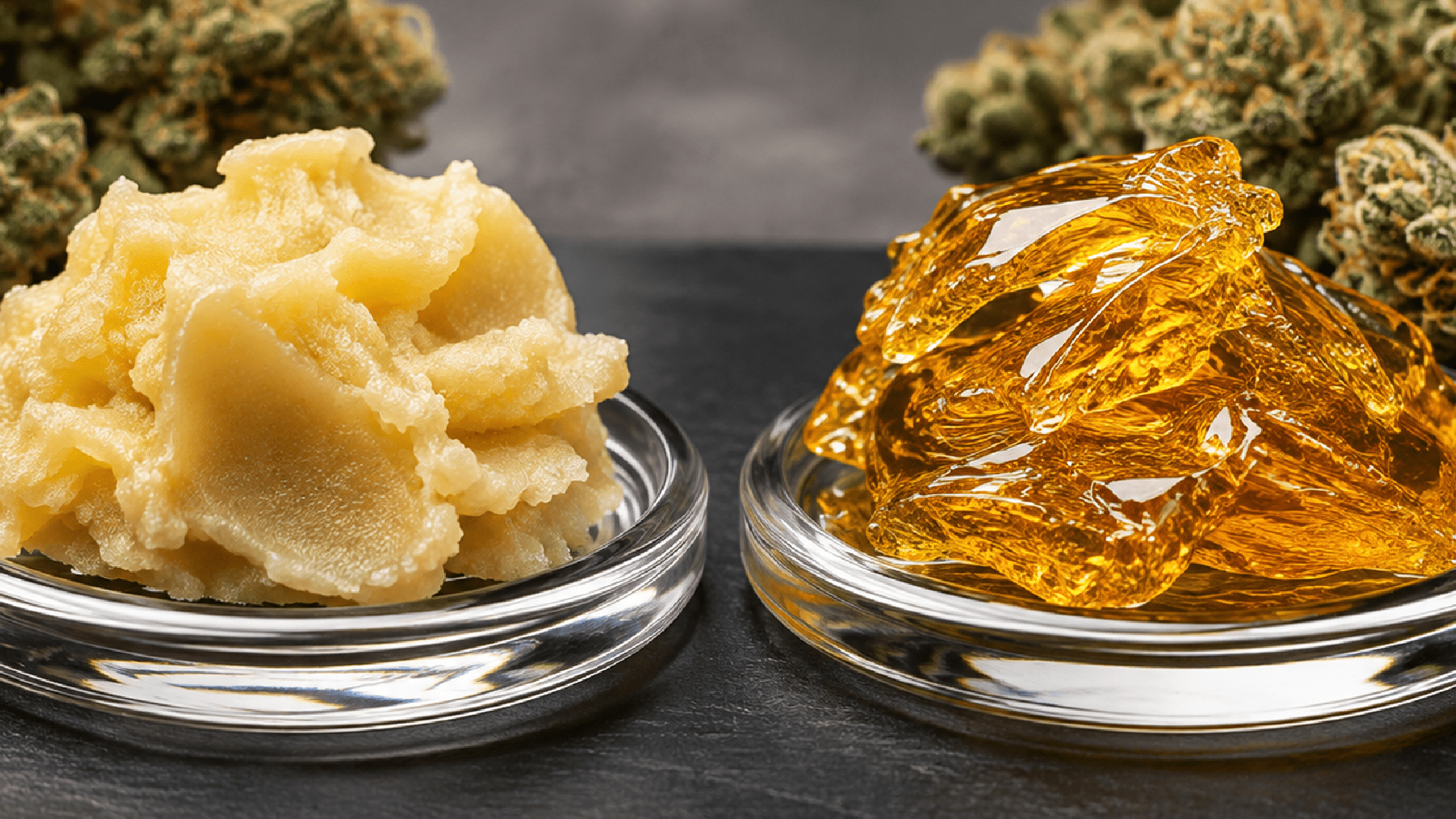
Solventless concentrates are made using physical or mechanical processes rather than chemical solvents. Depending on the product, that can involve ice water, agitation, screens, heat, pressure, or a combination of these methods. Solvent-based concentrates take the other road, using a solvent such as butane, propane, ethanol, or supercritical CO2 to pull cannabinoids and terpenes off the plant, then removing that solvent before the product is packaged and tested. Both land on the same shelf at a licensed Ontario shop, and the real difference sits in the method, the flavour, the texture, and what you are paying for.
Our staff get asked to explain this a dozen times a week, usually somewhere between “what is the strongest thing you have” and “why is that half gram forty bucks.” Here is the plain version, told the way we tell it across the counter at our cannabis shop in North York.
Understanding Solventless Concentrate
The solventless concentrate meaning comes down to how the resin was separated from the plant. Solventless products use physical or mechanical separation rather than a chemical solvent. If a hydrocarbon, alcohol, or another chemical solvent is used as part of the extraction process, the product belongs in the solvent based category.
People mix up “solventless” and “solvent-free” at the counter constantly, and the two should not be treated as interchangeable. Solventless describes how a product was made, while residual solvent testing addresses whether specified solvents remain in a solvent based product after processing. That distinction matters to a lot of hash heads, and it is the reason our hash and rosin collection gets its own corner of the store.
- Solventless: ice water hash, dry sift, kief, rosin, live rosin, hash rosin
- Solvent based: shatter, wax, budder made with BHO, live resin, distillate, most vape carts
- Solvent-free: a residual testing statement about a solvent based product, not a production method
How Solventless Extraction Works: Ice, Screens, Heat, and Pressure
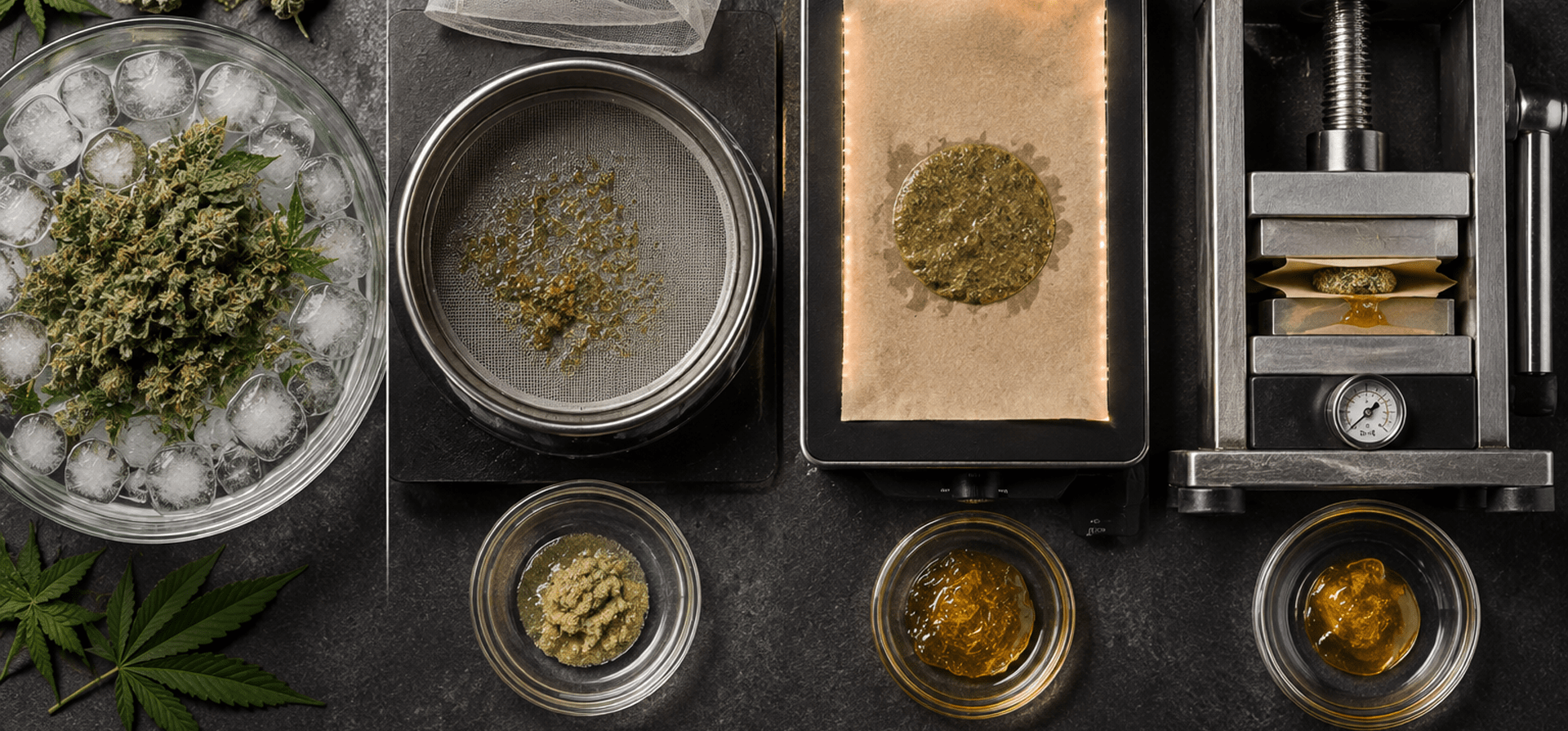
Solventless extraction is physical separation rather than chemistry. Trichome heads are the little resin glands sitting on the flower, and they come away from the plant when agitated in cold water or sieved across dry screens. From there the resin gets collected on graded mesh, dried, and either sold as hash or pressed into rosin.
The process is old school in the best way, but there is a lot of precision behind it. The goal is to separate and concentrate the plant’s resin-rich trichomes while handling the material carefully to preserve its natural characteristics. That same attention to temperature and handling matters later when the concentrate is used, which is why our complete guide to dabbing and concentrates spends so much time on low-temperature technique.
For ice water hash and hash rosin, the process typically looks like this:
- Fresh frozen or cured flower goes into a vessel with ice water and gets gently agitated.
- Resin heads separate from the plant material and are collected through stacked filter bags with different micron ratings, chosen for the separation and the product wanted.
- The wet hash is freeze dried or air dried down to a workable moisture level.
- That hash gets pressed between heated plates at low temperature to squeeze out rosin.
- Cold cure or fresh press finishing decides whether you end up with jam, badder, or a sandy texture.
What Is Solventless Live Rosin and Why Does It Cost So Much?
Solventless live rosin starts with fresh frozen cannabis rather than conventionally dried and cured flower. The fresh frozen input is used to help preserve volatile compounds that can be lost during drying and curing. That fresh-frozen material is processed into ice water hash, which is then pressed into rosin.
The price tag is not a markup for the sake of it, it is partly a yield problem. Solventless processing can produce a much smaller finished yield than highly efficient solvent based extraction, while also requiring specialized equipment, controlled temperatures, drying time, and skilled labour. Our piece on rosin edibles in Toronto covers how the format shows up in other products.
Solventless Concentrate Types You Will See on an Ontario Menu
Solventless concentrate types are usually sorted by how the resin was collected and how it was finished afterward. Some are meant for a dab rig, some go in a joint or a bowl, and some are meant to be crumbled into a pipe the way people have done for centuries. Ask the budtender which lane a product sits in before you buy, because texture tells you more than the THC number does.
Our menu has a strong focus on hash, rosin, and live rosin, with a rotating selection from Canadian producers. Between traditional hashish and modern press work there is a lot of ground to cover, which is why we built an entire place for hash section around it. Have a look at the full concentrates guide if you want the long version.
- Dry sift and kief: resin sieved off dry material through mesh screens, no water involved
- Ice water hash and bubble hash: resin separated in ice water and collected through different micron grades. Some grades are intended for dabbing, while others are more commonly used for infusing or adding to flower.
- Traditional hashish: hand rubbed or pressed hash in Afghan, Lebanese, Moroccan, and Nepalese temple ball styles
- Rosin: pressed from flower, dry sift, or hash. Hash rosin starts with concentrated trichome material rather than whole flower
- Live rosin: pressed from fresh frozen hash, sold as jam, badder, or cold cure
Traditional Extracts: How Solvent Based Concentrates Are Made

Traditional extracts use a solvent to dissolve cannabinoids and terpenes off the plant, then remove that solvent through vacuum ovens and heat. Butane and propane are common in North America, ethanol is used for large scale runs, and CO2 extraction is used to produce cannabis oils and other extract formats, including some vape products. Legal cannabis products are subject to applicable testing and regulatory requirements, including requirements related to residual solvents where applicable.
This category is not the enemy, and anyone telling you otherwise is selling something. Solvent extraction is efficient, consistent, and it makes formats that solventless simply cannot match at scale, vape carts being the obvious one. Licensed processors work under detailed federal rules for what can and cannot go into these products, which you can read on Health Canada’s composition requirements for cannabis products page.
- BHO and PHO: butane or propane extraction, produces shatter, wax, budder, crumble, and sauce
- Live resin: solvent extraction from fresh frozen material, terpene rich, often confused with live rosin
- CO2 oil: supercritical extraction, used for cannabis oils and some cartridge formats
Is Distillate Solventless?
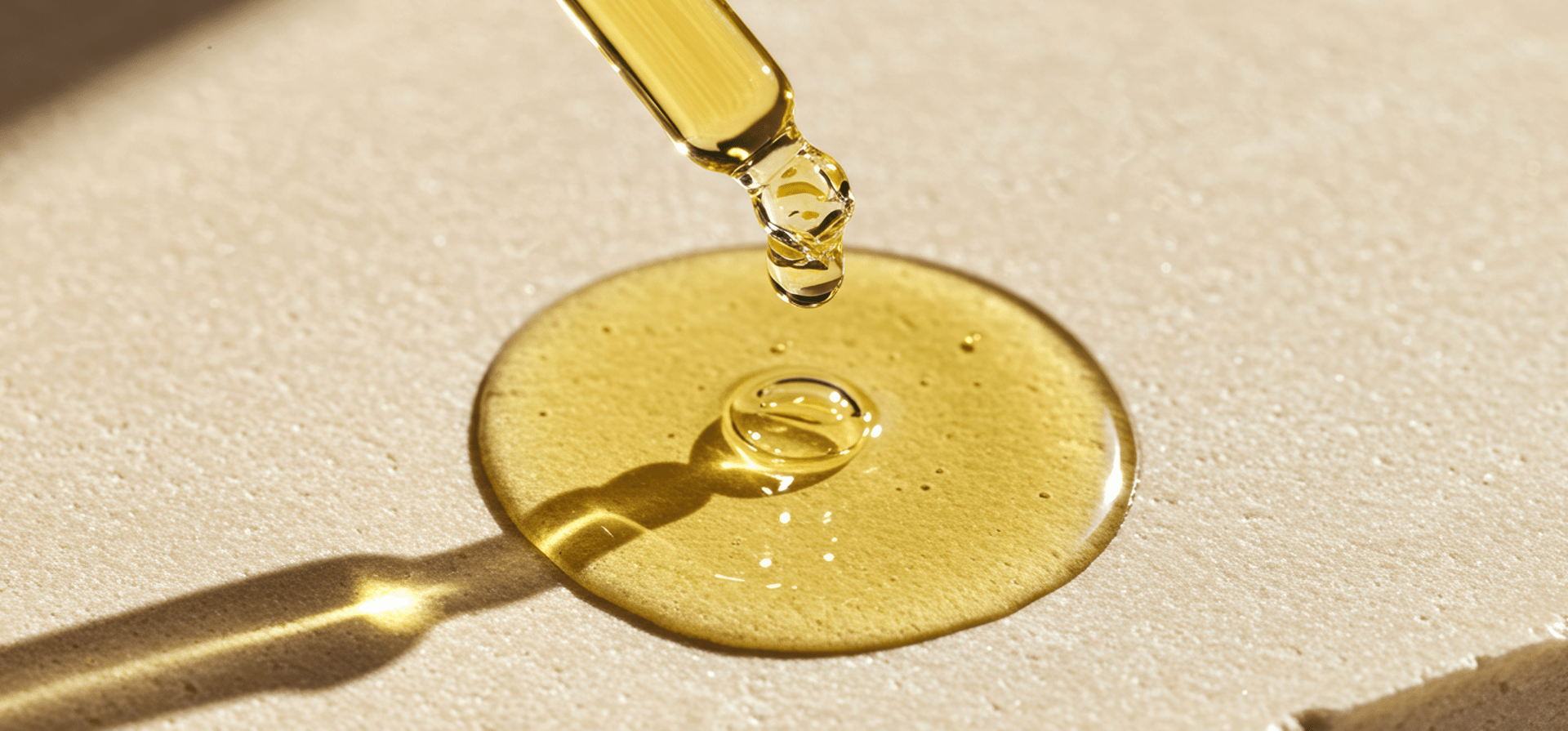
No, distillate is not solventless either. Distillate is produced by refining cannabis extract through processes such as distillation. Depending on the product and processor, additional steps such as winterization may be used before short-path or wiped-film distillation isolates and concentrates cannabinoids.
That refinement is why distillate carts often have terpenes added back in after the fact, sometimes botanical, sometimes cannabis derived. If terpene origin matters to you, ask before you buy, and read the label. Our breakdown of cannabis terpenes explains why that reintroduction step changes the whole character of a product.
- Distillate: high cannabinoid percentage, minimal native terpene content
- Live resin: solvent based but terpene rich, made from fresh frozen input
- Live rosin: solventless and terpene rich, the closest analogue to live resin on the other side of the fence
Is Shatter Solventless?
No, shatter is not solventless. Shatter is a butane or propane hash oil that has been purged into a hard, glassy sheet that cracks when you break it, and that glassy structure is a result of how the solvent purge was handled. If a shop tells you their shatter is solventless, they either misunderstand the term or they are guessing.
The confusion usually comes from the phrase “solvent free” printed on packaging. That claim speaks to residual solvent testing, not to the production method, and being solvent based does not by itself tell you whether a product is good or bad. A legally sold solvent based extract is subject to applicable regulatory and testing requirements, and our post on why lab testing matters walks through how to read that part of a certificate of analysis.
Searching Solventless Concentrates Near Me in North York
If you have been typing “solventless concentrates near me” into your phone around Bathurst and Wilson, you are already close. We are at 3852 Bathurst Street in North York, and our menu has a strong focus on hash, rosin, and live rosin, with a rotating selection from Canadian producers. You can browse the current stock on our online menu before you head over.
What you get in store that you cannot get from a search result is a staff that actually presses, dabs, and smokes this stuff. Come in with a question and you will get an honest answer, including when the answer is that a cheaper product will suit you better. Learn more about Scarlet Fire, see what customers have said on our reviews page, or check what is coming up on our events calendar.
- Skip the THC race: a higher THC percentage does not automatically mean better flavour or a better overall experience, so compare extraction method, cannabinoid profile, terpene information, texture, and freshness instead
- Ask about the input: fresh frozen, cured flower, or other starting material tells you a lot about how the concentrate was made
- Look at the terpene information: terpenes can contribute to aroma and flavour, although the overall profile depends on the product and how it was processed
- Check the batch date: rosin and other solventless products can change in texture and aroma with storage, so freshness matters
Come Talk Hash With Us on Bathurst Street
Solventless and solvent based extracts both deserve a spot in your rotation, and the important part is knowing how the product was made and what you are actually buying. Our team is happy to walk you through the difference in person, no rush and no pressure. Stop by 3852 Bathurst Street in North York, browse the current menu, or get in touch with us if you have a question before you visit.
Want more like this? Our blog archive covers concentrates, terpenes, flower, and everything else we get asked about, and our hash collection feature goes deeper on the traditional side of the category. You must be 19 or older to shop with us.