
What Is THCA and How Is It Different from THC? - Scarlet Fire (North York / Toronto)
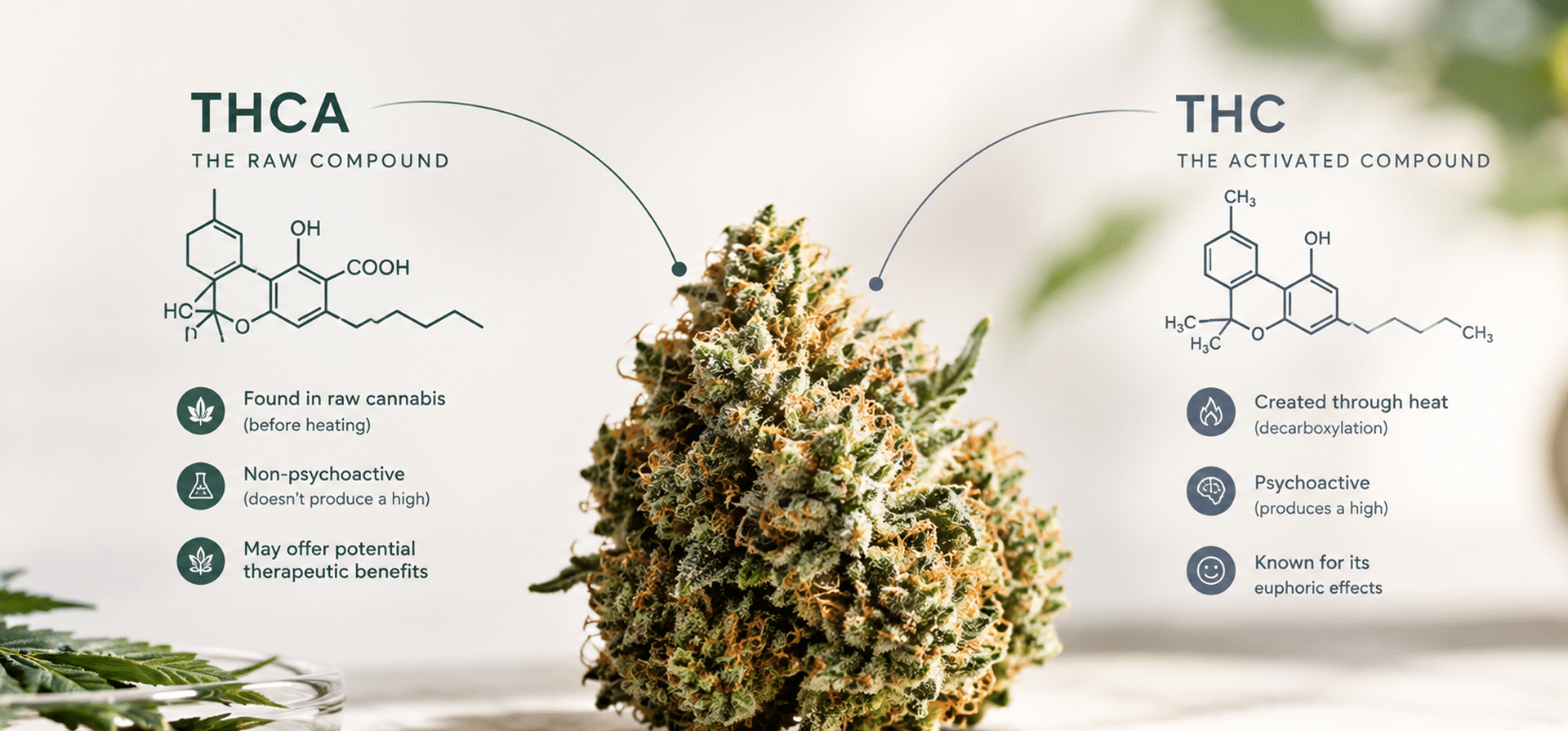
THCA is tetrahydrocannabinolic acid, the non-intoxicating acid form of THC found in raw, undried cannabis. The key difference between the two is molecular structure, and heat converts THCA into intoxicating delta-9 THC through a reaction called decarboxylation. THCA vs THC is not two different plants or two different product lines, it is one compound before and after it meets a flame, a heating element, or an oven.
Anyone who has scrolled through a US cannabis site has run into “THCA flower” and wondered why the label reads 28% THCA instead of 28% THC. The answer is part chemistry and part border. Ontario’s rules handle this compound differently than the American hemp market does, and understanding why saves a lot of confusion at the counter of a licensed cannabis store on Bathurst Street.
THCA vs THC
THCA is the acidic form that builds up in the plant while it grows, and THC is what heat turns it into. The two differ in molecular structure, and that difference is why THCA does not produce the intoxicating effect delta-9 THC does. Add heat, the structure changes, and that is why nobody eats a raw bud off the plant and expects anything to happen.
Here is the split in plain terms:
- THCA: The acid form, found in living and freshly harvested plants, non-intoxicating as-is
- Delta-9 THC: the intoxicating cannabinoid formed when THCA decarboxylates, and the one the THC limits in the Cannabis Regulations are written around
- The Trigger: Heat above all, with time, light, and air playing slower roles
- The Relationship: Nearly all the THC in dried flower started out as THCA
- The Label Math: Canadian potency figures are calculated with THCA’s potential conversion already built in
The takeaway is pretty simple. A Canadian jar reading 24% total THC and a US jar reading 27% THCA can describe roughly the same plant under two different rulebooks. One country counts what the flower is, the other counts what the flower will become.
Where THCA Comes From Inside the Plant
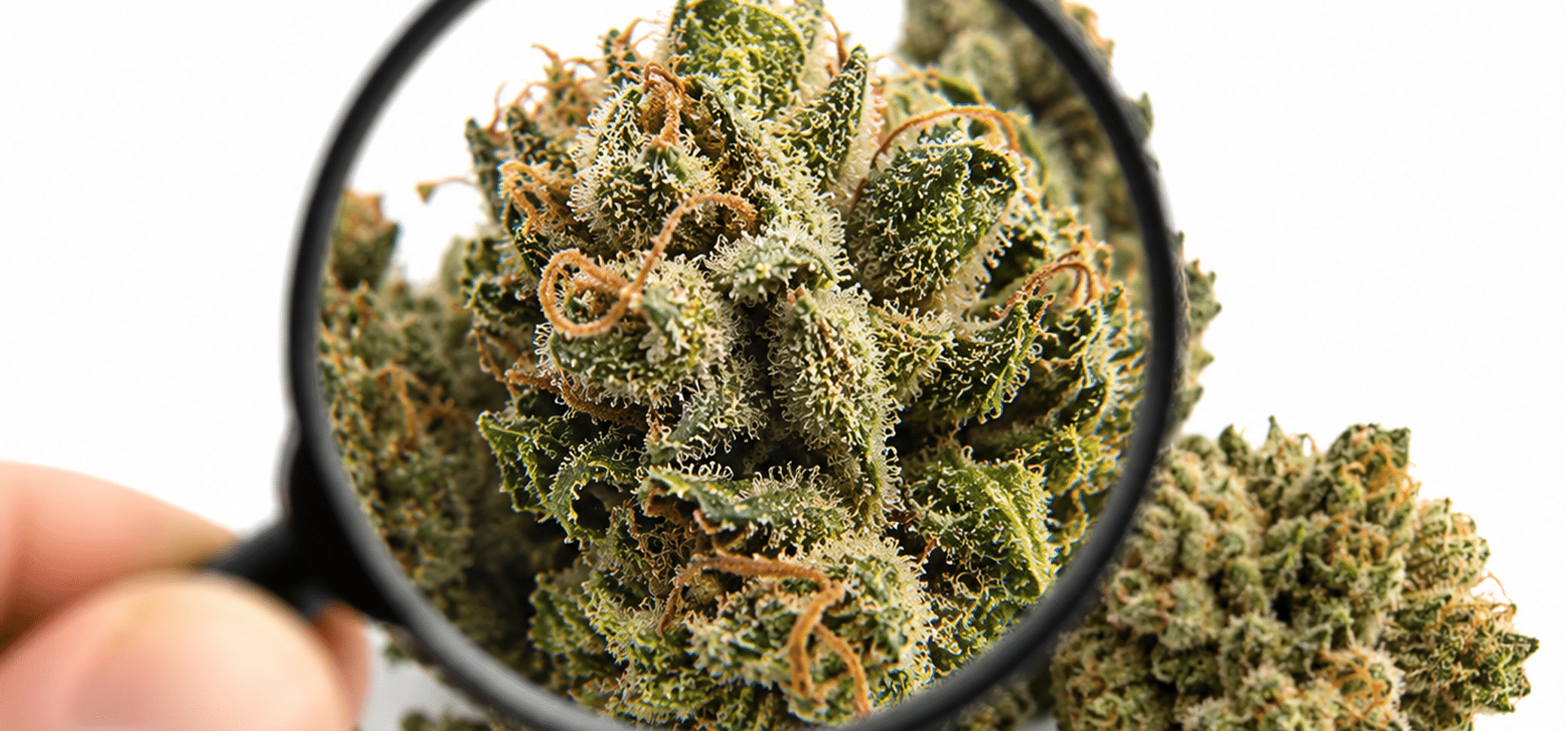
Cannabis mostly produces acidic cannabinoids rather than THC itself. The plant builds a starter compound called CBGA, and enzymes turn that into acidic cannabinoids including THCA and CBDA, depending on the plant’s genetics. That split is what separates a high-THC cultivar from a hemp cultivar.
All of it collects in the trichomes, the sticky resin heads coating the flower and sugar leaves. Those same trichomes hold the terpenes you smell the second the lid comes off a jar, and there is a fuller breakdown in the piece on what cannabis terpenes actually do. Hash and rosin are basically those resin heads collected and pressed, with as little plant material along for the ride as possible.
How THCA Turns Into THC: Decarboxylation Explained
Decarboxylation is the reaction that removes a carboxyl group from the THCA molecule and releases it as carbon dioxide, leaving delta-9 THC behind. Nothing mysterious about it. Combustion converts THCA rapidly, while a home oven does the same job over roughly half an hour.
Researchers have actually timed this. In a 2016 study published in Cannabis and Cannabinoid Research, THCA levels dropped to near zero after 30 minutes at 110°C, took roughly nine minutes at 130°C, and about six minutes at 145°C, while anything under 100°C did not finish the job within an hour. Here is roughly what that means in practice:
- Sitting on a shelf for months: Slow, partial, unpredictable conversion as flower ages
- 110°C for about 30 minutes: The reliable oven range if you are decarbing at home
- Roughly 160°C to 220°C: Where most dry herb and concentrate vaporizers run
- A lit joint or bowl: The burning tip runs several hundred degrees, so conversion happens rapidly, though that heat also degrades and volatilizes other compounds, terpenes included
This is why dab temperature comes up so often with concentrate users. Go too hot and you scorch the terpenes, go too cool and you leave material sitting in the banger. The full walkthrough is in the complete guide to dabbing and concentrates, and the counter team is happy to talk temperature if you are still dialling yours in.
Stop by and ask. The staff at 3852 Bathurst St. talk heat, terpenes, and technique all day long. Find the shop in North York and bring your questions.
Why Canadian Labels Show Total THC Instead of THCA
Canadian cannabis labels display Total THC. This figure accounts for the potential conversion of THCA into THC, which Health Canada’s cannabis rules require when determining the applicable total THC amount.
The chemistry behind that conversion is straightforward:
Total THC = delta-9 THC + (0.877 × THCA)
The 0.877 factor reflects the molecular mass lost when THCA releases carbon dioxide during decarboxylation. U.S. federal hemp regulations explicitly use this relationship at 7 CFR § 990.1.
Canada and the United States apply this chemistry within different regulatory frameworks. Health Canada’s current guidance requires cannabis lots to be tested for delta-9-THCA and delta-9-THC and requires labels to display total delta-9-THC, accounting for the potential conversion of THCA into THC.
For a simple mathematical example, a sample containing 1% delta-9 THC and 25% THCA would produce a calculated potential total THC of 22.9% using the 0.877 conversion factor:
1 + (0.877 × 25) = 22.925%
That calculation illustrates why THCA and THC percentages cannot be compared directly without considering the conversion between the two forms.
THCA Flower, THCA King, and THCA Small Buds: What Those Terms Mean

THCA flower is dried cannabis sold in the United States under a hemp label because it tests below 0.3% delta-9 THC by dry weight while carrying a high THCA percentage. Functionally, it is cannabis. It smokes the same and smells the same, but under the old US federal definition, regulators looked only at delta-9 THC and ignored the acid form sitting right beside it.
A whole vocabulary grew up around that gap, and none of it is standardized. THCA king is an informal marketing language some US sellers use for their highest-testing lots, not a scientific or regulatory category. THCA small buds is the same kind of shorthand, describing smaller popcorn-sized nugs sold cheaper per gram than premium tops.
Why the Terminology Never Crossed the Border
Canada legalized adult-use cannabis federally in 2018 and counted THCA in the potency math from day one. There was no gap to work around, so no separate THCA product category ever formed up here. Canadian products carry regulated potency and product information instead, along with cultivar or strain names when the producer provides them, which is what you will see browsing the current Scarlet Fire menu.
The US federal hemp definition is scheduled to change on November 12, 2026. H.R. 5371, the appropriations act signed on November 12, 2025, rewrote that definition around a total-THC standard with a per-container limit, effective one year after enactment. Once it takes hold, both countries will be measuring much the way Canada has from the start.
How to Read a Potency Label Without Getting Fooled
Type THCA concentrate near me or THCA concentrates online from a Toronto address and you will get US shops in the results. Those listings can appear in Canadian search results, but that does not make them legal Canadian retail options. The CBSA is blunt about it: moving cannabis across the Canadian border in any form is a serious criminal offence, and that holds no matter how much you have, whether you have a medical document, or whether it was legal where it was shipped from.
In Canada, you can already find similar extracts on legal shelves under different names. Live rosin, hash rosin, budder, shatter, and diamonds all start from the same trichome resin, just pulled off the plant by different methods, and solventless vs. solvent-based concentrates lays out how those methods differ. North York shoppers can dig through Ontario’s largest hash collection rather than chasing a listing that was never available to them.
Storage, Freshness, and Slow Conversion
Light, oxygen, heat, and time all contribute to cannabinoid and terpene degradation during storage. THC can also oxidize into other cannabinoids, including CBN, which is part of why a jar you forgot about smells flat a year later. Storage is not overkill, and it can make the difference between fresh flower and a faded product.
The habits are boring and they work:
- Airtight container, out of direct sunlight
- Stable, cool room temperature rather than a fridge or freezer
- Concentrates kept cold, sealed, and handled with a clean tool
- Everything in child-resistant packaging, secured away from kids and pets
Not sure what you are looking at? Bring the jar in. The team at Scarlet Fire Cannabis Co. will read the label with you and walk you through the product information. Get in touch or drop by 3852 Bathurst St.
Come Talk It Through in North York
THCA vs THC comes down to one reaction, and once that clicks, potency labels stop being intimidating. The rest is preference: format, terpenes, freshness, and what actually suits you. That part is easier with a person in front of you than a search bar.
Scarlet Fire Cannabis Co. sits at 3852 Bathurst St. in North York, with a deep hash and concentrate selection and staff who genuinely like the technical questions. Browse what is in stock, work through more explainers on the blog, or reach out to the team before you head over.