
Shatter vs Crumble: Choosing the Right Concentrate
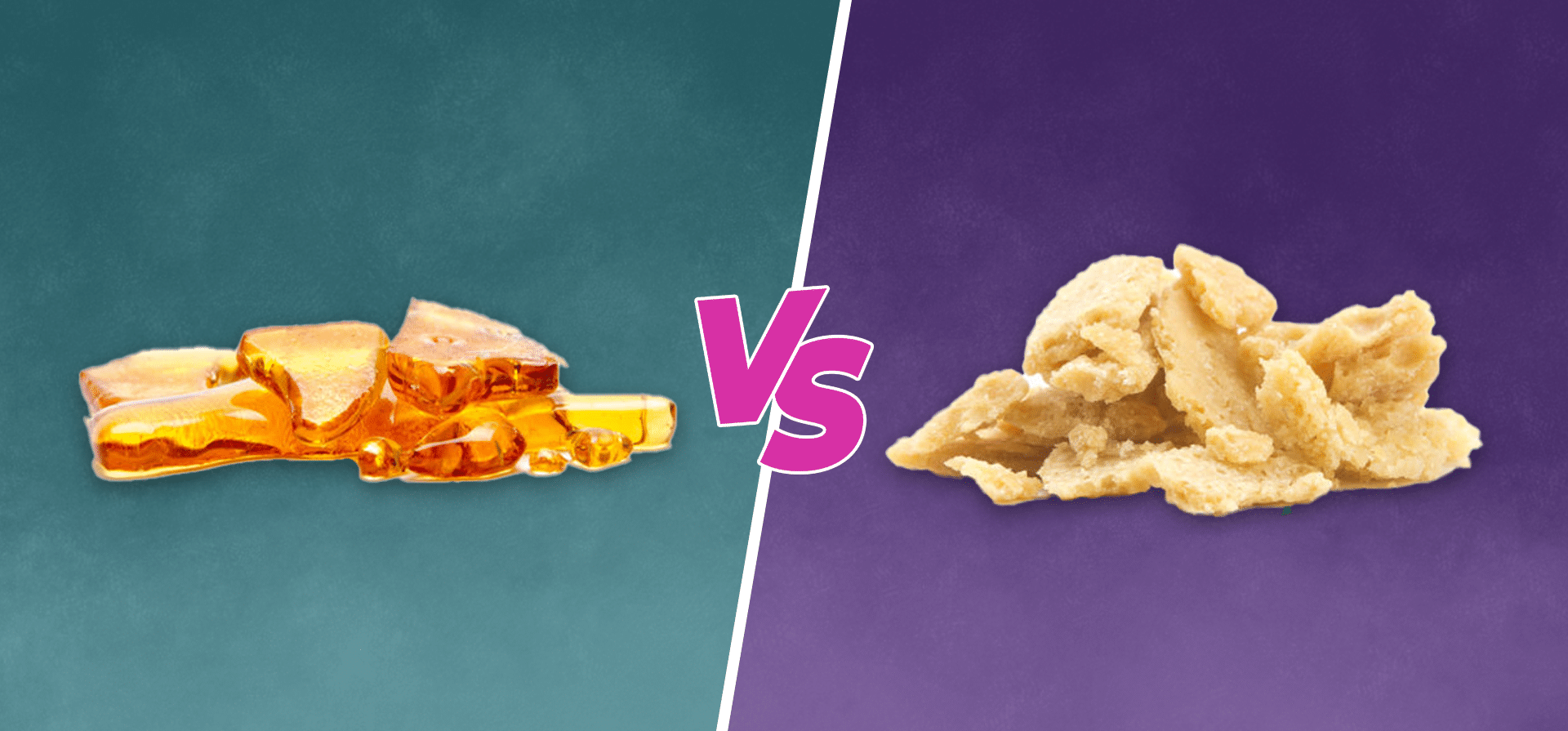
Shatter and crumble are both hydrocarbon cannabis concentrates, and the main difference comes down to texture: shatter is a glassy, snappable slab, while crumble is a dry, honeycomb-style extract that falls apart at a touch. Both usually start the same way, with butane or propane pulling cannabinoids and terpenes off the plant. What changes everything is how the extract gets purged and handled after that first wash.
At Scarlet Fire Cannabis Co. on Bathurst, the shatter vs crumble question comes up at the counter pretty much every day. Health Canada commissioned a national survey on inhalable concentrate use for 2025/26, reflecting continued interest in this product category. Our budtenders work with an extensive hash selection, and they’ll usually steer you by your setup and habits rather than by hype.
What Is Shatter?
Shatter is a translucent, amber-to-gold extract that sets up hard and snaps like peanut brittle when it’s cold. It’s a type of BHO (butane hash oil), one of the solvent-based concentrates that have residual solvent removed before they ever hit a shelf. Hold a good slab up to the light and you should be able to see right through it.
That glassy look comes from the extract cooling while it sits still and undisturbed. Shatter can change on you, though, and it sometimes sugars up or turns cloudy when it’s exposed to heat, moisture, or too much handling. That’s mostly cosmetic, but it’s a pretty good sign the slab has spent time somewhere warm.
What Is Crumble?
Crumble is a dry, opaque concentrate with a texture that looks a lot like honeycomb or a chunk of feta. You’ll also see it called honeycomb wax, and it sits in the same wax family as budder and badder. Pick it up with a dab tool and it breaks into little bits instead of stretching or pulling.
Crumble has a drier, more porous texture than many other wax-style concentrates, which explains that dusty, brittle feel. Producers get there in different ways, with some agitating the extract during processing and others adjusting how it’s purged. For a closer look at where it fits beside sauce, budder, and diamonds, our cannabis concentrates guide lays out the full lineup.
Shatter vs Crumble: The Key Differences
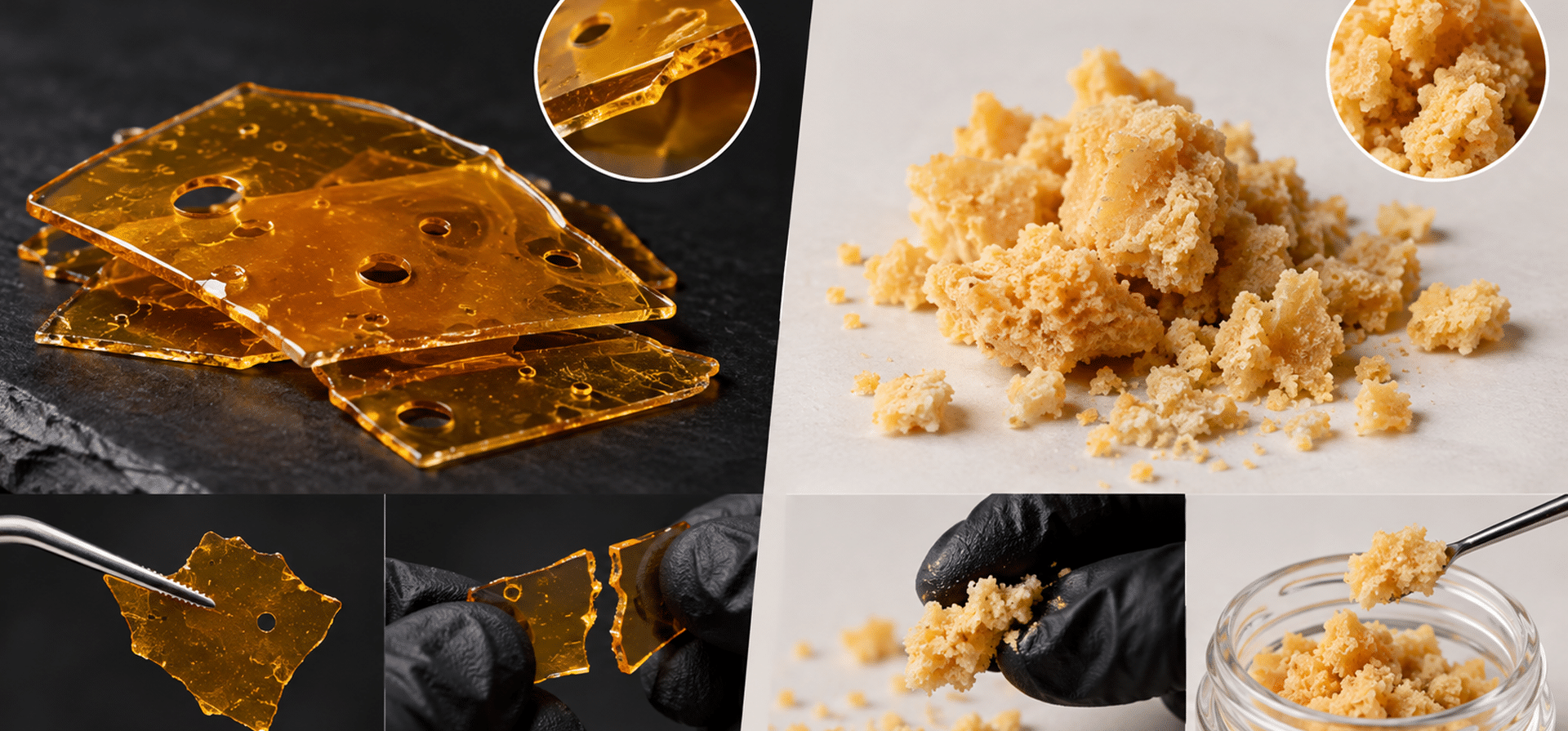
On paper, shatter and crumble often land in a similar THC range, so potency usually isn’t the deal-breaker. The real gap shows up in texture, how easy each one is to portion, and how much flavour comes through in the jar. Here’s the quick side-by-side budtenders lean on when someone’s sitting on the fence.
|
Shatter |
Crumble |
|
|
Look |
Clear, glassy, amber to gold |
Opaque, dry, golden to tan |
|
Final texture |
Glassy and brittle, tacky when warm |
Dry and crumbly, breaks apart easily |
|
Handling |
Snaps into shards, can be fussy to portion |
Easy to scoop, can get dusty |
|
Processing |
Commonly processed for a stable, glass-like texture |
Commonly processed for a dry, crumbly texture |
|
Agitation |
Often minimized |
May involve agitation |
|
Common use |
Dab rigs and electronic rigs |
Topping bowls and joints, dabs |
|
Stability |
Can sugar up if warm or overhandled |
Fairly stable, can dry out further |
Neither one wins across the board. If you mainly dab and prefer a firm, glassy texture, shatter usually makes more sense, and if you want something you can sprinkle over flower without a fight, crumble takes that round. Meet the team on Bathurst or browse the current menu to see what’s on the shelf this week.
How Shatter and Crumble Are Made
Both extracts usually start in a closed-loop system, where a hydrocarbon solvent like butane or propane washes over plant material and strips off the resin. Licensed processors then remove the leftover solvent, and the techniques used after that, which vary from one processor to the next, are where the two textures tend to split. Solventless options like rosin skip solvents altogether, which is a whole other conversation.
Home extraction with butane is genuinely dangerous and not a garage or kitchen project. The Canadian Centre on Substance Use and Addiction points out that licensed extracts are regulated and inspected, while making your own can be risky. Stick with products from licensed producers sold through authorized retailers.
How Shatter Is Commonly Processed

Shatter is commonly processed to preserve a stable, glass-like consistency, often with minimal agitation after extraction. A common approach is spreading the extract thin and purging it under vacuum, though temperatures, timing, and equipment vary by processor. When it comes together, the extract cools into that flat, glassy sheet you see in the jar.
Starting material plays a part too, since some inputs hold up as glass better than others. Heat, moisture, or lots of handling can cause a slab to nucleate and lose its clarity over time. That’s one reason producers pay close attention to packaging and storage once it’s made.
How Crumble Is Commonly Processed
Crumble is commonly processed to produce a drier, more porous texture, with producers using different purge and agitation techniques to get there. Some agitate or whip the extract during processing, while others adjust how the oil is purged until it sets up dry. Either way, the result is a concentrate that’s easy to portion and breaks apart cleanly.
Aroma is where things can vary. Processing conditions like temperature, time, and pressure can affect terpene retention, and so can the starting material itself. That means aroma can differ quite a bit between concentrates made from similar input, shatter and crumble alike.
Texture, Handling, and Mess Factor
Ask any budtender and they’ll tell you handling is where most folks make up their mind. Shatter can go flying across the table when you snap it, and with warm hands it turns tacky fast. Crumble skips the stickiness, but it can leave golden dust all over your mat if you’re not careful.
- Chill shatters in the fridge for a few minutes so it snaps clean.
- Fold it inside parchment and press with a fingertip to break off a small piece.
- Use a scoop-style dab tool for crumble instead of a pointed one.
- Keep a silicone mat under your setup to catch stray bits.
The right gear makes either one way easier to deal with. A decent dab tool, a silicone container, and a mat cover most of it, and our rundown on smoking accessories goes over what’s worth keeping on hand. Once you get the hang of it, both textures are pretty easy to live with.
Flavour and Terpenes
Terpenes contribute heavily to the aroma and flavour profile of a concentrate, the aromatic compounds behind each cultivar’s smell, from citrus and pine to gas and funk. Both shatter and crumble can carry a solid terpene profile, though the most terp-heavy extracts often end up as sauce or budder instead of glass. How much aroma comes through depends on the starting material and processing conditions, not just the texture.
A well-made shatter or crumble from quality input can taste great. Batch, cultivar, and producer matter more than the texture name on the label. When flavour is your top priority, ask a budtender which jars are smelling loudest that week.
Potency and Labels in Canada
Shatter and crumble sit well above flower for THC, with labels on legal Canadian concentrates commonly reading somewhere in the 60 to 90 percent range. That figure is usually listed as total THC, and total THC calculations account for the potential conversion of THCA into THC. The CCSA notes some extracts can get close to 99 percent THC, so reading the label really matters.
The federal Cannabis Regulations set firm limits on legal extracts:
- No more than 1,000 mg of THC per immediate container.
- A 7.5 g limit per immediate container for extracts containing more than 3 percent THC.
- Child-resistant, plain packaging with the standardized THC symbol and a health warning.
- THC and CBD content printed on every label.
Thanks to that 1,000 mg cap, a high-potency jar usually holds around a gram, give or take. Licensed products also go through lab testing for potency and contaminants, which is a big reason to stay with legal options. If two jars read close on THC, let texture and flavour make the call.
How to Consume Each One
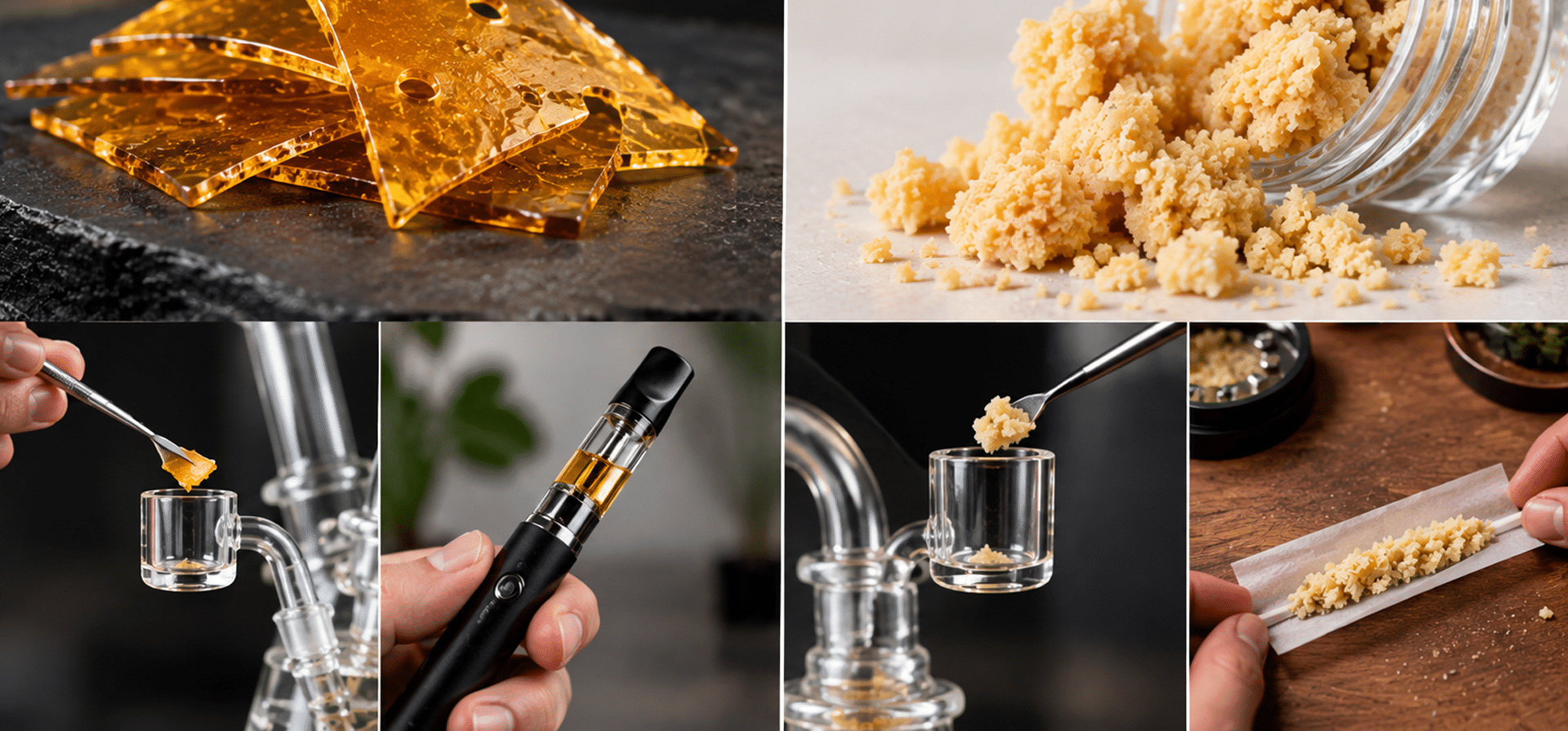
Most people dab shatter and crumble, but neither one is stuck with a rig. Both work in concentrate-ready vaporizers, and crumble in particular is a favourite for adding to flower. Your gear and routine should steer the choice more than anything else.
Concentrates can contain substantially more THC than flower, so use the smallest amount appropriate for your experience and follow the product label. If you’re new to cannabis, skip dabbing altogether, since the Canadian Centre on Substance Use and Addiction specifically advises against it for inexperienced consumers. There’s no prize for the biggest dab at the sesh.
Dabbing Shatter
Shatter is commonly used with dab rigs and electronic rigs because its firm texture is easy to handle and portion. Many experienced consumers prefer lower-temperature dabs for flavour, but the right setting varies by device and concentrate. A carb cap can help the shatter vaporize more evenly at lower temps.
If timing your banger with a torch feels fiddly, an e-nail or electronic rig makes temperature easier to manage, though the displayed setting won’t always match the actual surface temperature. Our complete guide to dabbing and concentrated walks through rig setup step by step. Warm the shard slightly between your fingers and it’ll stick to the tool instead of sliding off.
Topping a Bowl or Joint With Crumble
Its dry texture can make crumble easier to portion over flower, which is why plenty of people top a bowl with it or roll it into a joint. It mixes into ground flower without the gooey mess you get from stickier waxes. It also works fine in a rig if you’d rather keep things simple.
When adding it to a joint, layer it through the middle instead of near the ends so it doesn’t run. If your rolling game needs a refresh, check out our tips to roll a better joint. Keep in mind that even a small sprinkle bumps up the potency of the whole thing, so go easy.
Storage Tips for Shatter and Crumble
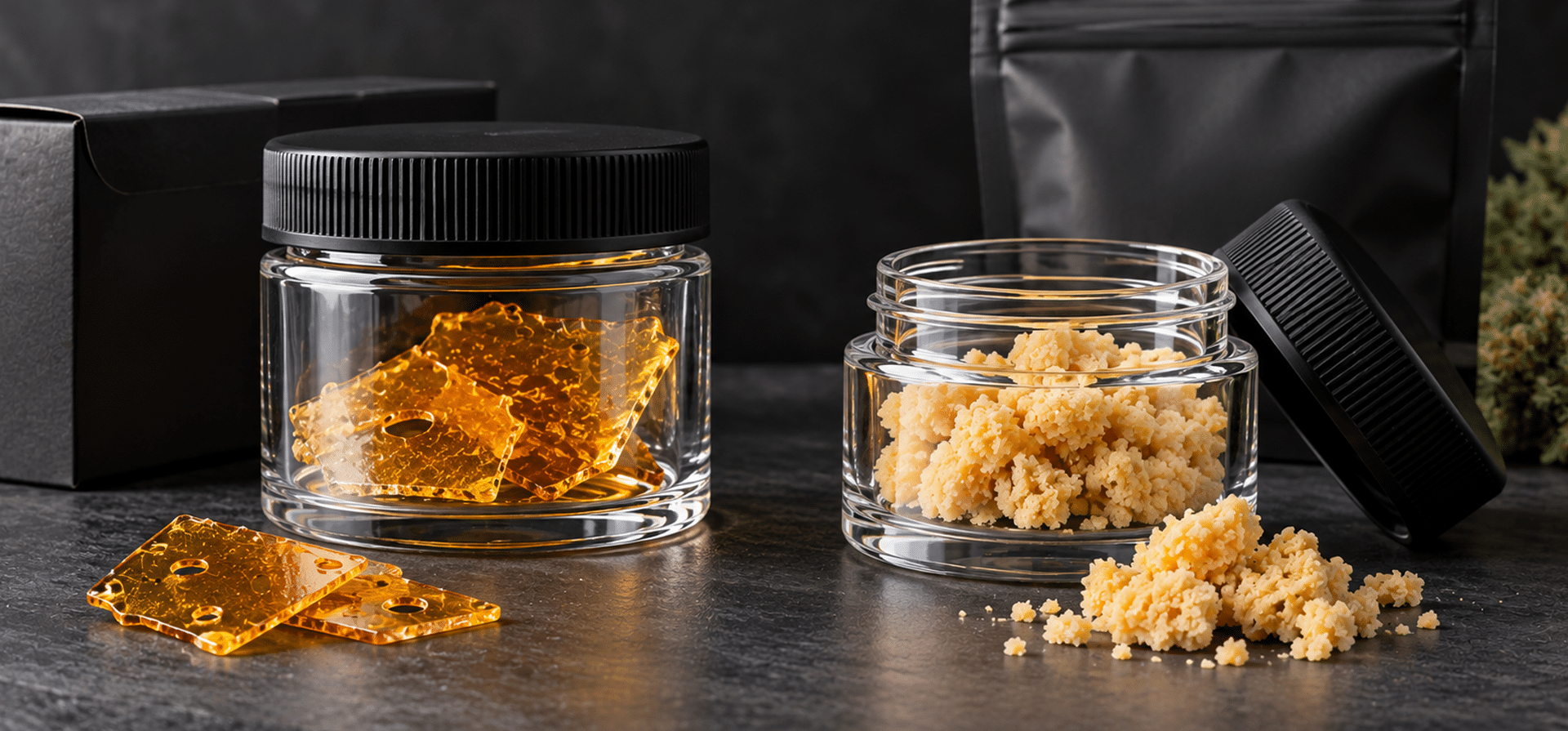
Heat, light, air, and moisture are the main enemies of any concentrate. Shatter gets tacky and can sugar up in a warm room, while crumble can dry out further and lose aroma when the lid’s left off. Good storage keeps both closer to how they were when they left the lab.
- Keep jars sealed in a cool, dark spot, away from windows and the stove.
- Use the original packaging or a silicone or glass container.
- For longer storage, the fridge works, but let the jar come to room temp before opening it to avoid condensation.
- Store everything out of reach of kids and pets.
Shatter stored in parchment can be a pain to peel when warm, so a quick chill helps. Crumble is a little more forgiving, as long as it stays sealed tight. Got questions about keeping your stash fresh through a humid Toronto summer? Ask our team any time.
Which One Should You Pick?
There’s no wrong answer, just a better fit for how you like to consume. Think about your gear, how much prep you’re into, and what you care about most in a session. These are the pointers budtenders usually run through:
- Go with shatter if you mainly dab, like a clean, glassy extract, and don’t mind the snap-and-break routine.
- Go with crumble if you want easy portioning, like topping bowls or joints, or prefer a no-stick texture.
- Try both if you’re new to concentrates and still figuring out what you like.
- Look past texture if flavour comes first, since batch and cultivar matter just as much.
If solvent-based extracts aren’t your thing, our Place for Hash page shows off the solventless side of the menu. You can also read up on the different types of hash if traditional options catch your eye. Either way, the counter is the best spot to compare jars side by side.
Consume Responsibly
Shatter and crumble are high-potency products, and they deserve a bit of respect. Canada’s Lower-Risk Cannabis Use Guidelines recommend choosing lower-potency products and avoiding habits like deep inhalation and breath-holding. Keeping portions small and spacing out sessions goes a long way.
Don’t drive or operate machinery for at least six hours after using cannabis, or longer if you still feel impaired, and skip mixing concentrates with alcohol. Regular high-potency use can also build tolerance quickly, so taking a break now and then is worth considering. You must be 19 or older to purchase or consume cannabis in Ontario.
Talk Concentrates With the Scarlet Fire Crew
Still torn on shatter vs crumble? Our budtenders talk concentrates all day and are happy to walk you through what’s on the shelf, from glassy slabs to dry honeycomb. Swing by 3852 Bathurst Street in North York, or see what customers say about the shop first.
Browse the menu for current concentrate options, or call (416) 663-5000 with any questions before you visit. For more on extracts, hash, and everything in between, the Scarlet Fire blog has plenty to dig into. For adults 19+ only; please consume responsibly.